

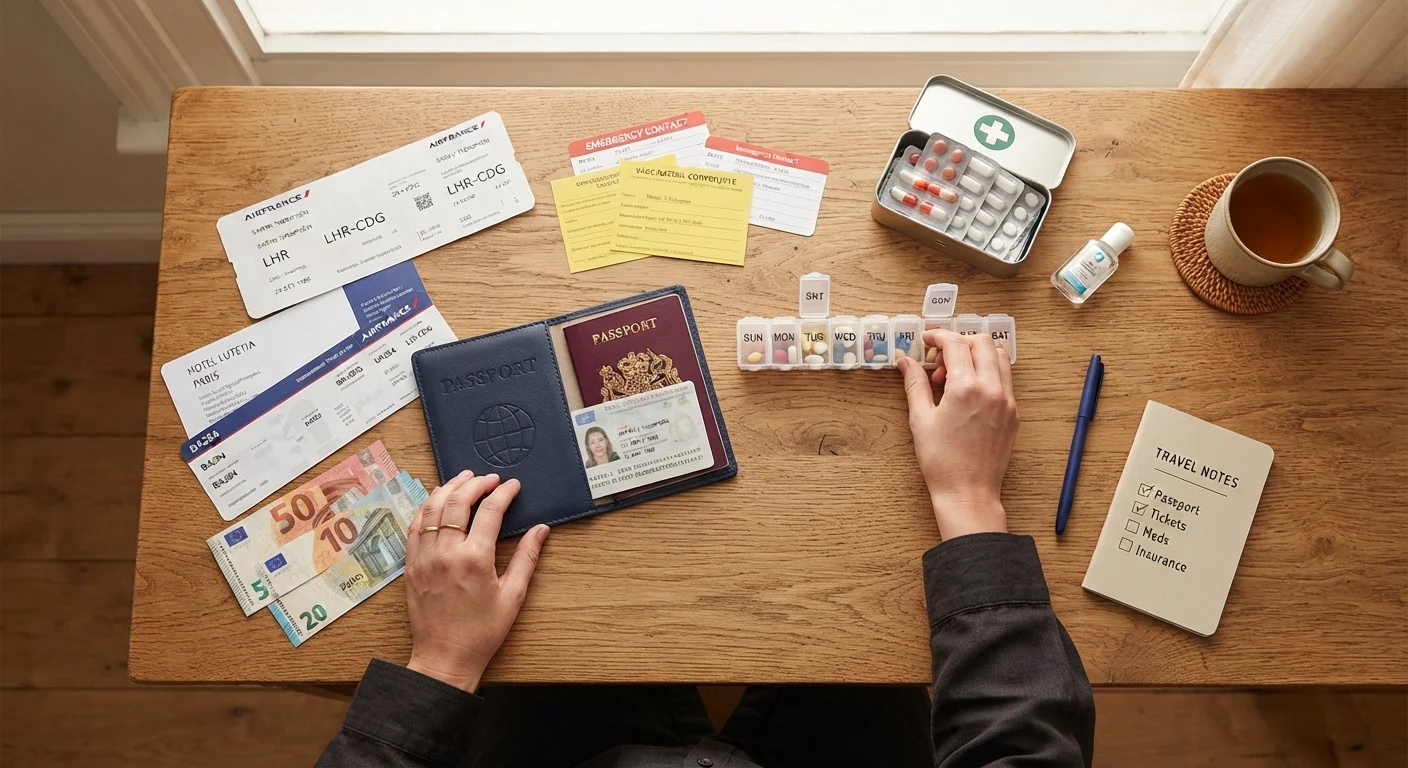
Key Takeaways
- Schedule a travel medicine or specialist appointment at least 6 to 8 weeks before departure.
- Carry medications in original labeled containers in your carry-on, never in checked luggage.
- Obtain written documentation of your diagnoses and prescriptions in case of a medical event abroad.
- Verify that your travel insurance covers pre-existing conditions before you buy a policy.
- Research medical facility availability at your destination before you book, not after.
Why advance planning looks different for travelers with health conditions
Most trip planning follows a familiar sequence: pick a destination, book flights, arrange accommodations. For travelers managing chronic conditions, allergies, mobility limitations, or regular medications, that sequence needs a health-planning layer woven in from the start. Waiting until the week before departure creates real logistical problems, and some of them cannot be fixed in time.
The core issue is lead time. Prescription refills, letters from physicians, vaccine schedules, and insurance reviews all take longer than most people expect. A travel medicine consultation, which covers vaccinations and destination-specific health risks, should happen 6 to 8 weeks before you leave. Specialist appointments may need even more runway. Building health planning into your overall pre-trip checklist from the beginning prevents last-minute scrambles.
This article is general health information and education, not medical advice. Consult your physician or a qualified travel medicine professional for guidance specific to your health history.
Recommended practices for managing health needs before you travel
The following practices address the most common points where travelers with health needs run into problems. Each one is specific enough to act on.
Schedule a physician or travel medicine consultation at least 6 to 8 weeks before departure
Some vaccines require multiple doses spaced weeks apart, and prescription adjustments take time to stabilize. Booking this appointment early gives your care team room to address complications without rushing.
Request a written medical summary and carry it in your carry-on bag
Emergency room clinicians in another country cannot access your home records. A one-page summary with diagnoses, medications, allergies, and contact information for your doctor can speed up treatment decisions significantly.
Pack all medications in original, labeled containers in your carry-on luggage
Checked bags get delayed, lost, or searched. If your medications travel separately from you, even a one-day gap can create a serious health problem. Original containers also satisfy customs and border inspection requirements in many countries.
Research medical facility access at your destination before booking
Not every destination has hospitals equipped for complex conditions, and some remote areas have limited pharmacy stock. Knowing this in advance lets you adjust your itinerary or prepare additional supplies rather than discovering the gap mid-trip.
Verify travel insurance covers your pre-existing conditions before purchasing
Many policies exclude pre-existing conditions by default, and the window to add a waiver is often just 14 to 21 days after the initial trip deposit. Missing this window can leave you without coverage for the exact health events most likely to occur.
Documentation: the paperwork that protects you
Carrying the right documents can change the outcome of a medical event abroad. A written summary from your primary care physician should list your diagnoses, current medications with generic names and dosages, known allergies, and any implanted devices such as pacemakers or joint replacements. Generic drug names matter because brand names differ by country.
If you use controlled substances, carry a signed letter on official letterhead, because many countries have strict import rules for these medications. Always verify current entry requirements with the destination country's embassy or official government source before you travel; rules change and no article can substitute for official confirmation.
Pair your medical documentation with thorough pre-trip safety preparation, including copies of your insurance cards and emergency contacts stored separately from your originals.
Traveling with medical devices
Devices such as CPAP machines, insulin pumps, or mobility aids require additional preparation. Confirm voltage compatibility and carry adapter plugs for your destination. Airlines have specific rules about battery-powered medical devices in the cabin, so contact the carrier directly before your travel date. The TSA and international equivalents publish guidance on screening procedures for implanted devices and medical equipment.
Insurance and financial exposure
Standard travel insurance policies often exclude pre-existing conditions unless you purchase a waiver, typically within a short window after your initial trip deposit. Read the policy language carefully, because definitions of "pre-existing condition" vary widely between insurers. The financial exposure from traveling uninsured extends well beyond medical bills to include evacuation costs, which can reach tens of thousands of dollars in remote locations.
This is general information, not personalized insurance or financial advice. A licensed insurance professional can help you evaluate whether a specific policy covers your circumstances. Consult one before purchasing coverage for any trip where medical costs would be a serious concern.