

Key Takeaways
- Research entry requirements and travel advisories before booking any flights or accommodation.
- Understanding a destination's climate and peak seasons shapes every other planning decision.
- Health preparation, including vaccinations, should begin weeks or months before departure.
- A budget framework built during research prevents overspending on bookings made in excitement.
- Verifying information through official government and provider sources protects you from outdated data.
What you will need
Why a research framework beats ad-hoc searching
Most trip-planning mistakes happen before anything is booked. A traveler locks in flights, then discovers the destination requires a visa that takes six weeks to process. Someone books a beach resort, then learns that month is the region's rainy season. These problems are avoidable, but only if research happens in a deliberate order.
A framework does one specific thing: it sequences your questions so each answer informs the next decision. You start with information that could stop the trip entirely (entry requirements, advisories), move to information that shapes the shape of the trip (climate, local conditions), then work toward the details that fill in the plan (costs, health prep, logistics). Skipping ahead wastes time and can mean redoing work after a critical constraint surfaces late.
For a fuller picture of everything you need to cover before departure, see the complete trip planning checklist.
How to research any destination systematically
The steps below apply whether you are planning a weekend road trip or a three-week international journey. Work through them in order. Some steps will take minutes; others may open up new decisions.
Check entry requirements and travel advisories
Visit your government's official travel advisory site and look up your destination. Note the current advisory level and read the full summary, not just the headline rating. Then check visa requirements: whether you need one, how long processing takes, and whether you must apply before arrival or can obtain one on arrival.
Confirm your passport is valid for at least six months beyond your planned return date, as many countries require this. Some destinations also require proof of onward travel or sufficient funds at the border.
Research climate and seasonal conditions
Look up average temperatures, precipitation patterns, and any seasonal hazards (monsoons, hurricane season, wildfire season) for the specific months you plan to travel. Climate averages are available from meteorological agencies and are more reliable than travel blog summaries.
Also note whether your travel dates fall during a local public holiday or major festival. These can affect accommodation availability, transportation crowding, and the kinds of experiences you will find on the ground.
Build a realistic budget framework
Gather general cost information for your destination: typical accommodation price ranges, average meal costs, local transportation options, and any major entrance fees or activity costs you expect. You are building a ballpark, not a line-item budget.
Factor in currency exchange considerations and whether your bank or cards charge foreign transaction fees. Note that prices on travel sites can reflect peak demand; off-season travel typically costs less. For guidance on insurance options that protect your trip investment, the insurance hub covers general concepts worth understanding before you commit.
Identify health requirements and preparation needs
Check whether your destination requires proof of vaccination for entry (yellow fever is the most common example). Beyond entry requirements, look up which vaccinations or health precautions your government's travel health advisory recommends for that region.
If any vaccinations are recommended, note the lead time: some require a series of doses spread over weeks. Schedule a travel medicine consultation early, particularly if you have existing health conditions or are traveling with children or during pregnancy. General information is not a substitute for professional medical advice tailored to your situation.
Review local laws, customs, and practical logistics
Look up local laws that may differ significantly from home, including rules around photography, dress codes at religious sites, alcohol consumption in public, and anything specific to transportation (such as whether an international driving permit is required to rent a car).
Check practical logistics: the voltage and plug type at your destination, whether your mobile plan covers the region or whether a local SIM card is more practical, and how widely credit cards are accepted versus whether cash is needed.
Once you have completed your research, the next challenge is turning that information into a schedule that holds up on the ground. The guide to building a trip itinerary that actually works covers how to structure daily plans with realistic timing.
Keep a single research document
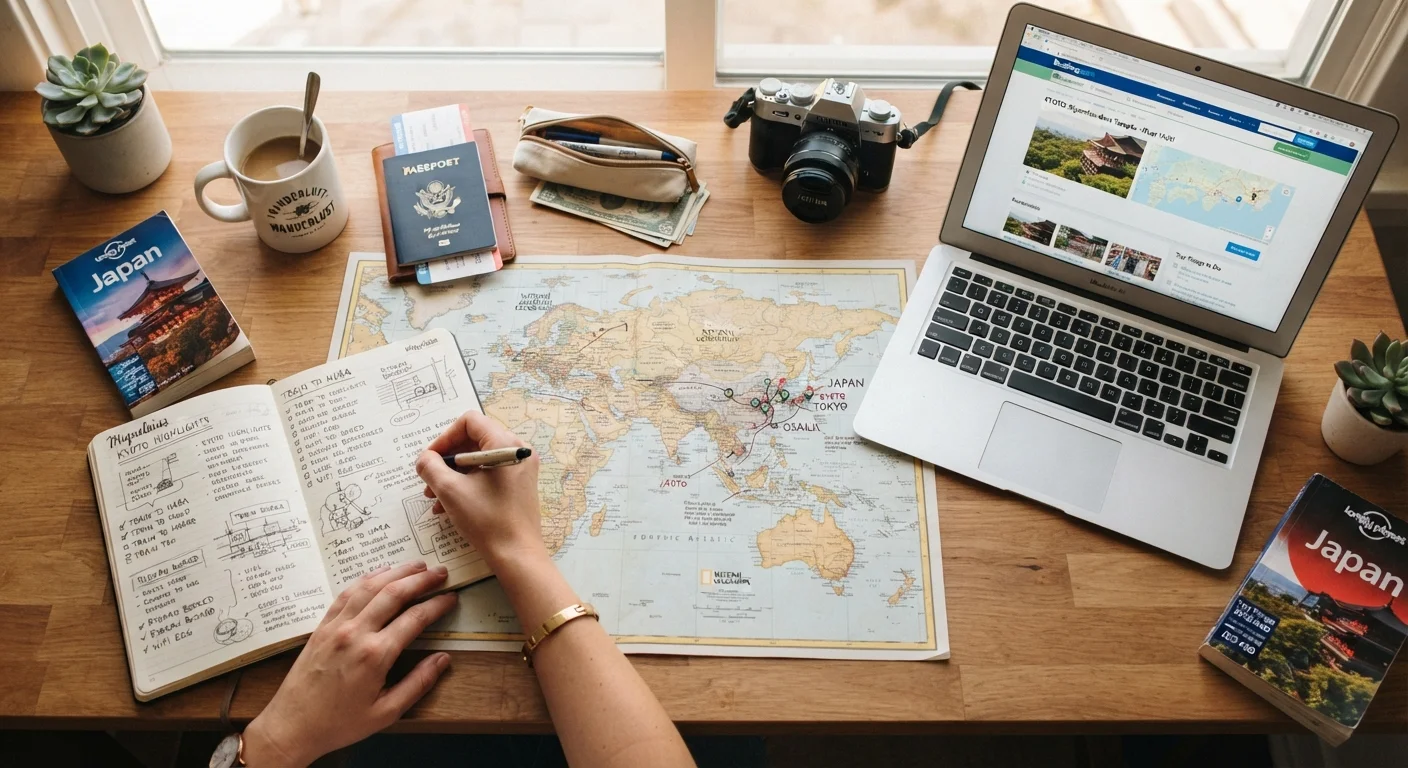
As you work through each step, record your findings in one place: a notes app, a shared document, or even a paper notebook. When you need to revisit a decision or share information with travel companions, having everything in one location saves significant time.
Verifying what you find
Travel information on blogs, forums, and review sites can be months or years out of date. For anything with real consequences, cross-check against official sources: your government's foreign affairs or state department website for advisories and entry requirements, the destination country's embassy or consulate for visa details, and the airline or transport operator directly for schedule and baggage rules.
Health-related research deserves the same care. General guidance on vaccination timelines and pre-travel medical prep is covered in travel health prep: vaccinations, medications, and when to see a doctor. For travelers with ongoing health conditions, traveling with specific health needs covers what to plan well in advance. Always consult a qualified healthcare professional for personal medical decisions before travel.
For a broader look at staying safe before and during any journey, the travel safety complete guide and the pre-trip safety checklist are practical companions to this framework.
This article is for general informational purposes only. Entry requirements, travel advisories, health recommendations, and local conditions change frequently. Always verify current information through official government sources and qualified professionals before making travel decisions.