
Travel Health Prep: Vaccinations, Medications, and When to See a Doctor Before You Fly

Key Takeaways
- Schedule a travel medicine consultation at least 4 to 6 weeks before departure to allow time for vaccines to take effect.
- Some destinations require proof of specific vaccinations for entry; verify requirements with official government sources before booking.
- Carry a written medication list and enough supply to last beyond your planned return date in case of delays.
- Travelers with chronic conditions, pregnancy, or compromised immunity need specialist input, not just general guidance.
- Travel health prep is part of a broader pre-trip safety plan, not a separate last-minute errand.
Why pre-travel health prep matters
Many travelers think about vaccinations only when a visa application asks for proof, but the reasoning for pre-trip health preparation goes further than entry requirements. Some vaccine-preventable diseases are uncommon in the United States yet circulate widely in parts of Africa, South Asia, and Latin America. Exposure risk changes with destination, season, altitude, and planned activities. A traveler hiking rural trails faces different exposures than someone attending a city conference.
The pre-trip research process should include a health component alongside logistics like accommodation and transportation. Starting health prep early gives you time to act on what you find, because some vaccines require multiple doses spaced weeks apart, and others need time to build immunity before you arrive.
When and where to get travel health advice
A travel medicine clinic or a physician trained in travel medicine is the right starting point for most international trips. General practitioners can handle routine vaccination updates, but destination-specific disease risk, antimalarial options, and altitude sickness protocols require a more focused assessment. The U.S. Centers for Disease Control and Prevention (CDC) maintains destination-specific health notices and a searchable traveler health database at cdc.gov/travel, which is a reliable public reference before any appointment.
Book your appointment at least 4 to 6 weeks before departure. That window accommodates multi-dose vaccine series (hepatitis A and B, for example, each involve more than one shot) and allows your immune system time to respond before exposure. If your trip is less than two weeks away, still go: a clinician can prioritize the most time-sensitive interventions and advise on alternatives.
Special populations need specialist input
Travelers who are pregnant, immunocompromised, traveling with young children, or managing chronic conditions face risks and medication considerations that go beyond standard travel health advice. General guidance does not substitute for individualized clinical assessment in these cases. Consult a travel medicine specialist or your treating physician well in advance of any international trip.
For a broader view of how health prep fits into your overall safety planning, see the complete travel safety guide.
Vaccinations: routine, recommended, and required
Travel vaccines fall into three practical categories. Routine vaccines are those you should be current on regardless of travel: measles-mumps-rubella (MMR), tetanus-diphtheria-pertussis (Tdap), seasonal flu, and COVID-19. Travel can expose you to outbreaks of diseases that are well-controlled in the U.S. but not elsewhere, so being up to date matters.
Recommended vaccines depend on your destination and itinerary. Hepatitis A is recommended for most international travel because it spreads through contaminated food and water. Typhoid, yellow fever, Japanese encephalitis, and meningococcal vaccines are destination-specific. Your clinician will cross-reference your itinerary against current outbreak data to guide these decisions.
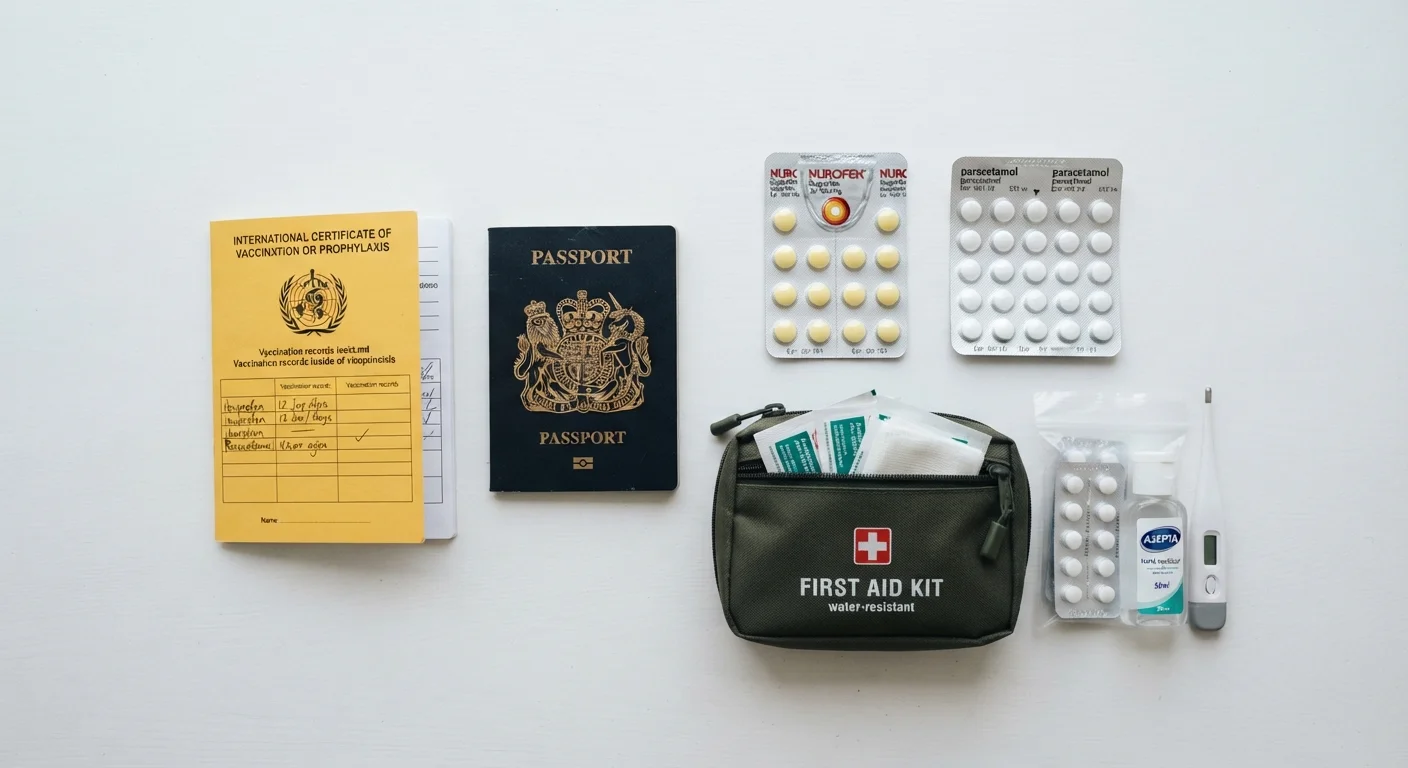
Required vaccines are a legal matter: certain countries, particularly those at risk for yellow fever transmission, require proof of yellow fever vaccination for entry. Some require this only if you are arriving from another high-risk country. Requirements change, so verify with the destination country's embassy or official health authority before your trip, and carry your International Certificate of Vaccination or Prophylaxis (often called the yellow card) if applicable.
Schedule a travel medicine appointment at least 4 to 6 weeks before departure
Some vaccines require multiple doses over several weeks, and immunity takes time to develop after vaccination. Waiting until the week before departure may leave you unprotected or unable to complete a full series.
Check both CDC and destination-country sources for current health requirements
Entry requirements and outbreak conditions change. A single source is rarely enough to give you the complete picture, and outdated information can result in denied boarding or entry.
Carry medications in original containers with a written medication list
Foreign pharmacies and emergency providers may not recognize brand names used in the U.S. Generic drug names and documented dosages help clinicians abroad treat you accurately if you cannot communicate clearly.
Discuss destination-specific preventive medications before departure, not mid-trip
Antimalarials and altitude medications require lead time: some must be started days or weeks before arrival to be effective. Obtaining and starting them abroad is often impractical and sometimes unsafe without prior evaluation.
Bring documentation for medical devices and injectable medications
Customs and security in many countries flag medical equipment and syringes without paperwork. A provider letter explaining the device or medication prevents delays and potential confiscation.
Medications to discuss with your provider
Beyond vaccines, a pre-travel appointment is the right time to discuss medications. Malaria prophylaxis is the most common example: no vaccine exists for malaria, so travelers to endemic regions take prescription medication before, during, and after the trip. The choice of drug depends on the destination, your health history, and tolerance for side effects. This is a clinical decision, not a self-guided one.
Travelers prone to gastrointestinal illness may be prescribed an antibiotic for self-treatment of traveler's diarrhea if professional care is not quickly accessible. Those with altitude-sensitive conditions may discuss acetazolamide for altitude sickness prevention. In each case, the goal is to have a plan before you need it, not to improvise abroad.
Carry all prescription medications in their original labeled containers. Bring enough supply to cover your trip plus several extra days in case of flight delays or disruptions. A written list of your medications, including generic names, dosages, and the conditions they treat, is useful if you need care from a foreign provider. If your itinerary spans many time zones, ask your provider how to adjust dosing schedules.
Travelers with specific health conditions should also read the advance planning guide for health needs, which covers documentation logistics and communication with healthcare providers abroad.
Health documentation and insurance
Carry copies of your vaccination records, prescription labels, and any relevant medical history summary. If you use a device such as a CPAP machine or carry injectable medications, have documentation from your provider explaining the medical necessity, since these items attract scrutiny at customs and security checkpoints.
Travel health preparation also connects to financial protection. Medical evacuation from a remote location can cost tens of thousands of dollars, and standard U.S. health insurance often provides limited or no coverage abroad. The risks of traveling without insurance extend beyond hospital bills to evacuation, repatriation, and trip interruption. Review your existing coverage before departure and understand what it does and does not cover internationally.
The pre-trip safety checklist includes a health documentation section that can help you confirm nothing is missing before you leave.
This article provides general travel health information for educational purposes only. It is not medical advice. Consult a qualified healthcare professional or travel medicine specialist for guidance specific to your health history, destination, and itinerary. For urgent symptoms or emergencies, seek immediate medical care.