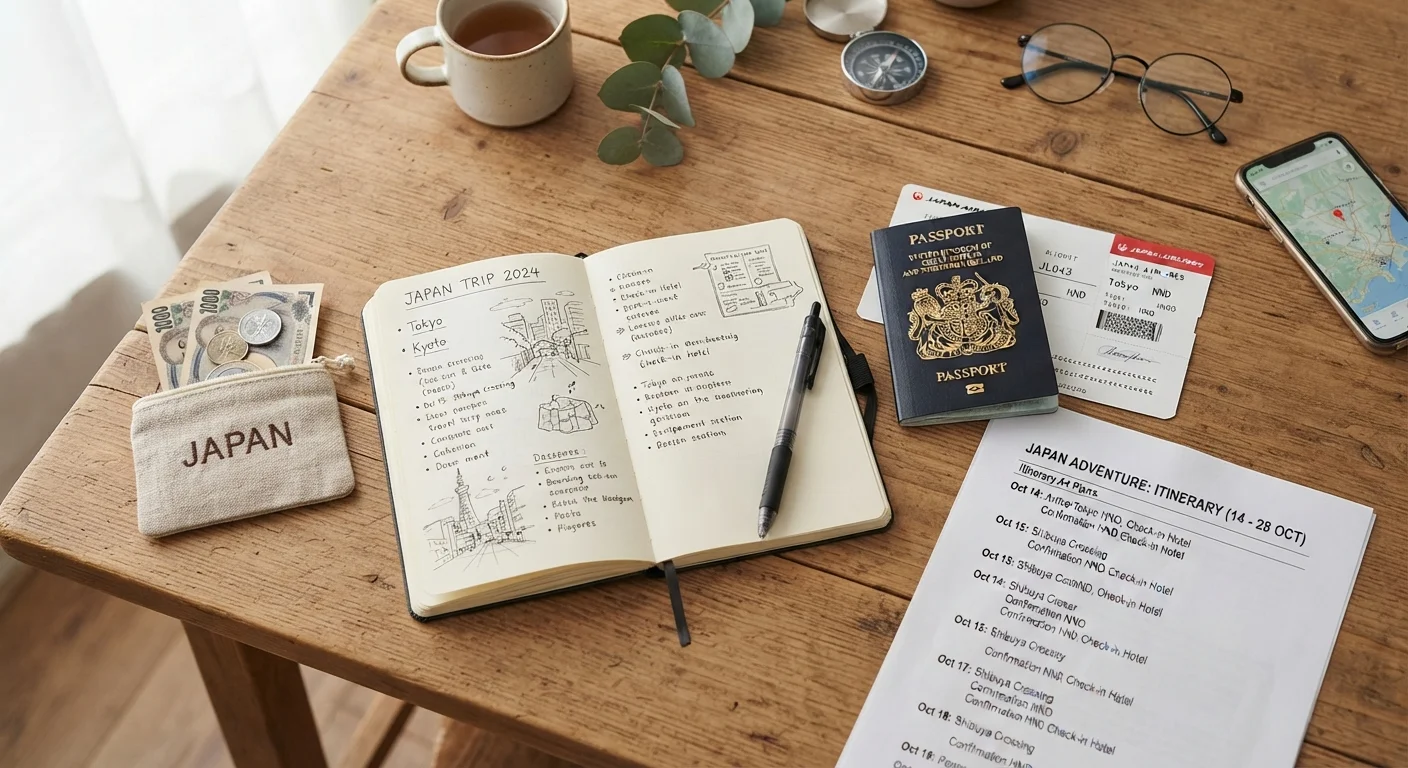
This checklist follows a stage-by-stage order: research, documents and logistics, bookings, health and safety prep, packing, and final pre-departure checks. Work through it in sequence rather than jumping to the packing section first. Decisions made early, such as visa requirements and travel insurance, affect every later stage.
Verify passport validity; most countries require at least six months of validity beyond your travel dates, so check the specific rule for your destination.Must
Check entry requirements, including visa rules, for every country on your itinerary using your government's official travel portal.Must
Review your government's travel advisory for the destination and note any areas, conditions, or local laws that require extra attention.Must
Research the destination's climate for your travel dates so you pack the right clothing and plan activities accordingly.Should
Identify the local currency, general price levels, and whether cards are widely accepted or cash is preferred.Should
Budgeting
Build a trip budget covering flights, accommodation, ground transport, food, activities, and a contingency reserve of at least 10 to 15 percent.Must
Account for fees that are easy to overlook: checked-bag charges, airport transfers, visa fees, and entry taxes.Should
Notify your bank and credit card providers of your travel dates and destinations to avoid having transactions blocked.Must
Bookings
Book flights and confirm that names on tickets exactly match the names on travel documents.Must
Reserve accommodation for every night of the trip, or have a clear plan for nights where you intentionally stay flexible.Must
Arrange airport transfers or confirm how you will get between the airport and your first accommodation.Should
Book any activities, tours, or entry tickets that require advance reservation; popular sites often sell out weeks ahead.Should
Purchase travel insurance at or near the time of your first booking so cancellation coverage applies from that date.Must
Read the policy document before you travel; confirm what is and is not covered, including medical evacuation, trip cancellation, and delays.Must
Consult a healthcare provider or travel medicine clinic about recommended or required vaccinations and any health precautions for your destination.Must
Assemble a travel health kit with prescription medications, copies of prescriptions, and any over-the-counter items you rely on regularly.Should
Share your full itinerary and emergency contact details with someone at home. Review broader safety practices at Travel Safety from the Ground Up.Must
Documents and copies
Make two copies of all critical documents: passport, visa, insurance policy, and booking confirmations. Store one set digitally in a secure location and carry one physical set separately from the originals.Must
Download offline maps and any apps you will rely on at the destination while you still have reliable internet.Should
Write down key phone numbers (accommodation, local emergency services, your insurer's claim line) somewhere accessible without a phone.Should
Packing
Write a packing list specific to this trip's climate, activities, and duration before opening a single drawer or closet.Should
Check airline carry-on and checked-bag size and weight limits before packing, since these vary across carriers.Must
Pack all essential medications, travel documents, and one change of clothes in your carry-on in case checked luggage is delayed.Must
Confirm that any liquids, gels, or restricted items comply with airport security rules for every country you are transiting.Must
Final checks, 48 to 72 hours before departure
Check in online when the window opens and download or print boarding passes.Must
Reconfirm accommodation and transfer bookings; verify addresses and check-in times.Must
Check the departure airport's current security wait times and any terminal changes or construction that could affect your route.Should
Charge all devices, pack cables and adaptors suitable for your destination's outlet type, and confirm your accommodation's Wi-Fi situation.Should
What to do in the final 72 hours
The days immediately before departure are not the time to start planning; they are for confirming that everything you arranged earlier still holds. Airlines change flight times, accommodations occasionally have system errors, and passport checks catch a surprising number of problems that could have been fixed weeks earlier.
Verify entry documents before you book
Flight and accommodation cancellation fees can be significant. Before committing to any booking, confirm that every traveler in your party has the right passport validity, visas, and any required health documentation for the destination. Entry requirements can change; always check the official government source for your nationality, not third-party summaries.
Run through your documents, confirmations, and bag one final time using the last group in the checklist above. For a detailed walkthrough of what happens from the moment you leave home through arrival, the anatomy of a travel day covers each stage. Safety-specific pre-departure steps are in the pre-trip safety checklist.
Travel Smarter Editorial Team is the collective byline for our editorial team and contributor network. Articles published under this byline or an editorial pen name are researched, written, and reviewed according to our editorial standards for clarity, consistency, and independence before publication.
Disclaimer: The content on this site is for informational purposes only and is not a substitute for professional advice. Always consult a qualified professional for guidance specific to your situation.