

Key Takeaways
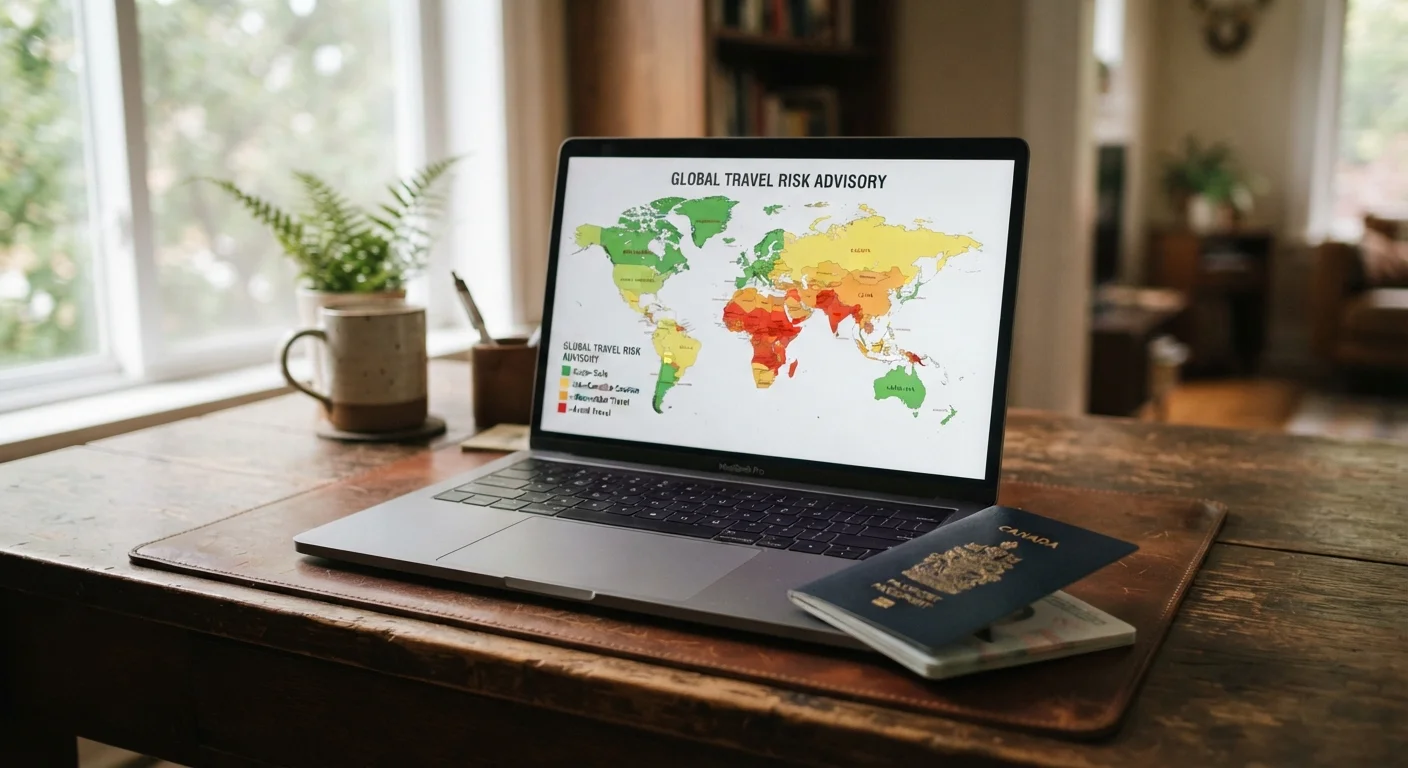
- The U.S. State Department rates destinations on a four-level scale from Level 1 (exercise normal precautions) to Level 4 (do not travel).
- Advisories reflect conditions at the time of publication and can change quickly; always check before departure and again close to your travel date.
- An advisory is one input, not a final verdict. Personal circumstances, trip purpose, and destination-specific context all matter.
- Level 3 and Level 4 advisories can affect travel insurance coverage and employer duty-of-care obligations.
- Always verify entry requirements, local laws, and health conditions through official government sources before traveling.
Government travel advisory
A government travel advisory is an official assessment published by a national foreign affairs agency that rates the risk of traveling to a specific country or region. Advisories draw on diplomatic reports, safety data, and on-the-ground conditions to assign a risk level. They are public documents designed to help citizens make informed decisions before and during travel.
In the United States, the Department of State issues advisories on a four-level scale. Other governments, including those of Canada, the United Kingdom, and Australia, publish similar systems with their own tier structures and terminology.
What advisories actually measure
Travel advisories do not measure whether a destination is enjoyable or affordable. They measure the likelihood that a traveler could face serious harm, be unable to get consular assistance, or encounter conditions that limit freedom of movement. The factors that feed into a rating include crime rates, terrorism threat levels, civil unrest, armed conflict, natural disaster risk, and the local government's capacity to respond to emergencies involving foreign nationals.
The U.S. State Department combines these factors into a single country-level rating, though advisories often include regional breakdowns. A country might carry an overall Level 2 rating while a specific province or border zone carries a Level 4 due to cartel activity or active conflict. Reading the full advisory text, not just the headline number, is what gives the rating practical meaning.
Other agencies contribute parallel assessments. The CDC publishes Travel Health Notices separately, covering disease outbreaks and vaccination recommendations. The two systems are independent; a destination can have a low State Department risk level and a high CDC health alert at the same time. For travelers with specific medical needs, the health planning guide covers how to layer those considerations into pre-trip preparation.
How the four-level U.S. scale works in practice
Level 1 (exercise normal precautions) applies to destinations where the State Department has assessed no unusual threat environment. Travelers should still use common sense, but no specific warnings attach to the destination.
Level 2 (exercise increased caution) signals that some risks are present and worth monitoring. This might reflect petty crime in tourist areas, occasional civil unrest, or elevated health concerns. Many popular travel destinations sit at Level 2 for extended periods without significant incident for most visitors.
Level 3 (reconsider travel) is a meaningful escalation. The government is saying that conditions make travel inadvisable for most people without a specific reason to go. At this level, travel insurance policies often contain exclusion clauses, and corporate travel managers typically restrict non-essential business trips.
Level 4 (do not travel) is reserved for active conflict zones, countries with collapsed civil order, or situations where the U.S. government has withdrawn consular services. If you travel to a Level 4 destination, you may have no access to embassy assistance in an emergency.
Enroll in STEP before you leave
The Smart Traveler Enrollment Program (STEP) is a free service from the U.S. State Department. Registering your trip lets the nearest U.S. embassy contact you in an emergency and automatically sends you alerts when advisory conditions change at your destination. Enrollment takes a few minutes at step.state.gov.
For a broader framework on how advisories fit into overall trip safety planning, the travel safety complete guide covers pre-trip preparation through on-the-ground awareness.
How to read an advisory beyond the level number
The number is a summary, not a complete picture. Each advisory includes written narrative that names the specific threats driving the rating, the regions most affected, and any groups with heightened exposure (such as LGBTQ+ travelers, journalists, or dual nationals). This text tells you whether the risk is concentrated in a border region you have no plans to visit or spread across the entire country.
Advisories also note whether the U.S. government restricts its own employees' travel within a country. If embassy staff face movement restrictions, that signals limited consular reach and is worth weighing separately from the headline level.
Conditions on the ground can shift before an advisory is formally updated. Natural disasters, political unrest, and sudden travel disruptions can develop faster than any advisory system can track. Enrolling in the State Department's Smart Traveler Enrollment Program (STEP) delivers email alerts when conditions change at your destination.
Using advisories as one tool, not the only tool
An advisory reflects a government's aggregate assessment for a broad audience. It cannot account for your specific itinerary, your experience level, your language skills, or the fact that you are visiting family in a city that happens to be in a country with an elevated national rating.
Insurance coverage is one concrete area where the advisory level has direct, practical consequences. Policies vary widely, but many standard travel insurance products exclude claims arising from travel to destinations under a Level 3 or Level 4 advisory at the time of departure. Read the policy exclusions before booking, not after.
Digital safety is another consideration that advisories rarely address in detail. Destinations where surveillance of communications is common or where foreign travelers face heightened scrutiny carry risks that sit outside the traditional advisory framework. The public Wi-Fi safety guide covers practical steps for reducing digital exposure regardless of destination risk level.
This article provides general travel information and is not a substitute for official government guidance. Verify current advisory levels, entry requirements, and local conditions at travel.state.gov and through your country's relevant foreign affairs agency before traveling.