

Key Takeaways
- The rate you see advertised is rarely the rate you get; fees and margins are almost always added.
- Airport and hotel exchange counters typically offer less favorable rates than other options.
- Dynamic currency conversion lets you pay in your home currency abroad, but it usually costs more.
- Keeping a small amount of local cash on hand is useful for places that do not accept cards.
- Always verify current entry requirements and local payment norms with official sources before traveling.
Currency exchange abroad
Currency exchange is the process of converting money from your home currency into the local currency of a destination country. The rate at which one currency converts to another is called the exchange rate, and it changes constantly based on global financial markets. Every conversion also carries some cost, whether a flat fee, a percentage margin built into the rate, or both.
The mid-market rate (sometimes called the interbank rate) is the midpoint between buy and sell prices on global markets. Most consumer exchange services add a margin on top of this rate, which is how they earn revenue.
How exchange rates actually work
An exchange rate tells you how much of one currency you receive for a unit of another. If the rate between the US dollar and the euro is 0.92, one dollar converts to 0.92 euros. That rate moves throughout each trading day based on factors including interest rates, inflation, and market demand.
The rate consumers see at exchange counters or on banking apps is almost never the mid-market rate. Providers add a margin, which is the difference between the rate they receive and the rate they offer you. That margin, sometimes combined with a flat fee, is how currency exchange services generate revenue. A rate that looks attractive in an advertisement may still carry a wide margin built invisibly into the numbers.
This is worth understanding before your trip because the gap between providers can be meaningful over a full vacation's worth of spending. How foreign currency, cards, and local ATMs work is a practical place to think through your payment approach before leaving home.
Common ways travelers access local currency
Most travelers use some combination of the following options.
- ATMs at the destination. Withdrawing cash from a local ATM converts funds at a rate set by your bank, plus any ATM operator fees. The rate is often close to the mid-market rate, but foreign transaction fees and withdrawal fees add to the total cost. Check your account terms in advance.
- Bank or credit union exchanges before departure. Some US banks allow customers to order foreign currency for pickup or delivery. Rates and availability vary by currency, and less common currencies may take several days to obtain.
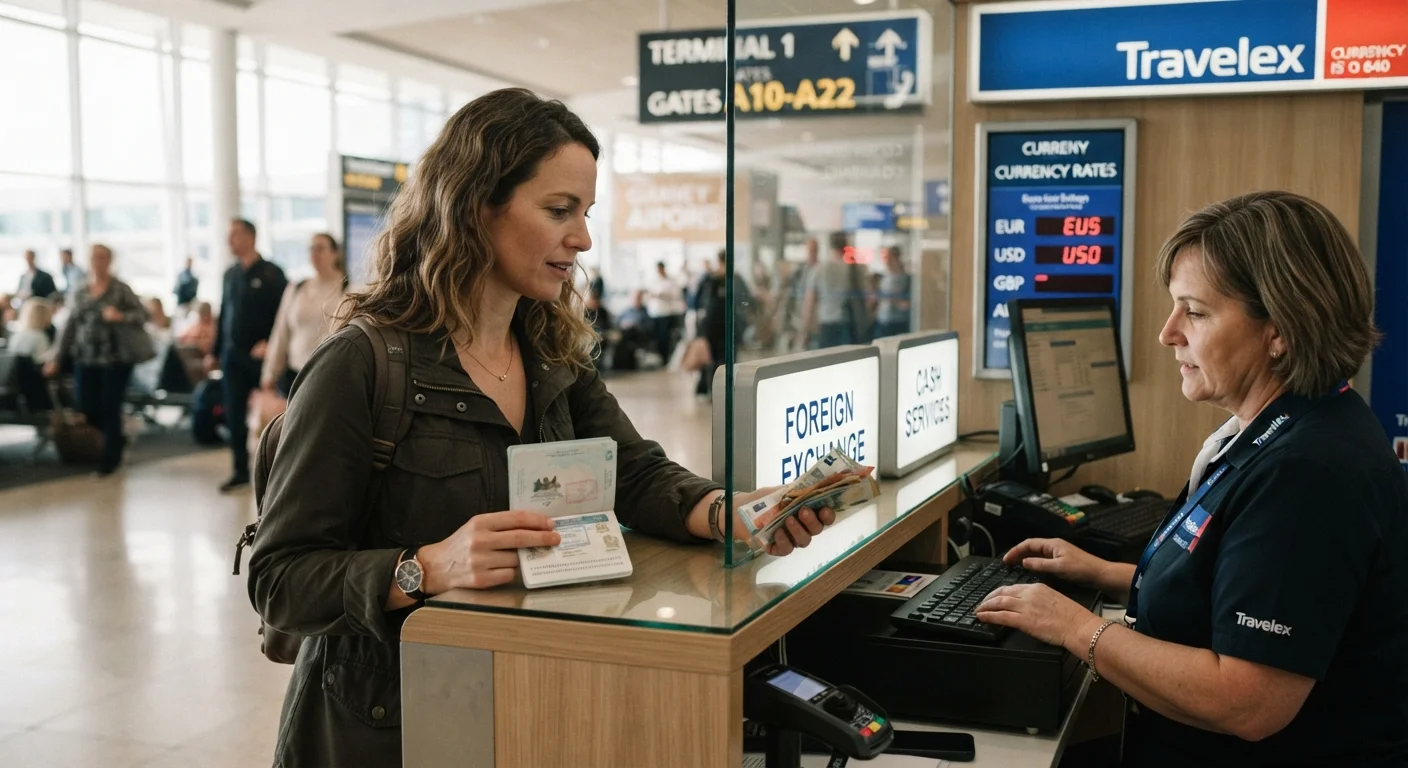
- Airport and hotel counters. Convenient but typically the most expensive option. These locations operate in high-traffic, low-competition environments, which allows them to offer wider margins. Using them for a small emergency amount is reasonable; using them as your primary source is not.
- Credit cards with no foreign transaction fees. For countries where card acceptance is widespread, paying by credit card can be efficient. The card network (Visa or Mastercard) applies its own conversion rate, which tends to be close to the mid-market rate, before your issuer adds any fees.
Before you withdraw abroad
Check whether your ATM card has a daily withdrawal limit that differs from your domestic limit. Some banks apply lower limits on international withdrawals. Knowing this in advance prevents a situation where you need more cash than your card will dispense in a single day.
Dynamic currency conversion: a cost to recognize
At many foreign merchants and ATMs, you may be asked whether you want to pay in the local currency or in US dollars. This is dynamic currency conversion (DCC). The merchant or ATM operator sets the conversion rate, and it almost always includes a markup above what your bank would charge for the same transaction.
The safest approach is to choose the local currency and let your own bank or card issuer handle the conversion. The choice is sometimes framed as a convenience, but the financial outcome is generally worse for the traveler. If an ATM screen selects the dollar option by default, look for the option to change it before confirming the transaction.
Planning ahead: what to sort out before you go
A few practical steps before departure can reduce friction at the destination.
Notify your bank and card issuers about your travel dates and destination countries. A fraud block on your card when you are abroad is more than an inconvenience. Also confirm what fees apply to foreign transactions and ATM withdrawals on each card you plan to use.
Research the payment norms at your destination. Some countries are largely cashless; others rely heavily on physical currency, particularly outside major cities. Carrying no cash in a cash-dependent area creates real problems. The practical side of staying connected on the road matters too, since mobile payment apps and digital banking both depend on a working device.
For destinations with less common currencies, check availability in advance. Your bank may need several days to obtain the currency, and exchanging at your destination may be the only realistic option.
Travel costs extend beyond exchange fees. Financial exposures like trip cancellation and lost property are worth reviewing separately as part of your overall trip budget.
This article is for general informational purposes only and does not constitute financial or investment advice. Exchange rates, fees, and policies vary by provider and change frequently. Consult your bank or a licensed financial professional for guidance specific to your situation.