

Key Takeaways
- Snacking is not inherently harmful or helpful; its effect depends on what you eat and when.
- Snacks that include protein or fiber tend to support steadier energy and appetite control.
- Eating out of boredom or habit, rather than hunger, is a common pattern that can displace nutritious meals.
- People with certain health conditions or at specific life stages may have different snacking needs.
- Reading food labels carefully helps you spot snacks that are marketed as healthy but are not.
Helps manage hunger between meals
A small snack with protein or fiber can prevent intense hunger before the next meal, which often leads to eating more slowly and in smaller amounts when mealtime arrives.
Can close nutritional gaps in the day
For people who struggle to meet their vegetable, fruit, or protein needs through three meals alone, a planned snack is a practical way to add nutrients without dramatically changing meal patterns.
Supports energy consistency for active people
People with higher activity levels, including athletes and those who do physical labor, often need more frequent food intake to sustain energy and support muscle recovery.
Useful for certain life stages and health conditions
Children, pregnant people, and older adults with smaller appetites may rely on snacks to meet caloric and nutrient needs that three standard meals alone do not cover.
Habitual eating can add calories without nutrients
Snacking driven by boredom, stress, or routine rather than hunger often involves ultra-processed foods high in added sugar, salt, and refined carbohydrates with limited nutritional value.
Can displace balanced, nutrient-dense meals
When snacks become too frequent or too large, they reduce appetite for meals, which are typically where people get the greatest variety of vitamins, minerals, and fiber.
Misleading packaging makes quality hard to judge
Many snack foods carry health-adjacent claims on the front of pack that are not backed by regulated definitions, making it easy to misjudge how nutritious a product actually is.
Timing can disrupt natural hunger and fullness signals
Eating at very frequent intervals throughout the day may make it harder to recognize true hunger, which can complicate efforts to eat in amounts that match the body's actual energy needs.
Our Verdict
Snacking works well when it addresses genuine hunger, contributes useful nutrients, and fits within an overall balanced eating pattern. It works against good nutrition when it becomes habitual, displaces meals, or adds mostly refined carbohydrates and added sugar with little else.
Anyone who wants a clearer framework for deciding whether, and how, to include snacks in their daily eating habits.
What snacking actually means for your diet
A snack is simply any food or drink consumed between main meals. That definition covers a wide range: a handful of almonds, a bag of chips, a piece of fruit, or a protein-rich yogurt. Because the category is so broad, blanket judgments about snacking tend to be less useful than questions about context.
Your overall eating pattern matters far more than any single snack. If you want a grounding framework before going further, the fundamentals of nutrition is a good place to start. Understanding macronutrients, fiber, and energy balance makes it easier to evaluate whether a given snack fits your needs.
Where snacking can help
Helps manage hunger between meals
A small snack with protein or fiber can prevent intense hunger before the next meal, which often leads to eating more slowly and in smaller amounts when mealtime arrives.
Can close nutritional gaps in the day
For people who struggle to meet their vegetable, fruit, or protein needs through three meals alone, a planned snack is a practical way to add nutrients without dramatically changing meal patterns.
Supports energy consistency for active people
People with higher activity levels, including athletes and those who do physical labor, often need more frequent food intake to sustain energy and support muscle recovery.
Useful for certain life stages and health conditions
Children, pregnant people, and older adults with smaller appetites may rely on snacks to meet caloric and nutrient needs that three standard meals alone do not cover.
The potential benefits of snacking are most apparent when snacks are deliberately chosen rather than grabbed out of convenience. A small amount of food between meals can prevent the kind of intense hunger that leads to eating quickly or in larger amounts than you intended at your next meal.
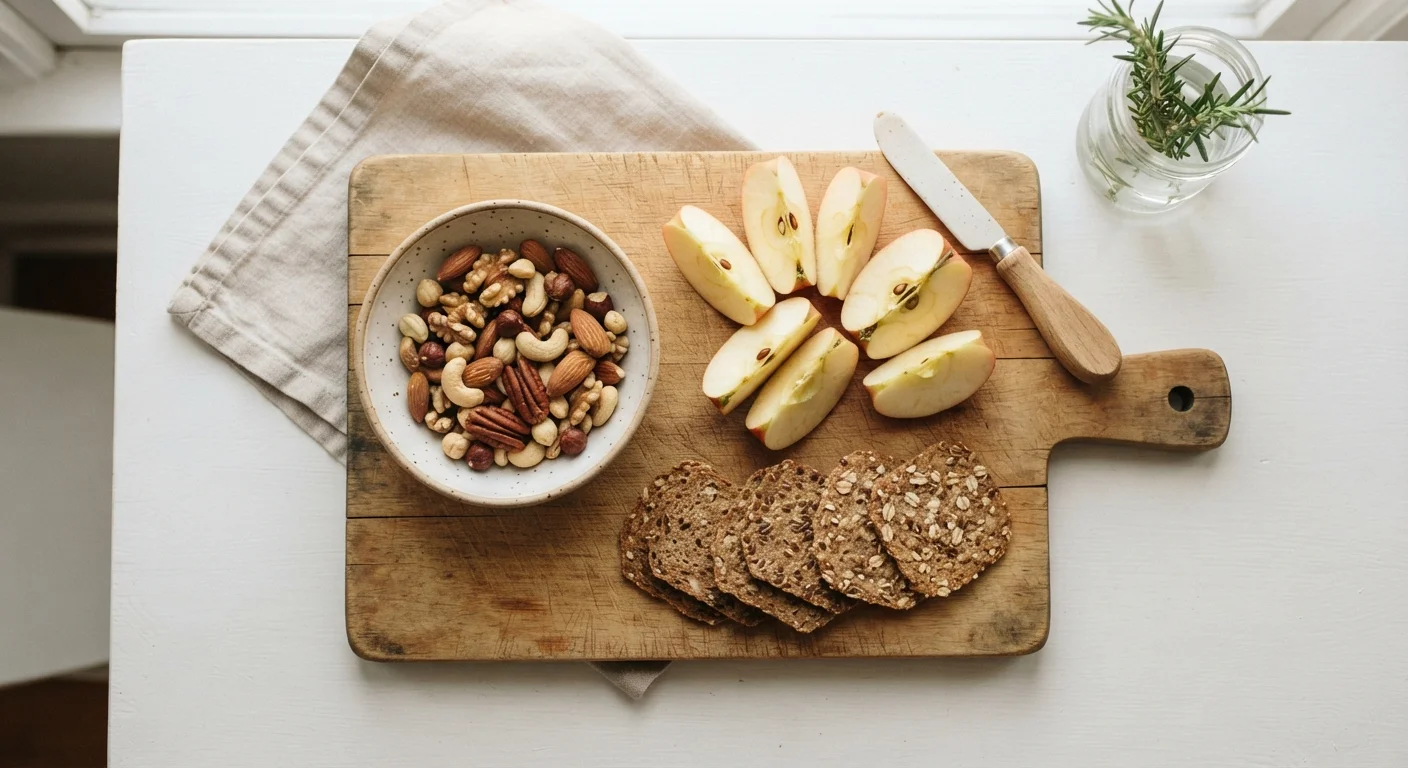
Protein and fiber are the two nutrients most associated with satiety, the sense of fullness that carries you between meals. Snacks that combine both, such as an apple with nut butter or plain Greek yogurt with seeds, tend to have a more lasting effect than those built mostly around refined carbohydrates and sugar.
Nutritional needs also shift across life stages. Children, adolescents, pregnant people, and older adults often have higher energy demands or more limited appetite windows, and planned snacking can help meet those needs. For a broader look at how dietary priorities change over time, see nutritional needs across life stages.
Where snacking can work against you
Habitual eating can add calories without nutrients
Snacking driven by boredom, stress, or routine rather than hunger often involves ultra-processed foods high in added sugar, salt, and refined carbohydrates with limited nutritional value.
Can displace balanced, nutrient-dense meals
When snacks become too frequent or too large, they reduce appetite for meals, which are typically where people get the greatest variety of vitamins, minerals, and fiber.
Misleading packaging makes quality hard to judge
Many snack foods carry health-adjacent claims on the front of pack that are not backed by regulated definitions, making it easy to misjudge how nutritious a product actually is.
Timing can disrupt natural hunger and fullness signals
Eating at very frequent intervals throughout the day may make it harder to recognize true hunger, which can complicate efforts to eat in amounts that match the body's actual energy needs.
The main risk with frequent snacking is that it can displace full meals, which are typically where most people get the widest range of nutrients. When snacks become a substitute for sitting down to eat, the diet can become less varied and less balanced over time.
Habitual snacking, eating because of the time of day, a trigger in the environment, or boredom rather than physical hunger, is a common pattern that is worth noticing. It does not make snacking morally wrong, but it does mean the calories add up without contributing much nutritionally.
Many snacks marketed as nutritious options rely on front-of-pack claims that are not always what they seem. Words like 'natural,' 'light,' or 'multigrain' carry no standard regulated definition in most contexts. understanding which food label claims to question can help you make more informed choices at the grocery store.
Putting snacking in practical context
~25%
Of daily calories from snacks in US adults
Research published in nutrition epidemiology literature has found that snacks account for roughly a quarter of total daily energy intake among many US adults, making snack quality consequential.
2 in 3
US adults who snack daily
National dietary survey data consistently show that the majority of American adults report eating at least one snack per day, with many eating two or more.
The most useful question before reaching for a snack is whether you are genuinely hungry or responding to something else. Physical hunger builds gradually; it does not usually appear suddenly five minutes after a full meal. If hunger is real, a snack that includes some protein, fat, or fiber will serve you better than one built almost entirely on refined starch or added sugar.
Portion size matters too. A snack is by definition a smaller amount of food than a meal. Eating from the full package rather than a measured portion makes it harder to stay aware of how much you have actually consumed.
For people managing chronic conditions such as diabetes, blood sugar-related disorders, or gastrointestinal conditions, the timing and composition of snacks can have specific clinical relevance. In those situations, guidance from a registered dietitian or physician matters more than any general rule. If you are working on building meals that are nutritionally balanced without obsessive tracking, building a balanced plate without counting every gram offers a practical visual approach that translates well to snacks too.
This article is for general informational purposes only and is not a substitute for personalized nutrition or medical advice. If you have questions about your dietary needs or a health condition, consult a qualified healthcare professional or registered dietitian.