

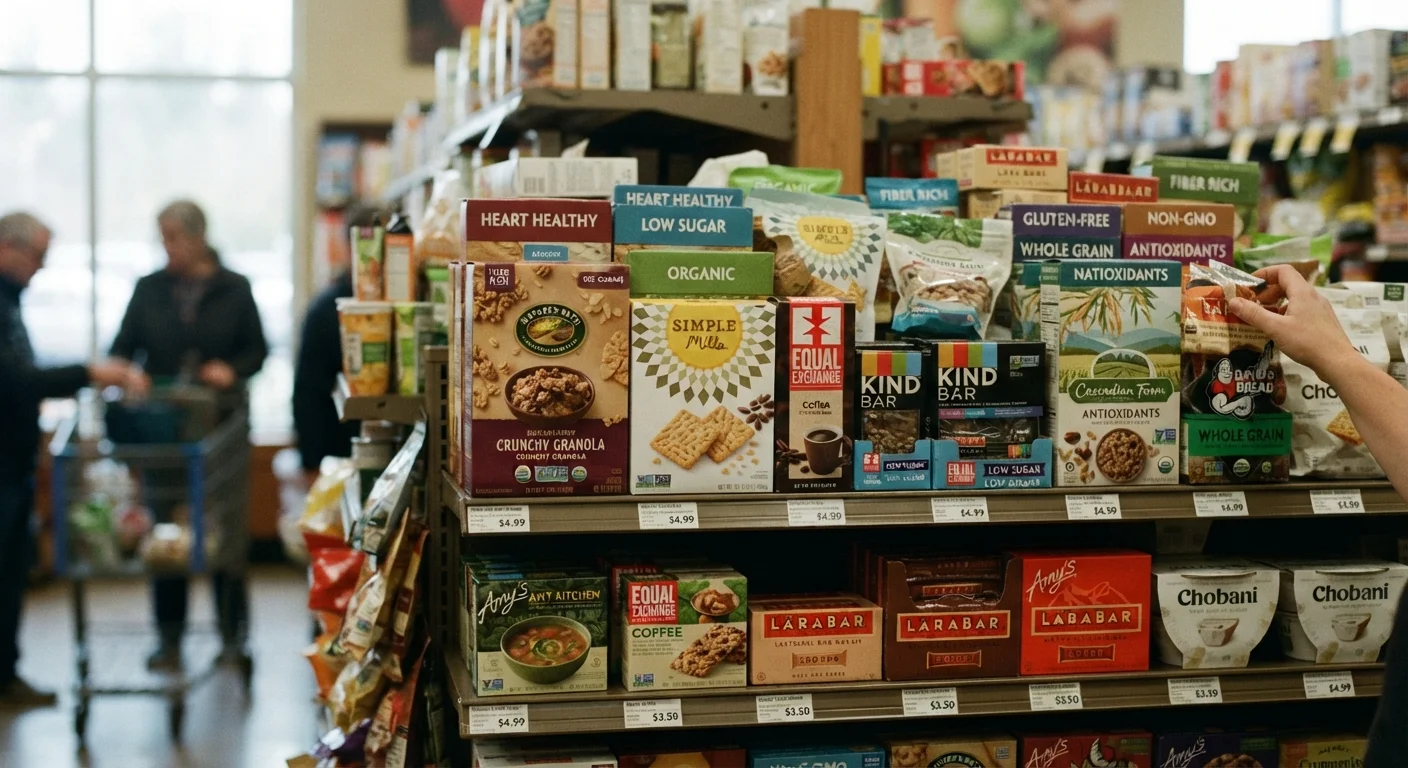
Key Takeaways
- Terms like 'natural' and 'multigrain' have no standardized legal definitions under FDA rules.
- Low-fat products often replace fat with added sugar, leaving overall nutrition unchanged or worse.
- The Nutrition Facts panel and ingredient list are more reliable than any front-of-pack claim.
- Serving sizes on labels are frequently smaller than what most people actually eat in one sitting.
- A claim can be technically truthful and still create a misleading impression of healthfulness.
Why front-of-pack claims are designed to persuade, not inform
Food packaging is marketing material before it is anything else. Manufacturers place health-adjacent words on the front panel precisely because those words influence what ends up in shopping carts. When a bag of chips reads 'made with real vegetables' or a cereal box promises 'supports immunity,' the impression is clear: this product is good for you. The reality is more complicated.
The U.S. Food and Drug Administration (FDA) regulates some label terms tightly, such as 'calorie-free' and 'low sodium,' which have specific numerical thresholds. Many other terms, though, sit in a regulatory grey zone where manufacturers have wide latitude. That gap between regulated and unregulated language is where most consumer confusion lives. Building a habit of turning the package over and reading the Nutrition Facts panel is a more reliable starting point than anything on the front. For anyone building that foundation, this introduction to nutrition basics covers the core concepts worth knowing first.
Common mistakes shoppers make when reading food labels
The errors below are not signs of carelessness. They follow predictably from how packaging is designed and what terms most people assume mean something precise.
Treating 'natural' as a meaningful health claim.
Why it happens: The word 'natural' carries strong positive associations, and shoppers reasonably assume it signals something about ingredients or processing. The FDA has not established a formal definition for 'natural' on food labels, so manufacturers apply it broadly.
Assuming 'low-fat' means fewer calories or a healthier product overall.
Why it happens: Fat reduction became synonymous with health improvement during decades of dietary messaging, so 'low-fat' reads as an unambiguous positive. Manufacturers know this.
Confusing 'multigrain' or 'made with whole grain' with 'whole grain.'
Why it happens: Both phrases sound like they describe the same thing. 'Multigrain' means the product contains more than one type of grain, none of which need to be whole. 'Made with whole grain' can mean a small amount of whole grain is present alongside refined flours.
Taking 'light' or 'lite' to mean the product is low in calories.
Why it happens: The FDA defines 'light' as a reduction of at least one-third in calories or 50% in fat compared to a reference product, but it can also legally refer to color or texture, as in 'light in color' or 'light in flavor.'
Ignoring serving size when assessing a product's sugar or sodium content.
Why it happens: Most people read the nutrient numbers on a label as applying to the whole package, especially for single-serve-looking items like a bottle of juice or a small bag of nuts.
Reading labels critically connects directly to broader patterns in how health information gets distorted. The same skills that help you spot a vague food claim also help with evaluating misleading health content online.
What the Nutrition Facts panel actually tells you
The Nutrition Facts panel is federally standardized, which makes it far more useful than front-of-pack language. A few areas deserve close attention.
Serving size is listed at the top because every number that follows is calculated per serving, not per package. A single bag of crackers might declare two and a half servings, which means doubling or tripling the sodium, sugar, and calorie figures if you eat the whole bag.
Added sugars appear as a separate line under total sugars, a requirement introduced in the updated FDA label format. This distinction matters because naturally occurring sugars in fruit or dairy behave differently metabolically than sugars added during processing. A product can be low in total sugars but still contain a meaningful amount of added sugar, or the reverse.
~70%
U.S. adults who read nutrition labels
According to the FDA's Food Safety Survey, roughly 70% of U.S. adults report using the Nutrition Facts panel, but far fewer report understanding how to apply serving size information correctly.
17 tsp
Average daily added sugar intake per U.S. adult
The CDC estimates average added sugar consumption among U.S. adults at roughly 17 teaspoons per day, well above the American Heart Association's general guidance of no more than 6 to 9 teaspoons.
Percent Daily Values (%DV) use a 2,000-calorie daily intake as a reference. Your own needs may differ based on age, activity, and health status. A %DV of 20% or more is generally considered high for nutrients you may want to limit, like sodium; 5% or less is considered low. Understanding this scale makes the panel much easier to use quickly. For a broader look at how food composition affects health, nutrient density vs. caloric density is worth reading alongside this.
This article is for general informational purposes only and is not a substitute for advice from a qualified healthcare professional or registered dietitian. Speak with a professional before making significant changes to your diet, especially if you have an existing health condition.