
Nutrient Density vs Caloric Density: A Distinction That Changes How You Think About Food

Key Takeaways
- Two foods with identical calorie counts can differ enormously in the vitamins, minerals, and fiber they provide.
- Nutrient density measures how much nutrition a food delivers per calorie; caloric density measures how many calories a given weight or volume contains.
- Foods high in water and fiber tend to be low in caloric density and relatively high in nutrient density.
- Neither concept alone tells the full story; both are useful lenses for understanding food quality.
- Understanding these terms can help you make more confident choices without obsessing over numbers.
- A registered dietitian can help you apply these concepts to your specific health needs and life stage.
Option A
Nutrient density
A measure of nutritional value per calorie consumed.
Best for: Anyone trying to get more vitamins, minerals, fiber, and protein without simply eating more food.
Option B
Caloric density
A measure of how many calories a food contains per unit of weight or volume.
Best for: Anyone managing portion sizes, energy intake, or trying to understand why some foods feel more filling than others.
If you want to eat more food by volume without dramatically increasing calories
Caloric density
Choosing foods with lower caloric density, such as vegetables, soups, and fruit, lets you fill a plate with more food for fewer calories, which many people find satisfying.
If you want to close nutritional gaps without overhauling your whole diet
Nutrient density
Focusing on nutrient-dense foods means each bite delivers more vitamins, minerals, and protein, which is especially useful if you eat moderate portions and want more from them.
If you are managing weight alongside overall health
Both concepts together
Using caloric density to control portions while using nutrient density to guide food choices gives you a more complete picture than either measure alone.
What these two terms actually mean
Caloric density is straightforward: it describes how many calories are packed into a given weight or volume of food. A tablespoon of oil and a large bowl of leafy greens may contain a similar calorie count, but the oil delivers those calories in a few grams while the greens fill a bowl. That difference is caloric density at work.
Nutrient density asks a different question: for the calories a food contains, how much nutritional value does it carry? A food is considered nutrient-dense when it supplies meaningful amounts of protein, fiber, vitamins, or minerals relative to its calorie count. White sugar has calories but virtually no accompanying nutrients. Cooked lentils have a comparable calorie count per serving and also provide protein, iron, folate, and fiber.
If nutrition concepts feel unfamiliar, the nutrition fundamentals guide covers the building blocks you need before going deeper.
| Criterion | Nutrient density | Caloric density |
|---|---|---|
| What it measures | Nutrition delivered per calorie | Calories per unit of weight or volume |
| Main question it answers | How nutritious is this food? | How filling is this food by volume? |
| High score means | Rich in vitamins, minerals, protein, or fiber | Many calories packed into a small amount |
| Low score means | Calories with little accompanying nutrition | Few calories for a large volume of food |
| Example of high score | Spinach, lentils, salmon | Oil, butter, nuts |
| Example of low score | Sugary soda, plain white bread | Leafy greens, cucumber, broth-based soup |
| Practical use | Guides food quality choices | Helps manage portion size and satiety |
Why the distinction matters in practice
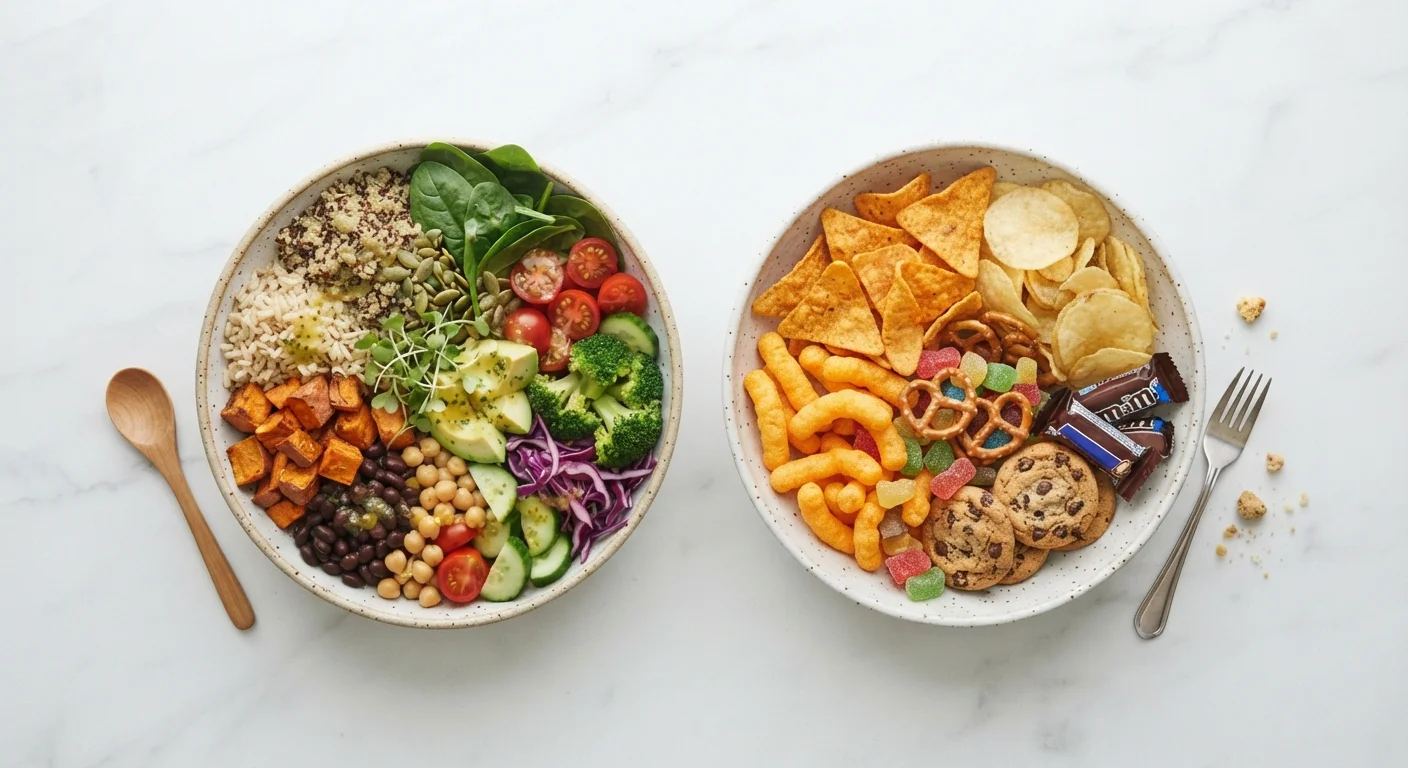
Processed foods are often engineered to be both calorie-dense and nutrient-poor. They pack calories into small volumes while delivering little protein, fiber, or micronutrients. That combination can leave you eating a lot of calories without satisfying hunger or meeting nutritional needs.
On the other side, foods with low caloric density, such as vegetables, broth-based soups, and whole fruit, tend to have high water and fiber content. That bulk creates a sense of fullness before the calorie count climbs steeply. Many of these foods also score well on nutrient density because the same serving that fills you up also delivers vitamins and minerals.
This overlap is not universal, though. Nuts and seeds are calorie-dense by weight, yet they are also nutrient-dense, supplying healthy fats, magnesium, and protein. Treating them as poor choices based on caloric density alone misses the nutritional picture.
Front-of-pack labels often obscure these distinctions. Words like "light" or "natural" say nothing about whether a food is nutrient-dense or calorically dense. The explainer on misleading food label claims goes into detail on which marketing terms deserve skepticism.
How to use both concepts without obsessing over numbers
These are tools, not rules
Nutrient density and caloric density are frameworks for thinking, not rigid scoring systems. No single food needs to be perfect on either measure. Dietary patterns over time matter far more than the profile of any individual item. A varied diet that leans toward whole foods will tend to do well on both counts without requiring precise calculation.
You do not need to calculate anything to use these ideas. A useful mental check when choosing a food is to ask two questions: How much physical food am I getting for these calories? And what does this food actually contain beyond energy?
Vegetables, legumes, whole grains, eggs, and fish generally score well on both measures. Ultra-processed snacks and sugar-sweetened drinks tend to score poorly on both. The genuinely tricky category is healthy calorie-dense foods like avocados, olive oil, and nuts, which deserve a place in a balanced diet even though their caloric density is high.
For a practical way to build meals around these principles without tracking every gram, see the guide to building a balanced plate without counting. Nutritional needs also shift with age, so what counts as nutrient-dense eating at 25 looks somewhat different at 65; the overview of nutrition across life stages covers that ground.
Certain nutrients, including iron, calcium, and vitamin D, are consistently under-consumed regardless of how many calories a person eats. The article on common nutrient shortfalls explains where those gaps tend to appear and which foods help close them.
This article is for general informational purposes only and is not a substitute for professional medical or dietary advice. Consult a registered dietitian or qualified healthcare provider before making significant changes to your diet, particularly if you have a health condition or specific nutritional needs.