

Key Takeaways
- Caloric and nutrient needs shift substantially at each life stage due to growth, hormonal changes, and metabolic shifts.
- Iron, calcium, and vitamin D are consistently under-consumed at multiple points across the lifespan.
- Older adults often need more protein and vitamin B12 even as total calorie needs decline.
- No single eating pattern fits every stage; the goal is adjusting priorities as circumstances change.
- A registered dietitian can provide personalized guidance that general information cannot replace.
Why nutritional needs change over a lifetime
The body does not have the same nutritional demands at age 8 that it does at 38 or 78. Growth spurts, hormonal shifts, changes in muscle mass, and shifts in how efficiently the gut absorbs certain nutrients all alter what a person needs from food. Understanding those changes helps people make more deliberate choices at each stage rather than applying a one-size-fits-all approach to eating.
This article is general health information and education, not personalized dietary advice. Always consult a registered dietitian or qualified healthcare provider for guidance specific to your situation.
For a closer look at how the body actually processes what you eat, see how food is broken down and absorbed.
Infancy and early childhood
The first years of life involve the fastest rate of physical growth a person will ever experience. Breast milk or iron-fortified infant formula supplies most nutritional needs in the first six months. Around six months, most infants begin transitioning to solid foods, and iron-rich foods become a particular focus because prenatal iron stores start to deplete.
Through toddlerhood and preschool years, calcium and vitamin D support rapid bone development. Fat remains important during these years because it supports brain development. The goal is not restriction but variety: exposing young children to a wide range of whole foods builds both nutritional breadth and eating habits that tend to persist. Parents and caregivers of young children should work with a pediatrician or pediatric dietitian rather than applying general adult nutrition guidance.
Adolescence and the growth years
Puberty triggers the second major growth period, and nutrient demands rise sharply. Calcium and vitamin D needs reach their highest levels during adolescence because peak bone mass is largely set by early adulthood. Bone density built during this window has lifelong consequences.
Iron needs increase significantly, particularly for adolescent girls after menstruation begins. Zinc supports growth and immune function. Total calorie needs are higher during this period than at almost any other stage outside pregnancy.
When assessing a teenager's diet, look at calcium-rich foods first. Bone density built during adolescence is difficult to recover later, so this is the window where it counts most.
Peak bone mass is largely established by the mid-twenties, making adolescence the highest-leverage period for calcium and vitamin D intake.
For older adults eating less overall, protein quality matters as much as quantity. Animal proteins and soy provide all essential amino acids, which makes them efficient choices when total food volume is limited.
Muscle protein synthesis in older adults responds well to leucine-rich, complete protein sources, according to exercise and nutrition science research.
Despite high needs, adolescents are among the groups most likely to have gaps in iron and calcium intake. Iron, calcium, and vitamin D shortfalls are worth understanding at this stage specifically.
Adulthood and midlife
Through the twenties and thirties, growth has stopped but nutritional foundations still matter. Calorie needs stabilize and for many people gradually decrease, but micronutrient needs do not fall at the same rate. This mismatch means the quality and density of food choices become more relevant than sheer quantity.
For people who become pregnant, nutritional needs shift considerably. Folate in early pregnancy, iron throughout, and adequate iodine are among the priorities that healthcare providers routinely assess. Those considerations fall outside the scope of general guidance and require individualized care.
Through midlife, metabolic rate tends to slow while muscle mass can decline if physical activity decreases. Adequate protein intake and strength-based activity help preserve lean mass. Building a balanced plate without calorie counting offers a practical framework for getting nutrient density right without obsessing over numbers.
Older adulthood
After roughly age 65, several changes converge. Appetite often decreases, the stomach produces less acid (which affects absorption of vitamin B12, calcium, and iron), muscle loss accelerates, and the skin becomes less efficient at synthesizing vitamin D from sunlight.
Protein needs per kilogram of body weight are generally higher for older adults than for younger ones, according to nutritional research, even though total calorie needs may be lower. This creates a real challenge: eating less overall while getting more protein per bite. Spreading protein intake across meals rather than concentrating it in one sitting appears to support muscle protein synthesis more effectively.
Vitamin B12 deficiency is more common in older adults and can be subtle in its early symptoms. Calcium and vitamin D continue to matter for bone health. Fiber supports digestive health and cardiovascular function. Hydration is also worth deliberate attention, since the sense of thirst becomes less reliable with age.
This article is for general informational purposes only and does not constitute medical or dietary advice. Speak with a qualified healthcare provider or registered dietitian about your personal nutritional needs.
Nutrients that matter across all stages
A few nutrients appear as priorities at nearly every life stage. Iron, calcium, and vitamin D consistently show up in surveys of dietary gaps across populations. Fiber intake is broadly lower than recommended at most ages. Omega-3 fatty acids, found in fatty fish and certain plant oils, support heart and brain health across the lifespan.
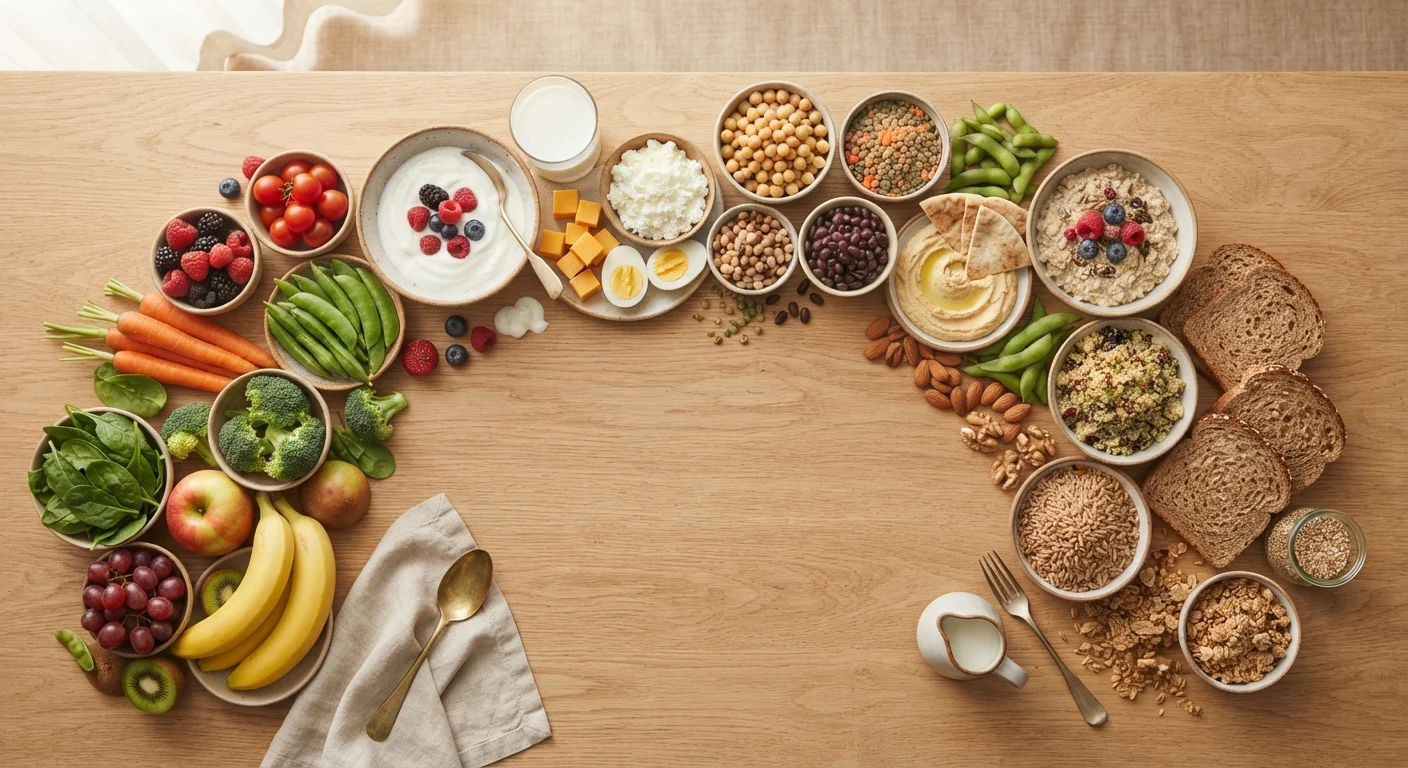
Eating patterns built around vegetables, legumes, whole grains, lean proteins, and dairy or fortified alternatives tend to cover most nutrient needs reasonably well at any stage. What shifts is the emphasis: more calcium during adolescence, more protein in older adulthood, more folate during reproductive years.
Just as financial planning adjusts with life circumstances (see how coverage priorities shift across life stages for an analogy in another domain), nutrition works best when it responds to where you are rather than following a static formula.
How snacking fits into overall eating patterns is one more practical layer worth understanding once you have the life-stage picture in view.