
What Happens to Food After You Eat It: Digestion and Absorption in Plain Language

Key Takeaways
- Digestion begins in the mouth, where chewing and saliva start breaking down food before it reaches the stomach.
- The small intestine is where most nutrient absorption happens, not the stomach.
- Different nutrients, including carbohydrates, proteins, and fats, follow distinct absorption pathways.
- Gut bacteria in the large intestine play a real role in digestion, particularly for fiber.
- How food is prepared and combined can affect how well nutrients are absorbed.
Digestion and absorption
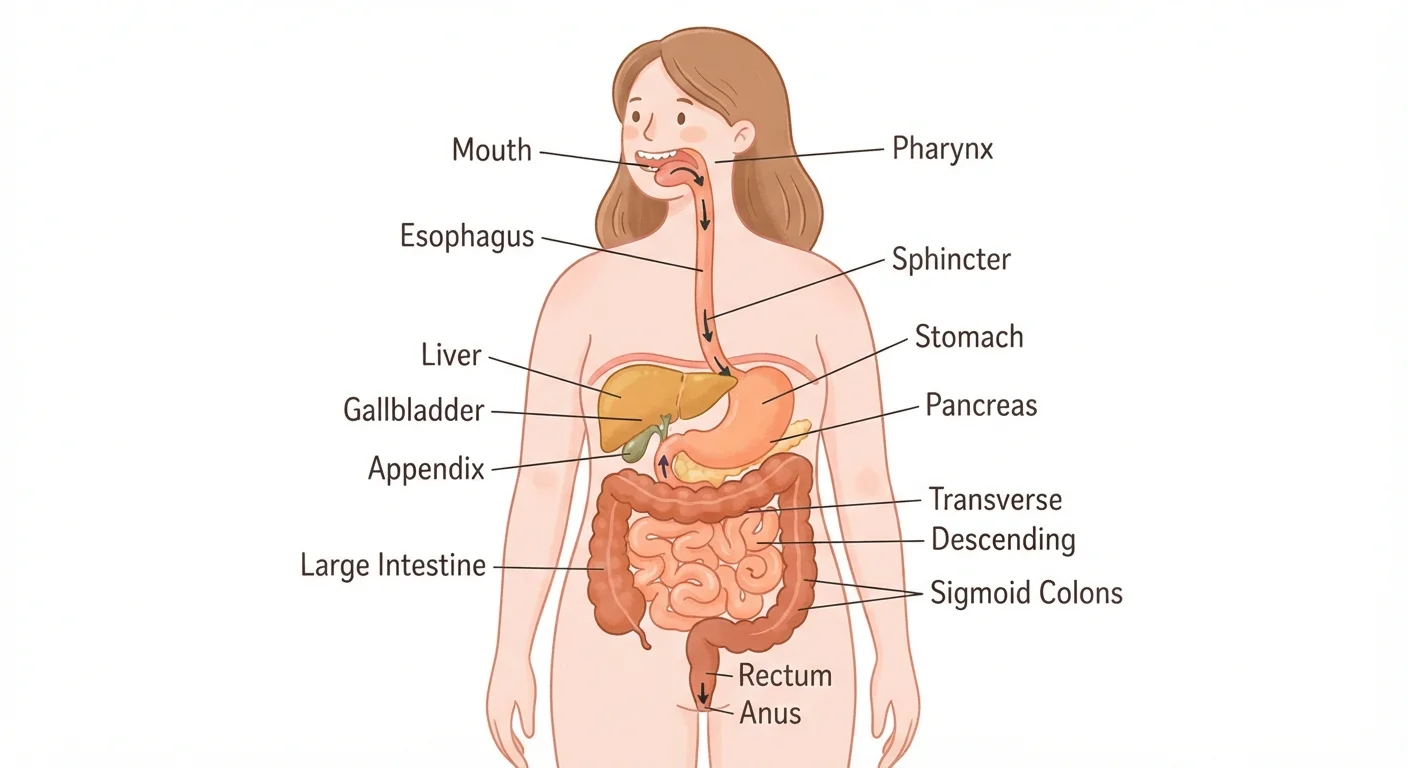
Digestion is the process by which the body breaks food down into smaller chemical components. Absorption is how those components pass through the wall of the small intestine into the bloodstream, where they travel to cells throughout the body. Together, these two processes convert a meal into the fuel and building materials your body actually uses.
Digestion involves both mechanical actions (chewing, stomach churning) and chemical reactions driven by enzymes and stomach acid. Absorption relies on specialized cells called enterocytes that line the small intestine.
Where digestion actually starts
Most people think of the stomach as the center of digestion, but the process starts the moment food enters your mouth. Chewing physically breaks food into smaller pieces, increasing the surface area that digestive enzymes can reach. At the same time, salivary glands release saliva containing an enzyme called amylase, which begins breaking down starch into simpler sugars.
Swallowing moves the chewed food, now called a bolus, down the esophagus through a coordinated muscular movement called peristalsis. The esophagus does not digest food, but its smooth contractions deliver the bolus to the stomach reliably and efficiently.
This early stage matters more than many people realize. Eating too quickly or not chewing thoroughly means larger food particles arrive in the stomach, which can slow the overall process and, in some cases, cause discomfort.
What the stomach actually does
The stomach is a muscular sac that serves two main functions: further breaking down food mechanically through churning, and creating the acidic environment needed for certain chemical reactions. Gastric acid, primarily hydrochloric acid, lowers the stomach's pH to a level that activates an enzyme called pepsin, which begins breaking proteins into shorter chains called peptides.
The stomach also produces mucus to protect its own lining from acid damage. Over 2 to 4 hours, the stomach converts food into a semi-liquid mixture called chyme. This is released gradually through a valve called the pyloric sphincter into the small intestine, where the bulk of digestion and absorption occurs.
Pay attention to meal composition
What you eat alongside a food can change how quickly it leaves your stomach and how steadily your blood glucose rises afterward. A meal with protein, fat, and fiber generally produces a slower, more gradual rise in blood sugar than one consisting mainly of refined carbohydrates. This is general context, not a prescription; a registered dietitian can help translate it into practical guidance for your situation.
Fat slows stomach emptying more than protein or carbohydrates, which is part of why high-fat meals tend to keep people feeling full longer.
The small intestine: where absorption happens
Despite its name, the small intestine is roughly 20 feet long. Its interior surface is covered in finger-like projections called villi, and each villus is covered in even tinier projections called microvilli. This structure creates an enormous surface area, estimated at around 250 square meters in a healthy adult, optimized for absorbing nutrients into the bloodstream.
The pancreas releases enzymes into the small intestine that continue breaking down carbohydrates, proteins, and fats. The liver produces bile, stored in the gallbladder, which is released into the small intestine to emulsify fats, making them accessible to fat-digesting enzymes called lipases.
Carbohydrates are absorbed as simple sugars like glucose and fructose. Proteins are absorbed as amino acids and short peptide chains. Fats take a different route: they are packaged into structures called chylomicrons and transported through the lymphatic system before entering the bloodstream. This is one reason dietary fat absorption is slower than that of carbohydrates or proteins.
For a broader look at how fat types behave differently in the body, see how saturated and unsaturated fats work.
The large intestine and what gets left behind
By the time the remaining material reaches the large intestine (also called the colon), most nutrients have already been absorbed. What remains is primarily water, electrolytes, and indigestible material, mainly dietary fiber.
The colon absorbs much of the remaining water, which is why stool consistency reflects hydration status. For more on that connection, the role of hydration in nutrition covers how water intake interacts with digestion.
Gut bacteria in the colon ferment certain types of fiber, producing short-chain fatty acids like butyrate. These compounds help maintain the health of the colon lining and have been associated with broader metabolic benefits in research settings. The gut microbiome is an active area of study, and while the science continues to develop, it is clear that fiber intake directly shapes the bacterial environment in the colon.
~250 m2
Surface area of the small intestine lining
The villi and microvilli of a healthy small intestine create an absorption surface roughly the size of a tennis court, according to estimates in gastroenterology literature.
24-72 hrs
Typical full digestive transit time
The National Institute of Diabetes and Digestive and Kidney Diseases notes that transit time varies widely based on diet, hydration, and individual gut motility.
~20 ft
Length of the small intestine in adults
Despite its name, the small intestine is considerably longer than the large intestine, with most of this length dedicated to nutrient absorption.
Factors that influence how well nutrients are absorbed
Absorption is not a fixed constant. Several factors shift how efficiently the body extracts nutrients from food.
- Cooking can increase bioavailability for some nutrients. Cooking tomatoes, for instance, raises the concentration of the antioxidant lycopene in a form the body absorbs more easily. However, heat degrades heat-sensitive vitamins like vitamin C.
- Combining certain foods affects absorption. Non-heme iron (the type found in plant foods) is absorbed more readily when eaten alongside vitamin C. Calcium consumed with high-dose zinc can compete for the same absorption pathways.
- Age matters. Older adults produce less stomach acid, which can impair absorption of vitamin B12, calcium, and iron. Nutritional needs across life stages covers these shifts in more detail.
- Gut health conditions like celiac disease or Crohn's disease can significantly reduce absorption of multiple nutrients. Anyone experiencing persistent digestive symptoms should consult a healthcare provider rather than attempt self-diagnosis.
This article is for general informational purposes only and does not constitute medical or nutritional advice. Speak with a qualified healthcare provider about any digestive symptoms, nutrient deficiencies, or dietary concerns specific to your situation.