

Key Takeaways
- Checking fluids monthly catches the most common causes of preventable engine damage.
- Tire pressure and tread depth affect both safety and fuel economy more than most drivers realize.
- Following your owner's manual service intervals is more accurate than relying on generic mileage rules.
- High-mileage vehicles need closer attention to seals, belts, and transmission fluid.
- A qualified mechanic should handle any task that involves lifting the vehicle or working near the brake hydraulics.
Why consistent maintenance matters
Vehicles are mechanical systems that degrade gradually. Most breakdowns do not happen without warning; they follow weeks or months of ignored signals. Oil that has broken down, a coolant level that has been low since last winter, or brake pads worn past their limit all announce themselves before they fail completely. Regular maintenance intercepts those signals before they become roadside emergencies or repair bills that dwarf what prevention would have cost.
The financial case is straightforward. A neglected timing belt that snaps can destroy an engine worth thousands of dollars. A $15 cabin air filter left unchanged for three years forces the HVAC blower motor to work harder, shortening its life. Consistent upkeep also preserves resale value. Buyers and dealers check service records, and a documented maintenance history signals a vehicle that has been cared for. For new drivers, our introduction to looking after a car covers the fundamentals in straightforward terms.
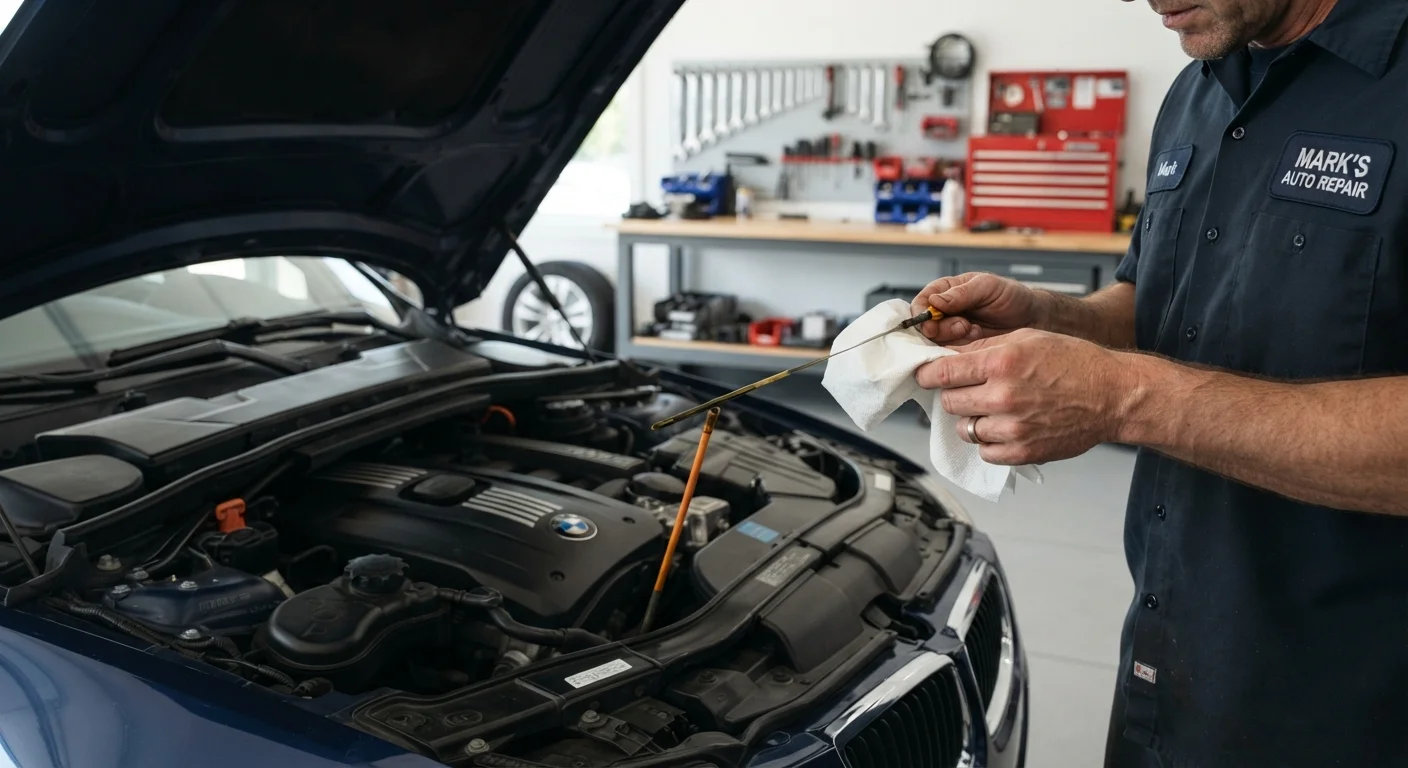
When checking engine oil, wipe the dipstick clean, reinsert it fully, then pull it again for an accurate reading. A single dip often shows an inflated level because oil clings to the stick on the way in.
This two-step method is what professional technicians use to get a true reading and avoid overfilling, which can damage seals as much as running low can.
If your brake pedal feels soft or spongy compared to how it normally feels, have the brake fluid and lines inspected before your next long drive, not after.
Spongy pedal feel is a common sign of moisture contamination or air in the hydraulic line, both of which reduce braking force under hard stops.
Fluids: the lifeblood of your vehicle
Six fluids govern most of what happens inside your car: engine oil, coolant, transmission fluid, brake fluid, power steering fluid, and windshield washer fluid. Each has a specific job, a normal operating range, and a service interval. Checking them monthly takes under ten minutes and catches the majority of problems before they escalate.
- Engine oil lubricates moving parts and carries heat away from the engine. Check it with the dipstick when the engine is cold. Milky or foamy oil can indicate a head gasket leak and warrants immediate professional inspection.
- Coolant (antifreeze) prevents overheating in summer and freezing in winter. The reservoir has min and max markings. Never open the cap when the engine is hot.
- Transmission fluid on vehicles with a dipstick should be checked with the engine warm and running. Fluid that smells burnt or looks dark red to brown is overdue for a change.
- Brake fluid is hygroscopic, meaning it absorbs moisture over time, which lowers its boiling point. Most manufacturers recommend changing it every two years regardless of mileage.
- Power steering fluid (on hydraulic systems) should be clear to light amber. A whining noise when turning often points to low or degraded fluid.
For guidance on adapting fluid checks to extreme temperatures, see our seasonal maintenance checklist.
Tires, brakes, and the systems that keep you safe
Tires are the only contact point between your vehicle and the road, which makes their condition directly connected to stopping distance, handling, and blowout risk. Check pressure monthly with a quality gauge, not just by looking at the sidewall. The correct pressure is listed on the sticker inside the driver's door jamb, not on the tire itself. Underinflated tires increase rolling resistance and generate heat; overinflated tires reduce the contact patch and can cause uneven wear.
Tread depth below 2/32 of an inch is the legal minimum in most U.S. states, but traction in wet conditions deteriorates noticeably before that point. The penny test (Lincoln's head disappearing into the tread) indicates it is time to replace the tire. Rotating tires every 5,000 to 7,500 miles evens out wear across all four corners.
Brake pads typically last between 25,000 and 65,000 miles depending on driving style and pad material. A high-pitched squeal when braking is the wear indicator doing its job. Grinding means the pad material is gone and rotors are being damaged, which significantly increases the repair cost. Brake inspection and replacement should always be performed by a qualified mechanic, as improper work on hydraulic brake systems creates serious safety risk.
Before any long drive, run through a full safety check. Our pre-long-trip vehicle inspection guide walks through tires, fluids, lights, and more in a structured sequence.
Major service milestones and what they include
Generic mileage rules like "change your oil every 3,000 miles" are outdated for most modern vehicles. Synthetic oils and tighter manufacturing tolerances have extended intervals considerably. The owner's manual for your specific make, model, and engine is the authoritative source. Manufacturers engineer those intervals around the vehicle's actual design, not a one-size-fits-all rule.
Common scheduled service milestones include:
- 15,000 to 30,000 miles: cabin air filter, engine air filter, tire rotation, brake inspection, and a full fluid check.
- 30,000 to 60,000 miles: spark plug replacement (on most gasoline engines), fuel filter (where applicable), coolant flush, and timing belt inspection.
- 60,000 to 100,000 miles: timing belt replacement if not already done, transmission fluid change, serpentine belt inspection, and a comprehensive suspension check.
As mileage climbs, certain systems need closer attention. Gaskets and seals harden, transmission performance can shift, and battery capacity drops. Our guide on maintenance priorities for high-mileage vehicles covers what changes and why it matters past 75,000 miles.
Daily habits that extend your car's life
Maintenance is not only what happens at a shop. How a vehicle is driven and stored every day has a measurable effect on component longevity.
- Allow a cold engine 30 to 60 seconds to idle before driving aggressively. Oil circulation takes a moment to reach all bearing surfaces, and hard acceleration before that happens accelerates wear.
- Avoid short trips whenever possible. Engines that never reach full operating temperature accumulate moisture and unburned fuel in the oil, degrading it faster than highway driving would.
- Do not ride the brakes on long descents. Use engine braking by downshifting or lifting off the throttle to reduce heat buildup in the brake system.
- Park in shade or a garage when available. UV exposure and heat cycles degrade rubber seals, belts, and interior trim over time.
- Listen to the vehicle. A new vibration, a change in how the steering feels, or an unfamiliar sound is information. Investigating early is almost always less expensive than waiting.
Finding reliable help when you need it
Some maintenance tasks are well within the reach of a driver with basic tools and a reliable guide: topping up washer fluid, replacing wiper blades, swapping a cabin air filter, or checking tire pressure. Others involve specialized equipment, safety risks, or calibration that genuinely require a professional. Our comparison of DIY maintenance versus a professional workshop helps map out which tasks belong in each category.
When choosing a shop, look for ASE-certified technicians (Automotive Service Excellence certification indicates standardized training), a written estimate before work begins, and a policy on returning replaced parts on request. Avoid any shop that pressures you into same-day decisions on expensive repairs without time to get a second opinion.
Keep a maintenance log, either a physical notebook in the glove box or a digital record, that tracks every service date, mileage, and work performed. This log is useful when diagnosing recurring issues and is a concrete asset if you sell the vehicle.
This article provides general vehicle maintenance information for educational purposes. For diagnosis of specific mechanical problems, consult a qualified, licensed mechanic.