

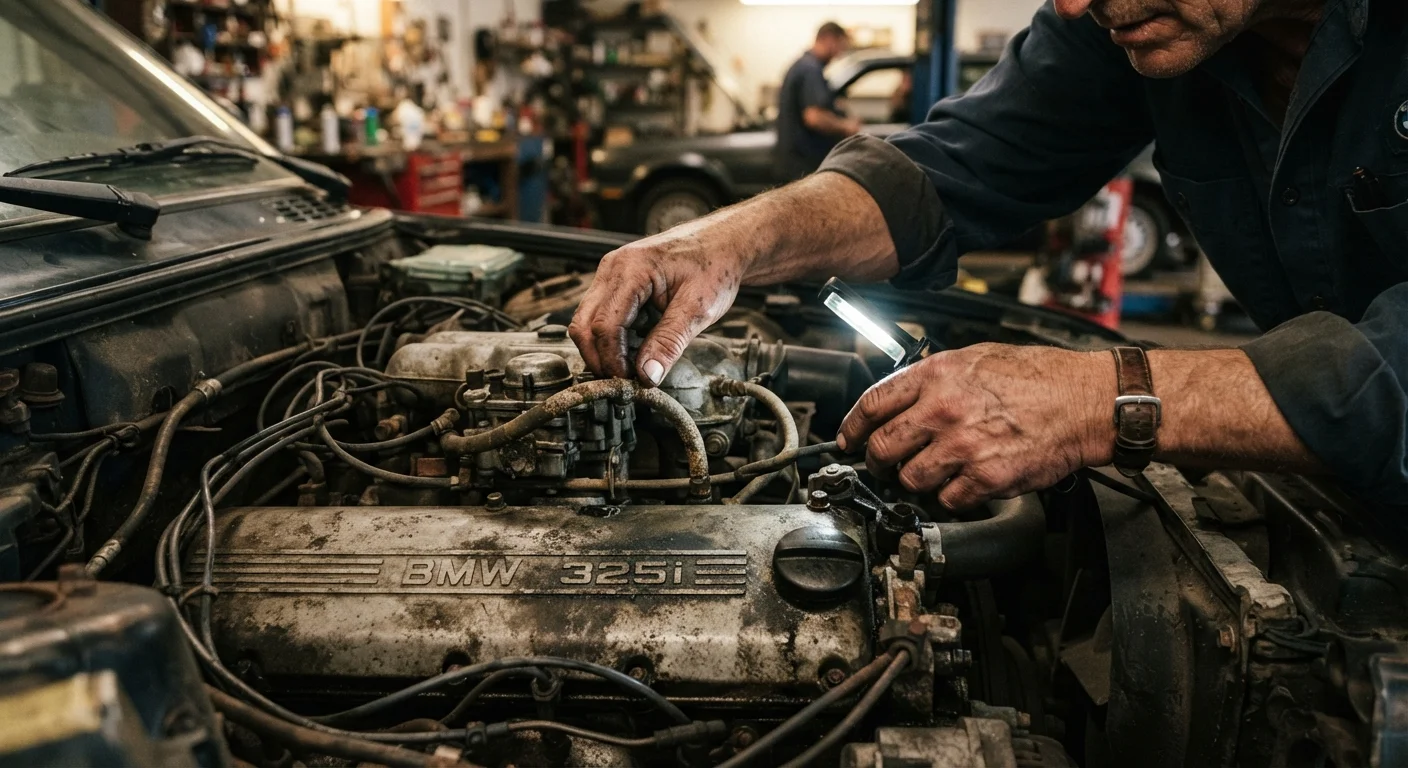
Key Takeaways
- Rubber seals, gaskets, and hoses degrade with age and mileage, making leak checks more important.
- Transmission fluid and coolant require closer attention once a vehicle passes 75,000 miles.
- Timing belt replacement is time-sensitive: missing the window risks catastrophic engine damage.
- Suspension and steering components wear gradually; symptoms are easy to overlook until they worsen.
- Oxygen sensors and spark plugs affect fuel economy and emissions as a vehicle ages.
- A consistent inspection schedule matters more at high mileage than at lower odometer readings.
Why mileage changes the maintenance equation
A vehicle with 30,000 miles and one with 120,000 miles may share the same make and model, but they do not share the same maintenance needs. Components that can wait at lower mileage become genuine priorities once the odometer climbs. Seals harden, metal surfaces accumulate wear, and fluids that were changed on schedule at the dealership may not have been touched since.
The complete guide to car maintenance covers the full lifecycle of vehicle care, but this article focuses specifically on what changes as mileage accumulates. Whether you drive a commuter car crossing 100,000 miles or a work truck pushing toward 200,000, the systems below deserve more attention, not less, as the numbers rise.
Engine seals and gaskets
Rubber and composite seals throughout the engine harden and shrink with age, often accelerated by heat cycling over many miles. The valve cover gasket, oil pan gasket, and front and rear crankshaft seals are common sources of slow leaks past 80,000 miles. A seeping gasket may seem minor, but oil loss that goes unnoticed can cause serious engine wear.
Inspect the underside and engine bay regularly for oily residue or fresh wet patches. A mechanic can pressure-test the cooling system and inspect the head gasket if you notice coolant consumption without visible external leaks, which sometimes points to an internal seep that does not drip onto the driveway.
Slow gasket leaks are easy to miss until oil levels drop low enough to cause damage.
Timing belt or timing chain
Vehicles with a rubber timing belt instead of a metal chain operate on a strict replacement interval, typically between 60,000 and 105,000 miles depending on the manufacturer's specification. At high mileage, this is the single repair where missing the window has the most severe consequences: a snapped belt on an interference engine bends valves and, in many cases, causes damage that exceeds the vehicle's value.
Check your owner's manual for the exact interval. If you purchased a used vehicle and cannot confirm the belt was replaced, treat it as overdue. Water pump replacement is usually recommended at the same time, since accessing it requires removing the same components.
A broken timing belt on an interference engine can destroy the engine in an instant.
Transmission fluid
Automatic transmission fluid degrades with heat and use. Many manufacturers list it as a "lifetime" fill, but independent transmission specialists generally advise changing it between 60,000 and 100,000 miles, particularly for vehicles used in towing, stop-and-go traffic, or hot climates. Dark brown or burnt-smelling fluid is a reliable sign it is past due.
Manual transmissions and transfer cases in four-wheel-drive vehicles also need fluid changes on a schedule. Neglecting this is a common oversight in high-mileage vehicles, and a failed transmission is one of the most expensive repairs a driver can face.
Burnt transmission fluid is a warning that should not be deferred to the next service interval.
Cooling system components
The radiator hoses, thermostat, water pump, and coolant itself all have finite service lives. Coolant loses its corrosion-inhibiting properties over time, which allows rust and scale to build up inside the radiator and passages. Most manufacturers recommend a coolant flush between 50,000 and 100,000 miles, though this varies by coolant type.
The vehicle cooling system guide covers how these components interact. At high mileage, a swollen or cracked radiator hose deserves immediate attention; the water pump impeller can also erode on older vehicles, reducing coolant flow before any visible external leak appears.
Degraded coolant causes internal corrosion that can block passages long before a leak appears outside the engine.
Spark plugs and oxygen sensors
Extended-life iridium or platinum spark plugs can last up to 100,000 miles, but worn plugs past that point cause misfires, rough idling, and a measurable drop in fuel economy. Oxygen sensors, which tell the engine management system how much fuel to inject, also degrade with age. A failing sensor often triggers a check-engine light before performance visibly suffers, but a slow-drifting sensor can quietly increase fuel consumption without setting a code.
The spark plugs and ignition health explainer covers what worn plugs look like and what the ignition system needs at each service milestone.
A drifting oxygen sensor can raise fuel consumption noticeably before any warning light appears.
Suspension and steering components
Ball joints, tie rod ends, control arm bushings, and shock absorbers all wear gradually. At lower mileage, deterioration is usually minor. Past 100,000 miles, cumulative wear in these parts changes handling, causes uneven tyre wear, and can make steering feel vague. Worn shocks and struts extend braking distances, which is a safety concern that goes beyond ride comfort.
Symptoms include clunking over bumps, pulling to one side, or the front end bouncing after a dip in the road. These often appear slowly enough that drivers adjust without noticing the change. Tyre care habits that include checking alignment can help catch suspension wear early through tyre wear patterns.
Worn shocks extend braking distances and are often dismissed as a comfort issue rather than a safety one.
Serpentine belt and accessory drive
The serpentine belt drives the alternator, power steering pump, and air conditioning compressor from the crankshaft. Unlike the timing belt, a failed serpentine belt does not destroy the engine, but it does leave the vehicle undriveable and, in vehicles where it also drives the water pump, can cause rapid overheating. Most manufacturers recommend inspection or replacement between 60,000 and 100,000 miles.
Modern belts are made from EPDM rubber that cracks less visibly than older designs, so visual inspection alone is not reliable. A technician can use a belt wear gauge to measure groove depth. Tensioner pulleys and idler pulleys should be evaluated at the same time, since a seized pulley can shred a new belt quickly.
EPDM serpentine belts show little visible cracking even when worn, so a gauge check is more reliable than a visual one.
Making the most of your maintenance investment
High-mileage driving is entirely achievable with disciplined, proactive care. The vehicles that reach 200,000 miles reliably are almost always ones that received consistent fluid changes, timely part replacements, and regular inspections rather than reactive repairs after something failed.
Keep a simple service log
A notebook in the glove box or a basic spreadsheet recording each service date, mileage, and work performed costs nothing and pays off when you need to verify what has been done. This record also adds credibility and value if you sell the vehicle, and it helps a mechanic spot gaps in service history at a glance.
As a vehicle ages, its insurance needs may shift too. Managing auto insurance costs over time explains how coverage adjustments can reflect a car's changing value. Before any long drive in an older vehicle, the pre-long-trip vehicle check walkthrough gives you a practical inspection framework to reduce breakdown risk.