

Key Takeaways
- Most vehicle auctions sell cars "as-is," meaning no warranties or return options apply after the gavel falls.
- Public auctions are open to consumers, while dealer-only auctions require an active dealer license to participate.
- Buyers fees, sales tax, and title costs add to the winning bid price, often by several hundred dollars.
- Pre-auction inspection time is limited; skipping it is one of the most common and costly mistakes bidders make.
- Winning a salvage or rebuilt-title vehicle at auction carries additional registration and insurance complications.
Start here
How vehicle auctions are structured
Next
Public auctions vs. dealer-only auctions
Then
What happens on auction day
Before you bid
Risks and protections every bidder should know
After you win
Paperwork and title considerations after you win
How vehicle auctions are structured
A vehicle auction is a competitive bidding event where cars, trucks, and other vehicles are sold to the highest bidder within a set time. Unlike a private sale or a dealership transaction, the price is not fixed: it rises in real time as participants bid against each other. The auction house operates as the intermediary, earning revenue through fees charged to both the seller and the buyer.
Vehicles at auction come from several sources: government agencies selling surplus or seized assets, banks and lenders disposing of repossessed vehicles, fleet operators cycling out high-mileage units, and private sellers who consign their car through the auction house. Each source type carries different disclosure norms and condition histories.
Buyer's fee
A charge the auction house adds on top of the winning bid price. It can be a flat dollar amount or a percentage of the sale price, and it is paid by the buyer, not the seller.
As-is sale
A transaction where the vehicle is sold in its current condition with no warranty or right of return. Any problems discovered after the sale become the buyer's responsibility.
Salvage title
A title designation assigned when an insurance company declared the vehicle a total loss. It signals significant past damage and creates complications for registration and insurance.
Run list
The pre-published schedule of vehicles that will be sold at a given auction event, including VINs and basic condition notes. Reviewing it in advance helps bidders prioritize which cars to inspect.
Arbitration window
A short, defined period after the sale during which a buyer can file a dispute if a vehicle was materially misrepresented by the seller. These windows are narrow and not available at every auction.
Most auctions publish a run list before the event, showing the vehicles scheduled to sell, their VINs, and basic condition disclosures. Reviewing this list in advance is one of the clearest ways to prepare.
Public auctions vs. dealer-only auctions
The two main categories available to buyers are public auctions and dealer-only (wholesale) auctions. The distinction matters because it affects who can participate and what protections, if any, apply.
Public auctions include government surplus sales, seized-asset sales administered by law enforcement agencies, and some consignment auction houses that welcome registered consumers. These events vary widely in the condition of vehicles offered, and the registration process usually requires a valid ID and a refundable deposit.
Dealer-only auctions are wholesale events where franchised and independent dealers buy inventory. Access requires an active dealer license. Private consumers cannot participate directly, though some buyers hire licensed dealer agents to bid on their behalf for a fee.
Online auction platforms have created a middle category: some sites facilitate public bidding on vehicles that were once dealer-only inventory. These platforms often provide condition reports and photos, but physical inspection before bidding may still not be possible. For context on how auction purchases compare to other buying channels, see our walkthrough of what actually happens in a full vehicle transaction.
What happens on auction day
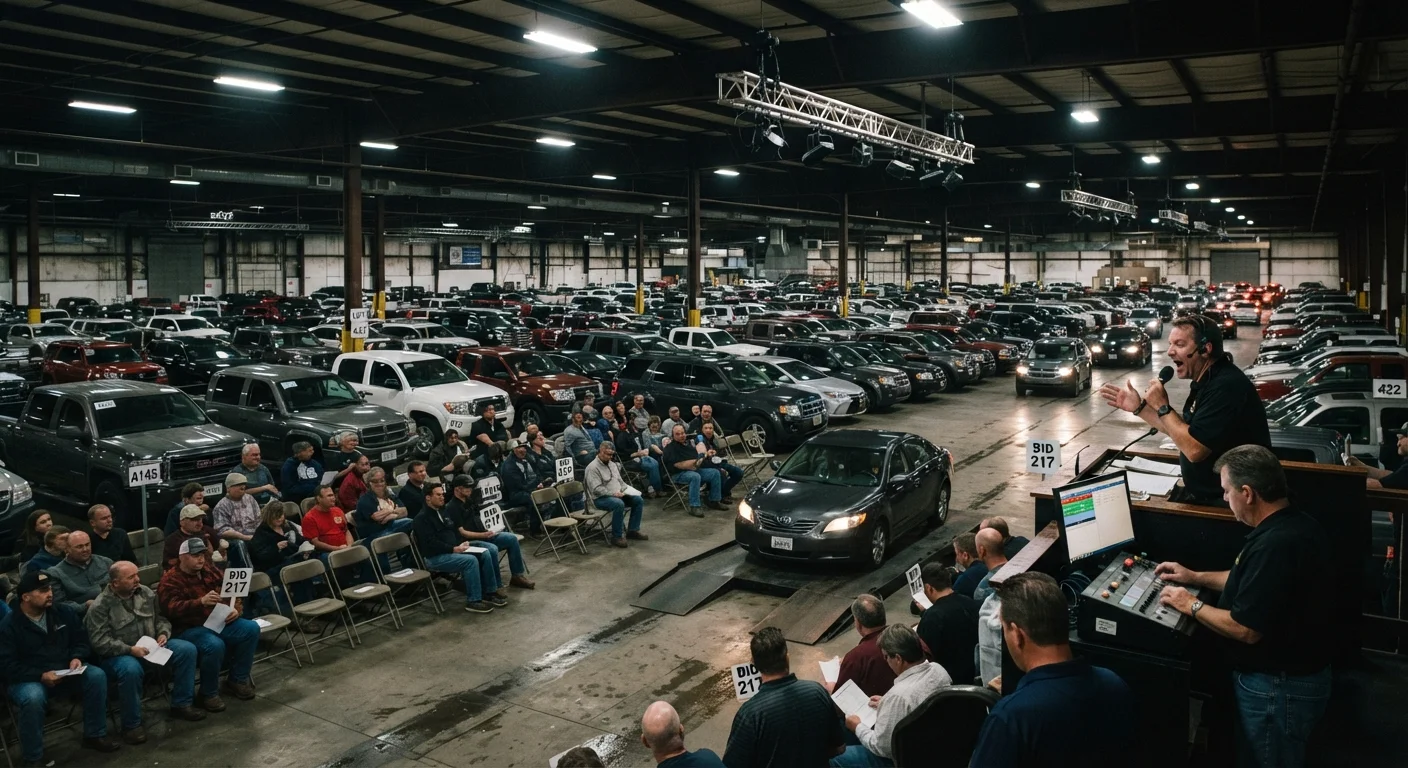
Arriving early matters. Most auction facilities open their lots for inspection one to two hours before bidding starts. This window is your only real opportunity to examine vehicles before committing. Walk around each car, check panel gaps and paint consistency for signs of body repair, and look under the hood for obvious fluid leaks or corrosion. Many facilities do not allow test drives.
When bidding opens, vehicles are brought through or called in sequence. An auctioneer sets an opening price and escalates it in increments as bidders respond. The process per vehicle often takes less than two minutes, so knowing your ceiling price before the car is called is essential. Once you win, the sale is typically final.
After the gavel falls, you move to the payment window. Most auctions require full payment within 24 to 48 hours. Accepted payment methods vary: cashier's checks and wire transfers are common; personal checks and credit cards may be restricted. A buyer's fee is added to the winning bid at this stage.
Risks and protections every bidder should know
The as-is nature of auction sales is the central risk for consumers. No return window, no dealer certification, and no implied warranty of merchantability typically applies. Mechanical problems discovered after you drive off the lot are yours to address.
As-is means no recourse after the gavel
Once a vehicle sells at auction, the transaction is generally final. There is no cooling-off period, no return policy, and no warranty unless the specific auction explicitly states otherwise. Mechanical failures, undisclosed damage, and title problems discovered after you pay become your financial responsibility. Do not bid on a vehicle you have not inspected or researched.
Running a vehicle history report on any car you plan to bid on is a baseline step, not optional. A history report can flag prior accidents, flood damage disclosures, odometer rollback flags, and open recalls. It will not tell you the current mechanical condition of the vehicle.
If the auction permits independent inspections, some buyers hire a mobile mechanic to do a limited pre-auction check during the preview period. This is not always allowed and is rarely comprehensive, but it catches obvious red flags. For a detailed sense of what a professional inspection covers, see what a pre-purchase inspection involves.
Salvage and rebuilt titles require extra scrutiny. A vehicle with a salvage title cannot be registered in most states without passing a state inspection, and many standard auto insurers will not write a policy on it or will limit coverage significantly. Confirm the title status from the run list and the history report before bidding. This is also a context worth comparing against what a certified pre-owned vehicle involves, since the protections are very different.
Paperwork and title considerations after you win
When payment clears, the auction house issues a buyer's receipt and transfers the title. The title should be in the seller's name with a valid reassignment section completed in your name, or it may be a dealer reassignable title depending on the auction type. Confirm there are no liens listed on the face of the title before you leave.
You then handle the state title transfer through your local DMV or equivalent agency, pay any applicable sales tax, and register the vehicle. Requirements differ by state, so check your state's DMV website for the specific documents required. For a broader explanation of the paperwork involved, our article on title transfers and bills of sale covers each document in plain terms.
If you paid more than expected and are considering financing options retrospectively, note that arranging a loan after an auction purchase is uncommon and usually not how auction buyers fund their bids. Most buyers come with pre-arranged funds. Our overview of used-car financing key terms is a useful reference if you are still working out how to structure the purchase before attending.
This article is for general informational purposes only and does not constitute financial, legal, or professional automotive advice. Verify all title, registration, and legal requirements with your state's relevant authorities before completing a vehicle purchase.