
The Full Vehicle Transaction: What Actually Happens from Listing to Title Transfer

Key Takeaways
- A vehicle transaction has six distinct stages, each requiring its own preparation and decisions.
- Title transfer is the legal moment of ownership change and must be completed correctly to protect both parties.
- Pre-sale inspection and a vehicle history report reduce risk for buyers significantly.
- Payment method affects the speed and safety of the transaction for both buyer and seller.
- Private sales and dealership sales follow the same general stages but differ in paperwork complexity and protections.
How the transaction stages connect
Buying or selling a car is not a single event. It is a sequence of steps that build on each other, and skipping one creates problems in a later stage. A buyer who skips inspection may discover a mechanical issue after title transfer, at which point the seller has no legal obligation. A seller who accepts payment before completing a title assignment can face liability if the buyer gets into an accident before re-registering the vehicle.
The six stages covered here apply whether the transaction is private, through a dealership, or a hybrid arrangement such as a consignment sale. The differences between private and dealership sales affect convenience and price, but the underlying structure is the same.
Listing or finding a vehicle
A transaction starts the moment a vehicle enters the market. For sellers, this means setting a realistic asking price based on current market data (such as published valuation guides), preparing the vehicle, and writing an accurate description. Photos matter: listings with clear images of the exterior, interior, odometer, and any known damage generate more serious inquiries and reduce wasted time. See the preparation checklist for a full breakdown of what to address before a listing goes live.
For buyers, this stage is about setting a realistic budget that accounts for registration fees, insurance, and any immediate repairs, not just the purchase price. Searching by vehicle identification number (VIN) or confirmed mileage filters out listings that are vague on key facts.
Set your floor price before listing
Decide the minimum price you will accept before any buyer contacts you. This prevents you from negotiating against yourself in real time when an offer comes in quickly. Write the number down and treat it as a firm internal limit.
Negotiation and agreeing on price
Once a buyer contacts a seller, price negotiation begins. Both sides benefit from knowing the vehicle's market value before the conversation starts. Sellers should anchor to a documented asking price; buyers should come with comparable listings as reference points. Emotional pressure to close quickly often benefits neither party.
Verbal agreements are not binding in vehicle sales. Any price agreement should be confirmed in writing before a buyer commits to an inspection or a seller turns away other inquiries. The principles behind car price negotiation apply equally whether you are the buyer or the seller.
Inspection, vehicle history, and due diligence
This stage protects the buyer and, in a functional sense, also protects the seller from post-sale disputes. A pre-purchase inspection by an independent, licensed mechanic gives both parties a documented record of the vehicle's condition at the time of sale. Sellers who allow inspections signal confidence in the vehicle; buyers who skip them accept unknown risk.
A vehicle history report (available through services that decode VINs against national databases) reveals title status, reported accidents, odometer readings recorded at prior registrations, and whether the vehicle has been declared a total loss. A clean report does not guarantee a problem-free vehicle, but a problematic report is a clear signal to investigate further or reconsider.
For transactions that differ significantly from standard private sales, such as auction purchases, the inspection window often does not exist. The auction process overview covers why that changes the risk profile.
Payment methods and financing
Payment method determines how quickly and safely the transaction closes. Cash is simple but creates risk for the seller in a private transaction (carrying large sums) and offers the buyer no recourse. A cashier's check from a reputable financial institution is the most common method in private sales, though sellers should verify the check with the issuing bank before releasing the vehicle.
Wire transfer works for transactions where both parties are comfortable with the process and the bank details are verified independently. Personal checks are generally not appropriate for vehicle sales given the time it takes for funds to clear.
If the buyer uses third-party financing, such as a pre-approved auto loan from a bank or credit union, the lender may need to appear on the title as a lienholder. This adds a step: the seller must ensure the title is clean (no existing lien from a prior loan) before transfer. If the seller still owes money on the vehicle, the outstanding loan must be paid off at or before closing, typically by coordinating with the lender directly.
~$481B
Annual U.S. used vehicle retail sales
According to NADA (National Automobile Dealers Association) industry data, used vehicle retail sales in the U.S. represent one of the largest consumer goods markets annually.
40M+
Used vehicles sold privately or through dealers per year in the U.S.
Industry estimates from NADA and Manheim place total annual U.S. used vehicle transactions above 40 million, spanning private sales and dealer retail.
Paperwork, title transfer, and closing the sale
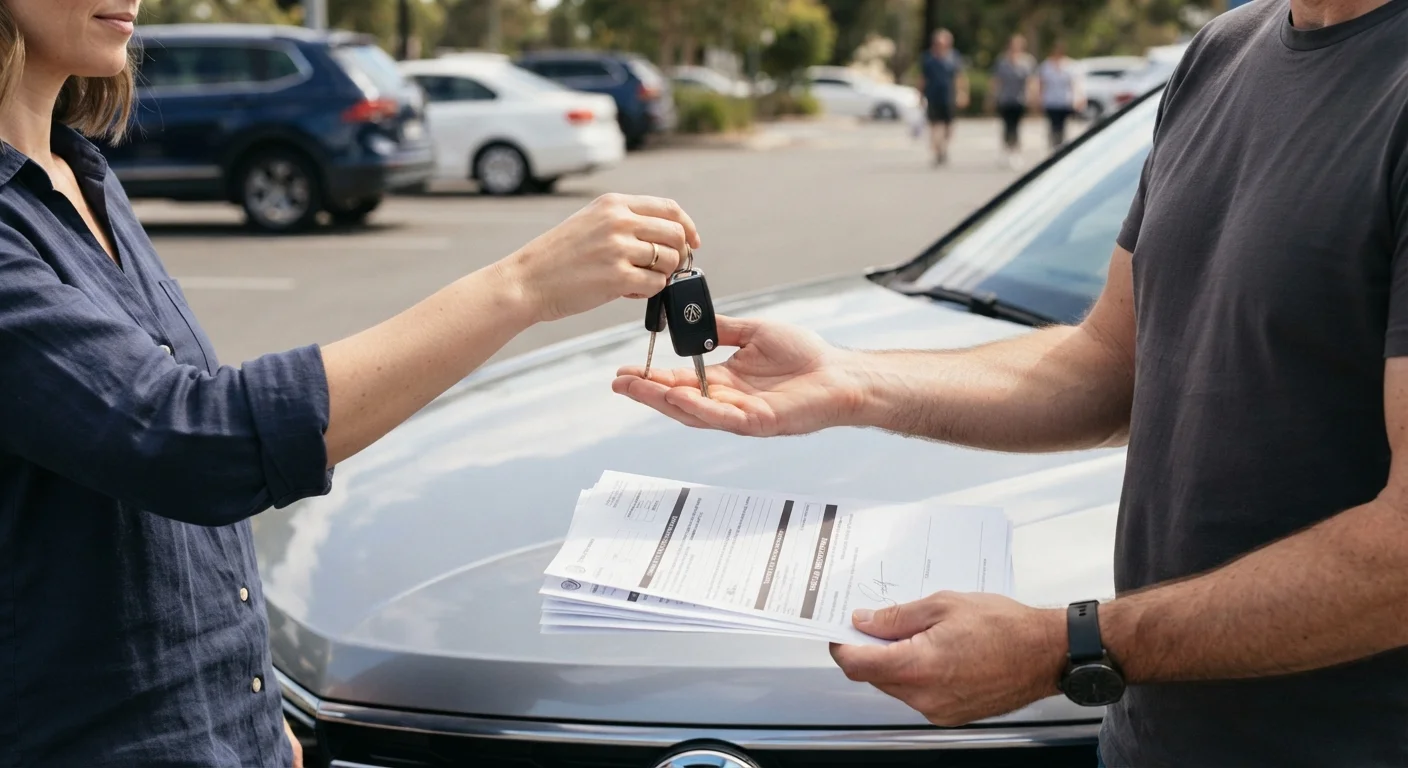
The title is the document that legally proves ownership of a vehicle. Transferring it correctly is the final and most consequential step. In a private sale, the seller signs the back of the title, records the odometer reading (as required by federal law for vehicles under ten years old), and writes in the buyer's name. The buyer then takes that signed title to their state's motor vehicle agency to complete re-registration and receive a new title in their name.
A bill of sale is a separate document that records the sale price, vehicle description, and both parties' information. Some states require it; all states accept it. It protects the seller from liability after the sale and gives the buyer a record of the agreed price for registration and tax purposes. The full overview of title transfer and bill of sale documents explains what each document must contain and what happens if something is missing.
In a dealership transaction, the dealer handles title paperwork on the buyer's behalf, typically charging a documentation fee. The tradeoff is convenience: the buyer pays the fee and waits for the dealer to process the transfer, which can take several weeks.
Until the title is transferred and the new owner registers the vehicle, the seller remains the legal owner of record. Both parties should retain copies of all signed documents. The transaction is complete when the buyer holds a valid title in their own name.
This article is for general informational purposes only. Vehicle transaction laws, fee structures, and documentation requirements vary by state. Consult your state's motor vehicle agency or a licensed professional for guidance specific to your situation.