

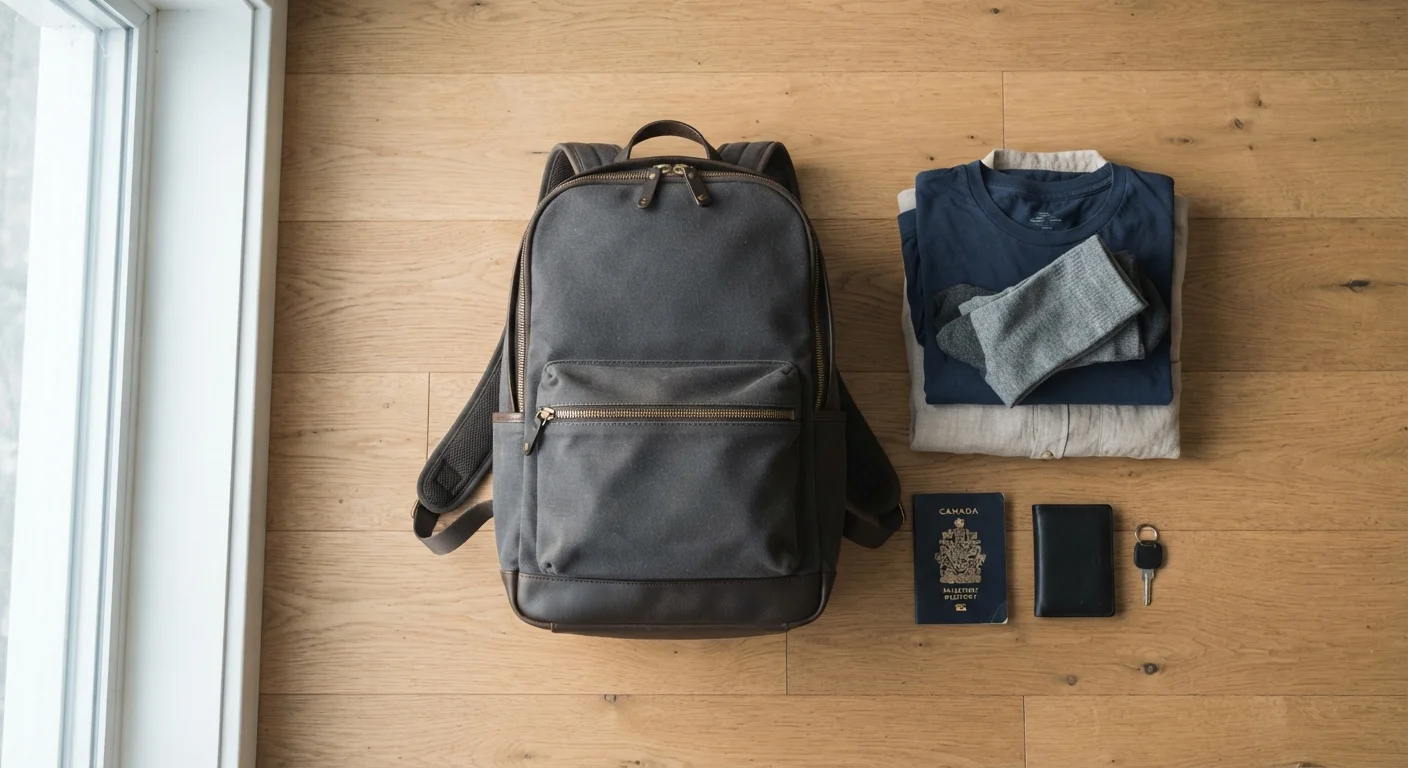
Key Takeaways
- Carry-on-only travel eliminates checked baggage fees, which can add up substantially on multi-leg trips.
- A single bag lets you move faster at airports, use any transport option, and change plans without logistical friction.
- Packing light requires deliberate choices about clothing versatility and toiletry limits, not deprivation.
- One-bag travel suits multi-destination trips and shorter stays especially well.
- The discipline of packing light often reveals how little most travelers actually use from a full suitcase.
One-bag travel
One-bag travel means fitting everything you need for a trip into a single carry-on sized bag, with no checked luggage. The bag must comply with airline cabin size limits so it stays with you at all times. The approach prioritizes mobility and simplicity over having every possible item on hand.
Most airline carry-on limits fall between 40 and 50 liters in volume, though size restrictions vary by carrier and cabin class. Confirming specific limits with your airline before departure is always advisable.
Why travelers choose one bag
The appeal of one-bag travel is mostly practical. When your luggage fits in an overhead bin, you skip the checked bag queue on arrival, avoid the wait at baggage claim, and remove any chance of the airline losing your belongings. On a multi-stop trip, those time savings repeat at every airport.
There is also a financial dimension. Checked bag fees differ by airline, route, and fare class, but they add up fast across a round trip or a journey with multiple carriers. A realistic trip budget accounts for these costs, and packing into one carry-on eliminates them entirely.
Beyond airports, a single bag makes ground transport easier. You can board a city bus, squeeze into a small taxi, or walk between accommodations without managing a large rolling case over cobblestones or stairs. That physical freedom compounds throughout a trip, particularly on itineraries with frequent moves.
The clothing logic that makes it work
Most travelers overpack because they plan outfits for best-case scenarios rather than actual use patterns. Research and anecdotal reports from frequent travelers consistently point to the same pattern: a large portion of packed clothing goes unworn.
One-bag packing works when you build a wardrobe around items that combine freely. Choose a consistent color palette so any top works with any bottom. Favor fabrics that dry overnight, resist wrinkles, and look presentable in multiple contexts. A shirt that works for a day of sightseeing and a casual dinner is doing twice the work of a shirt packed for one occasion.
Plan laundry access into your itinerary rather than treating it as an inconvenience. Most accommodations offer in-room sinks, laundromats within walking distance, or laundry services. A well-structured itinerary can include a laundry afternoon without disrupting the trip.
Test your pack before you travel
Pack your bag completely, then carry it for 30 minutes. If it feels unmanageable, remove items rather than adjusting your posture. A bag you can carry comfortably for an hour is the right weight for a travel day that involves walking, stairs, and transit.
How one-bag travel affects planning flexibility
Traveling with only cabin luggage changes what you can do spontaneously. When a flight is canceled or delayed, rebooking on a different carrier is simpler because there is no checked bag to transfer or reclaim. If a travel day runs long, you are not anchored to a baggage carousel.
The approach also opens up transport options. Rail journeys, bus connections, and ferry routes that would be awkward with large luggage become straightforward. Train travel in particular pairs well with carry-on-only packing, since trains rarely impose size fees and boarding is faster.
For travelers interested in slow travel or packed multi-city itineraries, the one-bag constraint accommodates both styles. Moving between cities with a single backpack is less taxing than hauling a checked suitcase, and staying in one place longer means more laundry options, not fewer.
Common pitfalls when starting out
First-time one-bag packers often underestimate how much space toiletries and shoes consume. Shoes are the single largest volume item most people pack. Two pairs, chosen so one can do double duty across activity types, is a workable ceiling for most trips. Wearing the bulkiest pair on travel days keeps them out of the bag entirely.
Toiletries are the second pressure point. Buying certain items at the destination (shampoo, sunscreen, basic medications) frees significant space and shifts weight. Common carry-on errors often include over-packing liquids, which then slow travelers down at security and eat into available volume.
A final mistake is choosing the wrong bag shape. Bags with a single large cavity require careful packing to avoid a disorganized heap. Bags with structured compartments, compression straps, and a clamshell opening make retrieval and repacking faster throughout a trip.
One-bag travel is not suited to every trip type. Extended stays in genuinely cold climates, formal-event travel requiring specific clothing, or trips involving specialized equipment all have legitimate luggage needs that go beyond a 40-liter carry-on. The goal is to make a deliberate choice, not to apply a rule rigidly.