

Key Takeaways
- Every app in a major store passes a review process before it is published, though the depth of that review varies by platform.
- App rankings reflect a combination of download volume, ratings, engagement signals, and paid placement, not quality alone.
- Apps can be removed by the developer, the store operator, or a regulator, and removal can happen without warning.
- User reviews influence rankings but are subject to manipulation; a high rating is not a guarantee of safety or reliability.
- Understanding how stores work helps you make more informed decisions about what you install.
App store
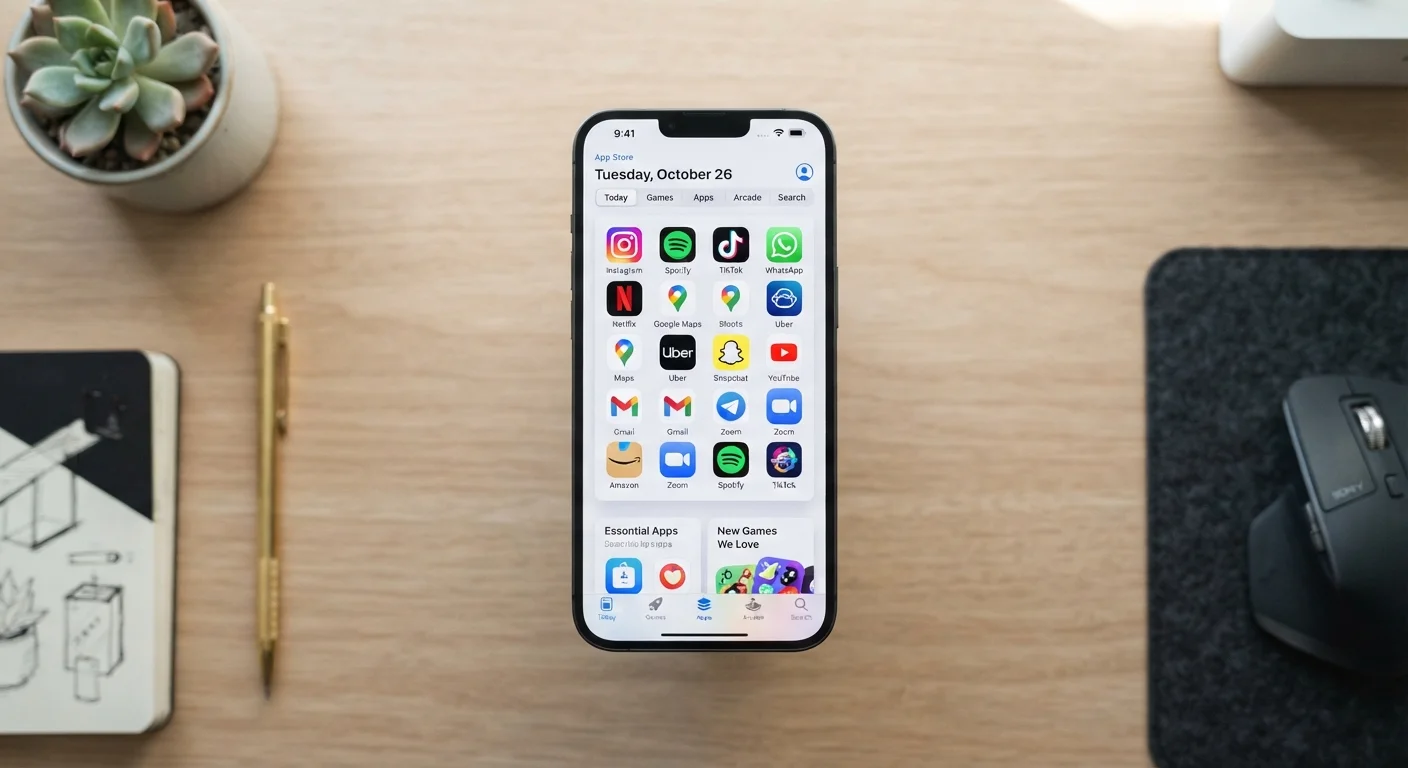
An app store is a digital marketplace where software applications are distributed to device users. The store operator controls which apps appear, how they are organized, and under what conditions they can be removed. Two stores dominate the US market: Apple's App Store for iOS devices and Google Play for Android devices.
Each platform uses a sandboxed distribution model, meaning apps are cryptographically signed and tied to the store's identity system before they reach a device.
How apps get approved in the first place
Before an app appears in a store, the developer submits it to the platform operator for review. Apple's App Store uses a manual review process where staff check apps against a published set of guidelines covering safety, privacy, legal compliance, and content. Google Play combines automated scanning with human review. Both platforms check for malware, prohibited content, and deceptive behavior.
The review process is not exhaustive. Reviewers work at scale across millions of submissions and cannot audit every line of code by hand. Automated tools scan for known malicious patterns, but novel threats sometimes pass through. This is why store approval is a starting point for trust, not a final word on it. Knowing what permissions an app requests after install is equally important. See what app permissions actually mean for a breakdown of what those requests indicate.
Developers who fail review receive feedback and can resubmit. Apps that violate policies after approval can be reviewed again at any time, not just at submission.
What drives an app's ranking
Store rankings are not a neutral measure of quality. The signals that push an app up the charts include total download volume, download velocity (how fast installs accumulate), retention rates, and user ratings. Paid placements appear prominently in search results on both major platforms, which means an app near the top of a search may be there because the developer paid for visibility, not because it is the most relevant result.
User ratings shape visibility, but the rating system has known weaknesses. Developers can prompt users to rate the app at moments designed to capture a positive response, such as right after a successful action. Review fraud, where bulk fake ratings are submitted, violates store policies but does occur. Both Apple and Google periodically purge suspicious reviews.
~3.7M
Apps available on Google Play
Figures from app intelligence trackers as of recent years place Google Play's catalog in this range, though counts shift with removals and additions.
~1.8M
Apps available on Apple's App Store
Apple's catalog is smaller in part because its review process rejects a higher proportion of submissions relative to Google Play.
30%
Standard store commission on in-app purchases
Both Apple and Google charge up to 30 percent on in-app purchases and subscriptions, though reduced rates apply in certain cases.
Algorithms also weight recency. An app with strong recent activity can outrank a long-established app with a larger total review count. This means rankings shift continuously and a high rank on one day does not indicate long-term standing.
How and why apps get removed
App removal happens through four main routes. First, the developer removes the app voluntarily, often when discontinuing a product or replacing it with a new version. Second, the store operator removes the app for policy violations discovered after approval, such as unauthorized data collection, a privacy regulation breach, or content that violates updated guidelines. Third, a legal order compels removal, which can be jurisdiction-specific. Fourth, some regions have seen government-directed removal of specific apps following regulatory rulings.
Store operators can remove apps with immediate effect and are not required to notify users in advance. If you rely on an app for something consequential, it is worth knowing whether the developer maintains an alternative distribution channel, because once an app leaves a store, there is no guaranteed recovery path through that store.
If you are building your digital toolkit and want to think through which apps are worth keeping long-term, organizing your digital life is a practical place to start. For tracking what recurring costs those apps generate, subscription app fatigue covers how to audit what you are paying.
What store policies actually cover
Both major platform operators publish detailed developer guidelines that cover content restrictions, privacy requirements, in-app purchase rules, and advertising behavior. These documents are updated periodically, and changes can require existing apps to be modified or face removal.
Privacy regulations have added another layer. US state laws, particularly California's privacy statutes, impose data handling requirements that feed into store policies. Apps that collect certain categories of data must disclose it in a standardized privacy label visible in the store listing before download. These labels are self-reported by developers, though stores conduct spot checks.
Understanding the vocabulary around apps makes these policies easier to parse. A plain-English glossary of app and software terms defines the terminology you will encounter most often.