
The Real Reasons Cats Scratch Furniture (And What Actually Redirects the Habit)

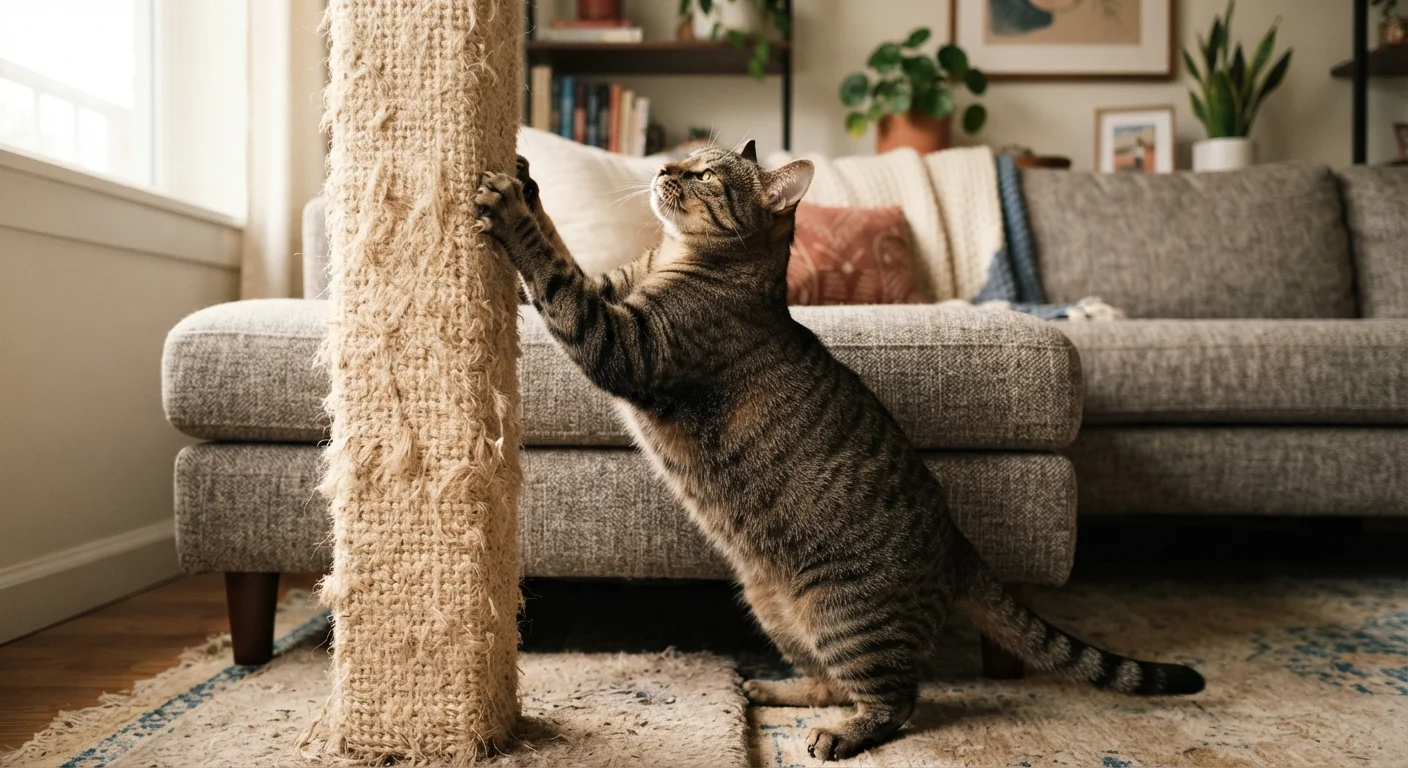
Key Takeaways
- Scratching is a biological need, not defiance or boredom-driven bad behaviour.
- Cats scratch to maintain claws, stretch muscles, and leave scent and visual marks.
- Post placement matters more than post material; location near scratch targets works best.
- Punishment rarely stops scratching and can increase stress-related behaviours.
- Nail trims and appropriate scratching surfaces used together give the most consistent results.
Why cats scratch: the biology behind the behaviour
Scratching furniture does not mean a cat is poorly trained or acting out. It means the cat is doing what cats do: maintaining their claws, stretching their bodies, and communicating through scent and visual marks left on surfaces in their territory. All of these functions are normal and recur throughout a cat's life, so the goal is never to eliminate scratching but to give it an appropriate outlet.
Cats that live entirely indoors tend to scratch more frequently on household surfaces because those surfaces are the only territory available to them. The health trade-offs of indoor versus outdoor living affect many behaviours, and scratching intensity is one of them.
Myth
Cats scratch furniture to get back at their owners or out of spite.
Fact
Scratching is driven by instinct, not emotion directed at people. Cats have no concept of revenge.
The behaviour feels targeted because it happens on items you use and value, like sofas or chair arms. Those surfaces carry your scent heavily, which makes them attractive scratch targets for reasons explained below. The cat is responding to cues in the environment, not to grievances against you.
Myth
Scratching is mainly about sharpening claws.
Fact
Claw maintenance is one function, but scratching also stretches muscles, deposits scent, and leaves a visual mark for communication.
Cats have scent glands between their toe pads. Each scratch session deposits pheromones on the surface, which communicates information to other cats (and reassures the cat itself in its own territory). The visible shredded fibres act as a secondary visual signal. The full-body stretch involved also works the muscles of the spine, shoulders, and forelimbs in a way that passive rest does not.
Understanding all four functions explains why a single scratching post in a back hallway often fails: the cat still needs to mark the social zones of the home.
Myth
If you provide a scratching post, the cat should stop scratching furniture automatically.
Fact
Cats need posts placed where they already want to scratch, not where it is convenient for owners.
Post placement is the most common reason redirection fails. If your cat scratches the corner of a couch in the living room, a post tucked behind a door in another room does not serve the same territorial function. Place posts directly beside or in front of the targeted furniture first. Once the cat uses the post consistently, you can shift it a few inches at a time over weeks.
Post height matters too. Cats need to fully extend their bodies while scratching. Posts under 28 inches tall often do not allow this, so cats continue using furniture that lets them stretch properly.
Myth
Soft, carpeted posts are the best choice because they feel comfortable.
Fact
Many cats prefer surfaces with a coarser texture, such as sisal rope or corrugated cardboard, because they allow the claws to catch and drag.
Carpet-covered posts can actually be counterproductive if your cat already scratches carpet flooring, since the post reinforces the same texture. Watch what surfaces your cat gravitates to. Cats that target upholstery often respond well to sisal rope. Cats that scratch cardboard boxes may do best with horizontal cardboard scratch pads rather than vertical posts.
Offering two surface types side by side for a week or two lets you observe a clear preference without guessing.
Myth
Punishment, like spraying water or saying 'no,' will train a cat out of scratching.
Fact
Punishment suppresses the behaviour in your presence but does not redirect the underlying drive, and it can raise general stress levels.
When a cat learns that scratching the couch earns a startle, it typically waits until you leave the room. The territorial and physical needs remain, so scratching continues. Elevated stress can produce other unwanted behaviours such as hiding, over-grooming, or litter box avoidance. Positive redirection, placing an appealing post at the scratch site and rewarding its use with a treat or praise, changes what the cat does rather than just when it does it.
Myth
Declawing is a straightforward solution that does not affect a cat's wellbeing.
Fact
Declawing involves the amputation of the last bone of each toe and carries documented risks including chronic pain and altered gait.
The American Association of Feline Practitioners opposes declawing as an elective procedure for the convenience of owners. Post-surgical complications can include nerve damage, bone fragments, and long-term sensitivity that affects how a cat walks and stands. Many cats also lose confidence using a litter box after the procedure because digging becomes uncomfortable. Behavioural alternatives address the root behaviour without these physical consequences. If you are weighing options, a conversation with your veterinarian will give you the most accurate picture for your cat's specific situation.
What actually works for redirecting the habit
Effective redirection comes down to three practical steps: matching the post surface to the cat's demonstrated preference, placing the post where the cat already wants to scratch, and pairing post use with positive reinforcement. Nail trims every two to three weeks reduce the physical satisfaction of digging into fabric, which makes the transition to a post easier. Your veterinarian or a groomer can show you the correct technique; see the home grooming guide for cat owners for a practical walkthrough.
Double-sided tape applied to furniture surfaces works for many cats as a short-term deterrent while the post becomes established. Cats generally dislike the sticky texture and avoid the surface without becoming stressed or fearful, unlike spray punishment.
Do not use deterrent sprays on the post itself
Some owners accidentally spray citrus or bitter deterrents on the new scratching post thinking it will force the cat toward it. Deterrents belong on the furniture surface you want the cat to avoid, never on the post you want the cat to use. Spraying the post makes it unappealing and defeats the purpose of the redirection strategy.
If your cat suddenly scratches more than usual or scratches while vocalising, a veterinary check is worth scheduling. Changes in scratching patterns can sometimes accompany stress or physical discomfort. Cats are also known to conceal signs of illness in other ways; the reasons cats hide when unwell article covers those signals in detail.
This article is for general informational purposes only and does not constitute veterinary advice. Consult a licensed veterinarian for guidance specific to your cat's health and behaviour.