

Key Takeaways
- Most cats need brushing, nail trimming, and ear checks as core home grooming tasks.
- Short-haired cats typically need brushing once a week; long-haired cats often need daily attention.
- Never use human nail clippers or scissors on a cat's claws.
- Grooming sessions are also a good opportunity to check for lumps, parasites, or skin changes.
- A professional groomer or veterinarian is the right choice for matted fur or an uncooperative cat.
- Starting grooming habits early in a cat's life makes the process easier for both owner and cat.
What you will need
Why grooming at home matters
Cats are famously tidy animals, but self-grooming has limits. Loose fur accumulates into hairballs, nails grow into furniture or skin if left unchecked, and ears can collect debris that leads to infection. A consistent home routine catches these issues early and keeps your cat comfortable between veterinary visits.
Grooming is also a practical health check. Running your hands and a brush over your cat's body regularly means you are more likely to notice a new lump, a bald patch, or a skin irritation before it becomes a bigger problem. For a broader look at preventive care habits, the Pet Health and Wellness hub is a useful starting point.
If you have an outdoor cat, grooming sessions matter even more because outdoor environments expose cats to mud, burrs, and parasites. The article on indoor vs outdoor cat health trade-offs covers why lifestyle shapes care needs.
Start young when you can
Kittens introduced to brushing and nail trimming early tend to accept grooming far more readily as adults. Even brief, gentle handling of paws and ears during kittenhood builds familiarity. If your cat is older and new to grooming, keep early sessions very short (two to three minutes) and increase duration gradually as trust builds.
What you will need
Gathering the right tools before you start makes the session go more smoothly and reduces the chance of accidental injury.
Slicker brush
Removes loose fur and minor tangles from both short- and long-haired coats.
Wide-toothed comb
Works through thicker or longer fur and helps detect mats before they tighten.
Cat-specific nail clippers
Designed for the curved shape of cat claws; human clippers can split the nail.
Styptic powder
Stops minor bleeding quickly if the nail quick is nicked during trimming.
Veterinarian-recommended ear cleaner
Loosens and removes surface debris from the outer ear canal safely.
Soft cloths or cotton balls
Used for gentle face wiping and ear cleaning without abrasion.
Non-slip mat
Gives the cat stable footing on a table, reducing anxiety during the session.
Keep all tools in one dedicated bag or box so they are easy to find. Cats pick up on owner hesitation, and fumbling for equipment mid-session can break their calm.
Step-by-step grooming routine
Work through these steps in order. If your cat becomes stressed at any point, stop and try again later rather than pushing through. Short, positive sessions build tolerance over time.
Choose a calm moment and set up your space
Pick a time when your cat is relaxed, ideally after a meal or a play session. Place a non-slip mat on a table or work at floor level if your cat prefers it. Have all tools within arm's reach before you begin.
Brush the coat
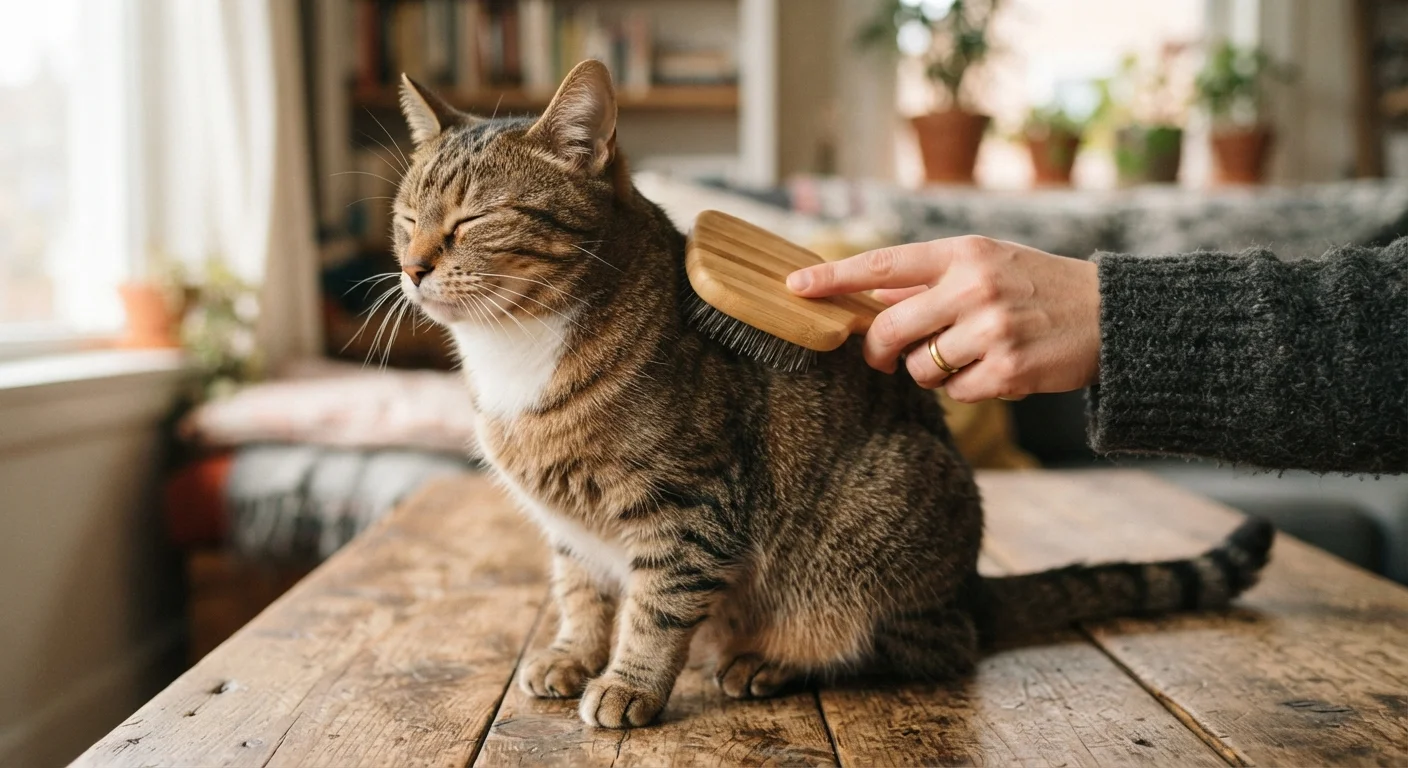
Work in the direction of hair growth using a slicker brush or a wide-toothed comb. Start at the neck and move toward the tail, then address the belly and legs if your cat allows it. For long-haired cats, section the fur with your fingers to avoid pulling. Remove accumulated fur from the brush frequently so it glides smoothly.
Short-haired cats generally need one brushing session per week. Long-haired breeds such as Persians or Maine Coons benefit from daily brushing to prevent matting.
Trim the nails
Wrap your cat gently in a towel if it helps them stay still. Press each toe pad gently to extend the claw. Identify the pink quick inside the claw. Cut only the clear, curved tip using cat-specific nail clippers, staying a few millimeters away from the quick.
Most cats need a trim every two to four weeks. You do not need to do all four paws in one session; splitting across two short sessions is fine.
Check and clean the ears
Look inside each ear for dark brown or black debris, redness, or an unusual smell. A small amount of light tan wax is normal. If the ear looks clean, no cleaning is needed. If there is visible surface debris, apply a few drops of a veterinarian-recommended ear cleaner to a cotton ball and gently wipe the outer part of the ear canal. Do not insert anything into the ear canal itself.
Wipe the face and check the eyes
Dampen a soft cloth with warm water and gently wipe around the eyes to remove any dried discharge. Use a separate corner of the cloth for each eye to avoid cross-contamination. Check that the eyes are clear and that the third eyelid is not visible. For flat-faced breeds such as Persians or Exotic Shorthairs, this step may be needed daily because tear ducts overflow more easily.
Finish with a full-body check
Run your hands over your cat's entire body, including under the chin, along the spine, and beneath the belly. Feel for any new lumps, swelling, or tender spots. Part the fur in a few places to look at the skin for redness, flaking, or signs of fleas such as tiny black specks.
Grooming also connects naturally to nail care habits. Cats that scratch appropriate surfaces tend to wear their claws down slightly, which is one reason the scratch redirection strategies covered in our scratching article complement a regular nail trim routine.
When to call a professional
Home grooming covers most routine needs, but some situations call for a veterinarian or a trained groomer. Matted fur that is tight against the skin should not be cut with scissors at home because the skin is often pulled up into the mat and a snip can cause a serious wound. A groomer with the right tools can remove mats safely.
Cats that become aggressive during grooming are communicating distress, not defiance. Forcing the session risks injury to both of you. A veterinarian can rule out pain as the cause and, if needed, discuss options for low-stress handling. If you are new to cat ownership and still building your care confidence, the first-time pet owner guide covers what to expect in those early months.
Parasite concerns found during grooming, such as flea dirt or ticks, deserve their own follow-up. The parasite prevention overview explains the treatment and prevention landscape clearly.
This article is for general informational purposes only and is not a substitute for veterinary advice. Always consult a qualified veterinarian for concerns about your cat's health.