

Key Takeaways
- Squealing is usually the first audible sign that brake pads are nearing the end of their service life.
- Grinding means metal is already contacting metal, which can damage rotors and raise repair costs.
- A brake pedal that pulses or sinks toward the floor points to a separate mechanical problem beyond normal pad wear.
- Most passenger vehicles need brake pad inspection every 12,000 miles, though driving style and load affect this significantly.
- A professional mechanic should inspect brakes immediately if the vehicle pulls to one side or the warning light stays on.
Brake wear
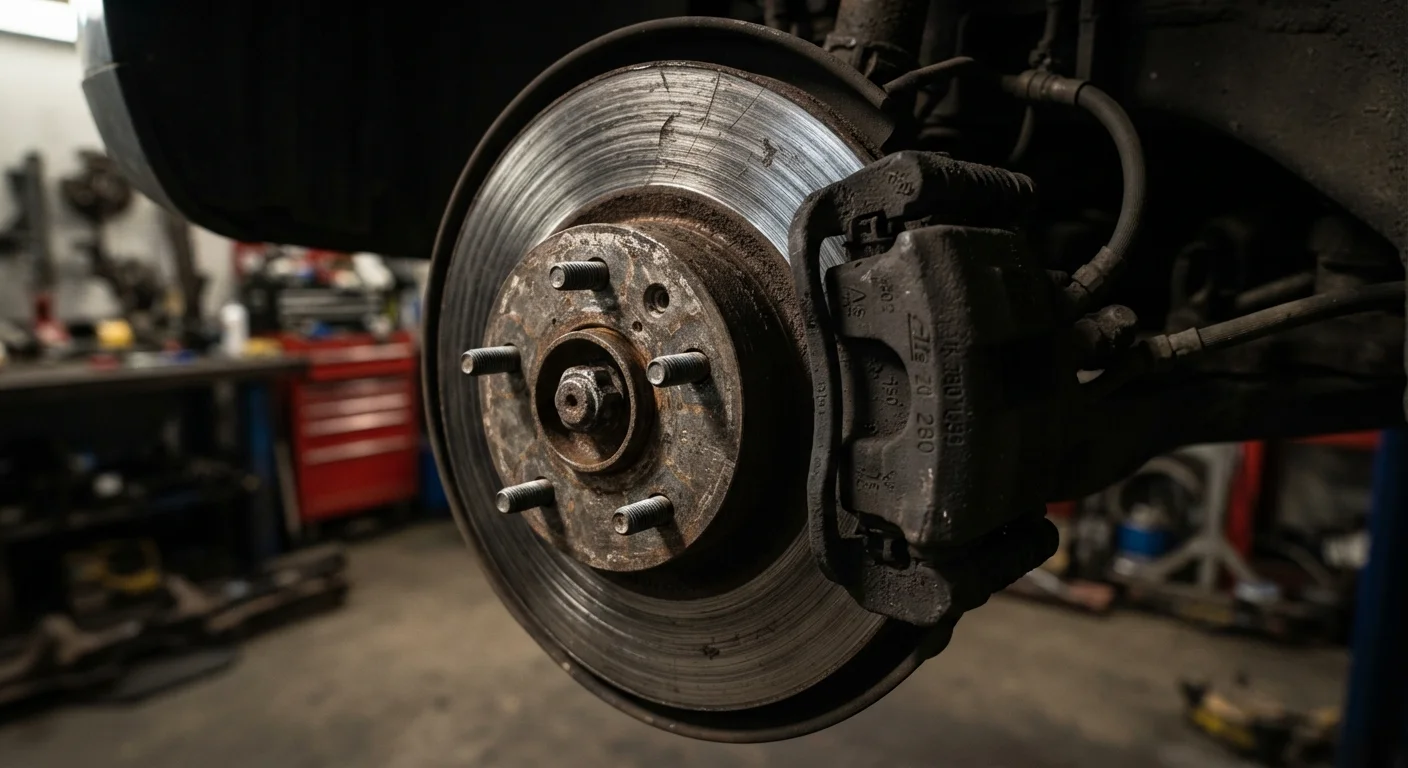
Brake wear is the gradual erosion of the friction materials in your braking system, primarily the brake pads and, over time, the rotors. Every time you press the brake pedal, those materials grind against spinning metal to slow your vehicle, and that contact slowly removes material. When enough material has worn away, stopping distances increase and component damage can follow.
Most modern disc brake pads start at roughly 10 to 12 mm of friction material. Mechanics typically recommend inspection at 4 mm and replacement before 2 mm, the point at which the metal wear indicator contacts the rotor.
How brakes wear down
Disc brakes, the standard on virtually all modern US passenger vehicles, work by squeezing two friction pads against a spinning metal rotor when you press the pedal. The friction converts kinetic energy into heat and slows the vehicle. That process is deliberately destructive: the pad material is designed to wear away gradually so the rotor is preserved for as long as possible.
Pad wear is not linear. Aggressive braking, towing, mountainous terrain, and stop-and-go city traffic all accelerate erosion. A vehicle used mainly for highway miles and driven conservatively may still have usable pads at 60,000 miles, while the same vehicle used for city delivery work might need pads every 15,000 miles.
Rotors wear too, though more slowly. Each rotor is cast to a minimum thickness specification stamped on its edge. Once a rotor thins below that specification through normal friction or machining, it cannot safely dissipate heat and must be replaced. Checking brake condition before a long drive is one of the most practical inspections a driver can do.
Sounds that signal a problem
Sound is often the first message a worn brake system sends. Knowing what each noise means helps drivers respond at the right level of urgency.
Squealing
Most brake pads have a small metal tab called a wear indicator built into the friction material. When the pad wears to roughly 2 to 3 mm, the tab contacts the rotor and produces a high-pitched squeal. This is a deliberate early warning, not a sign of immediate failure. However, it should not be ignored: that gap between the warning squeal and metal-on-metal contact is not large.
Grinding
A grinding noise during braking means the pad material is fully gone and metal backing is pressing directly against the rotor. This damages the rotor surface, often making resurfacing impossible and replacement necessary. Repair costs rise substantially once grinding begins. Unusual car sounds in this category require prompt professional attention.
Scraping or rattling at low speed
A loose stone or road debris trapped between the pad and rotor can scrape intermittently. That sound often disappears on its own after a few stops. Persistent rattling from the wheel area may point to a loose pad hardware clip or a caliper mounting bolt, both of which a mechanic can check quickly.
Check pad thickness at every tyre rotation
Most mechanics can visually inspect brake pad thickness while a wheel is off for rotation. Scheduling both together costs no extra labour time and gives you a regular look at wear before audible symptoms appear. Asking for a written pad thickness measurement each visit lets you track wear rate over time.
Physical symptoms beyond noise
Not all brake wear announces itself through sound. Drivers should also pay attention to how the vehicle behaves when stopping.
Pulling to one side
If the vehicle drifts left or right during braking, one brake is applying more force than the other. Common causes include a sticking caliper, uneven pad wear between sides, or contaminated brake fluid. Pulling can also come from uneven tyre pressure, so checking tyres first is reasonable, but if pressure is even and the pull persists under braking, a brake inspection is warranted. See suspension and steering wear for related symptoms that can cause similar handling changes.
Vibration or pedal pulsation
A brake pedal that vibrates or pulses underfoot during a normal stop often points to rotor thickness variation. Rotors can develop uneven spots from heat cycling, heavy use, or corrosion. The variation is small in millimeters, but the hydraulic feedback through the pedal is noticeable. This is distinct from the natural pulsation some anti-lock braking systems produce during hard stops, which is normal and expected.
Longer stopping distances
If the vehicle takes noticeably more distance to stop than it used to, that is a performance decline worth treating seriously. Glazed pads, contaminated rotors, low brake fluid, or air in the brake lines can all reduce stopping power. Any sudden change in stopping performance, particularly one that appears without obvious cause, calls for immediate professional inspection rather than a wait-and-see approach.
Dashboard warnings and fluid checks
Modern vehicles include a brake warning light on the instrument cluster. On most cars this light serves two separate functions: it activates when the parking brake is engaged, and it also illuminates when the brake fluid level drops below a minimum threshold in the reservoir. Low fluid can mean the pads have worn far enough to lower the fluid level naturally, or it can indicate a leak in the system. Either condition needs professional diagnosis.
Brake fluid absorbs moisture over time, which lowers its boiling point. Degraded fluid can cause brake fade under sustained use, such as descending a long grade. Many manufacturers recommend flushing brake fluid every two years regardless of mileage. A seasonal maintenance review is a practical time to include a fluid check.
Tyre condition interacts directly with stopping performance. Worn tread reduces the grip available when the brakes apply maximum force. Tyre care habits that maintain even wear across all four corners help braking work as designed.
This article is for general informational purposes only. Brake system repairs involve safety-critical components. Have a qualified mechanic inspect and service your brakes. Do not attempt brake repairs without the proper tools, training, and safety precautions.