

Key Takeaways
- Suspension and steering parts wear gradually and rarely fail all at once, making early detection difficult without a physical inspection.
- Ball joints, tie rod ends, control arm bushings, and shock absorbers are the components that degrade most commonly.
- Symptoms like pulling, vibration, or clunking noises often indicate worn suspension or steering parts, not just tyre problems.
- Most vehicles benefit from a steering and suspension inspection at least once a year or whenever unusual handling is noticed.
- Worn suspension components accelerate tyre wear and can compromise wheel alignment, creating a cycle of compounding costs.
Suspension and steering wear
Suspension and steering wear refers to the gradual degradation of the mechanical components that connect your vehicle to its wheels and allow you to control its direction. These parts absorb road impacts, maintain wheel alignment, and translate steering input into movement. Unlike engine oil or tyres, they have no fixed replacement interval printed in most owner manuals, which is why they are frequently overlooked.
Wear rates depend on driving surface, vehicle weight, component material, and whether the parts are sealed or serviceable (greaseable). Sealed components cannot be lubricated in service and must be replaced once worn.
Why suspension and steering maintenance goes unnoticed
Oil changes, tyre rotations, and brake pads occupy most of the attention in routine vehicle maintenance. Suspension and steering components tend to wear slowly and silently, without warning lights or obvious performance drops in the early stages. By the time a driver notices something is wrong, the wear is often significant.
Most owner manuals specify oil change intervals and spark plug replacement schedules, but offer little guidance on suspension inspection frequency. That gap leaves many drivers unaware that these systems require periodic attention at all. Unlike brake pads, which provide audible feedback through squealing, worn bushings or ball joints often communicate through subtle handling changes that are easy to dismiss as road texture or tyre noise.
The result is that steering and suspension wear tends to accumulate quietly until a component fails, or until a mechanic notices it during an unrelated service visit.
The components that wear and what they do
Several distinct parts make up the suspension and steering systems, and each degrades differently.
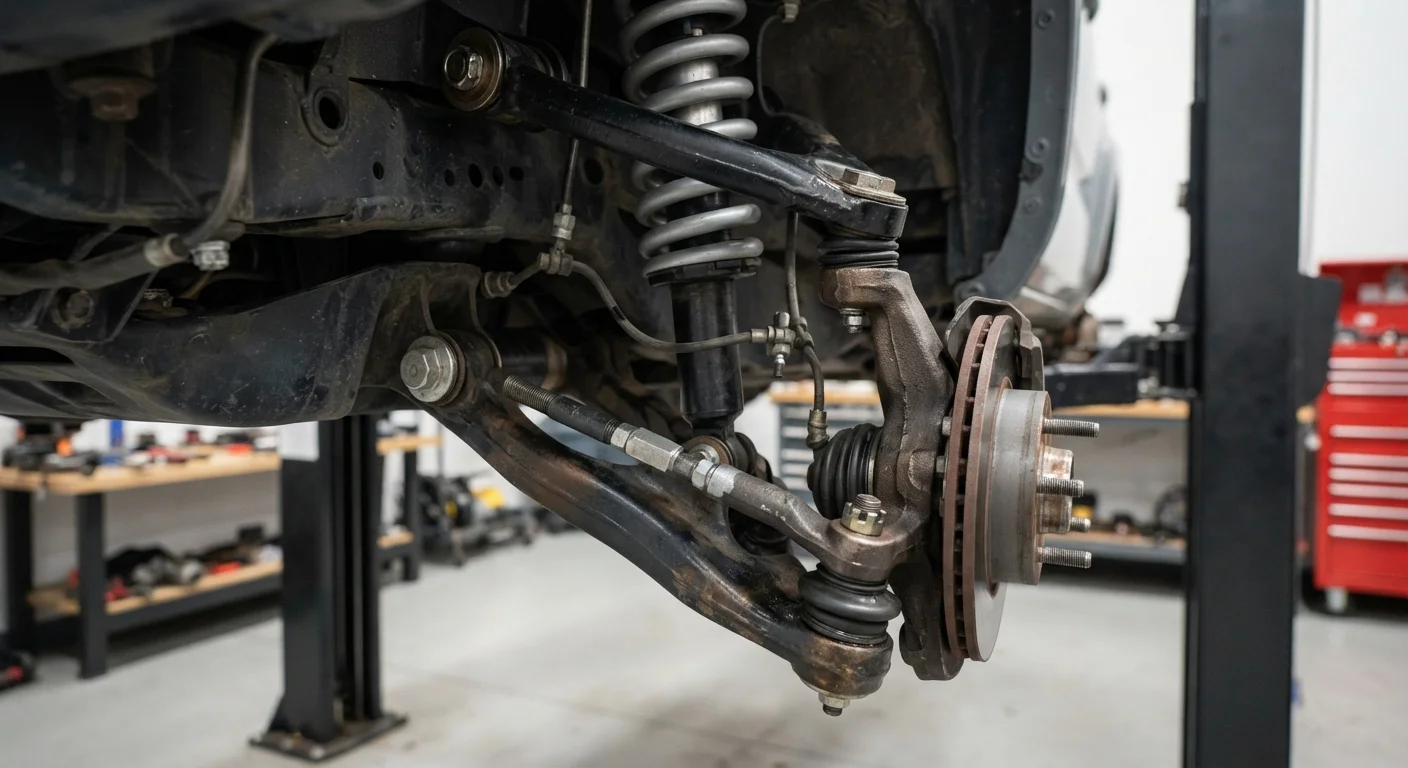
Ball joints connect the control arms to the steering knuckle, allowing the wheel to pivot for steering while moving up and down with the road. They are load-bearing joints with a grease-packed socket. As the socket wears, the joint develops play, which shows up as clunking sounds or vague steering feel. You can read more about how unusual noises map to specific mechanical issues in our guide to car noises and what they mean.
Tie rod ends connect the steering rack to the wheels. When they wear, steering becomes imprecise, and the vehicle may pull to one side. Worn tie rod ends also knock wheel alignment out of specification, causing uneven tyre wear.
Control arm bushings are rubber or polyurethane sleeves that cushion the connection between the control arm and the vehicle frame. Rubber degrades from heat, age, and road chemicals. Cracked or collapsed bushings allow unwanted movement that affects ride quality and alignment stability.
Shock absorbers and struts dampen the oscillation after a wheel hits a bump. A leaking or worn shock absorber cannot control that motion effectively, leading to a bouncy ride, longer braking distances, and reduced tyre contact with the road surface.
Ask for a suspension check during routine service
When your vehicle goes in for an oil change or tyre rotation, ask the technician to visually inspect the suspension and steering linkage while the vehicle is on the lift. This costs nothing extra at most shops and can catch deteriorating bushings or leaking shocks before they cause secondary problems like alignment drift or accelerated tyre wear.
Sway bar links and end links connect the anti-roll bar to the suspension. They wear relatively quickly compared to other components and often produce a rattling sound over bumps when loose or broken.
How wear shows up in everyday driving
Wear patterns in suspension and steering rarely announce themselves dramatically at first. The early signals are worth knowing.
A vehicle that pulls consistently to one side, even on a flat straight road, can indicate unequal suspension wear or a loose tie rod end rather than a simple alignment issue. Vibration through the steering wheel at highway speeds is often associated with wheel balance, but it can also point to worn steering components that allow the wheels to oscillate slightly. Wheel alignment and balancing are different services, and distinguishing between them requires checking the suspension condition first.
Uneven tyre wear is another signal. If the inner or outer edge of a tyre wears faster than the center, suspension geometry is likely off. That geometry is held in place by components like ball joints and control arm bushings, so tyre wear is sometimes a downstream consequence of suspension degradation. Our guide on tyre care habits covers how to read tread wear patterns.
A clunking or knocking sound from the front of the vehicle when turning or going over a speed bump is one of the more direct indicators of a worn ball joint or sway bar link. Braking performance can also be affected, because worn shocks reduce the tyre's contact patch with the road during deceleration. Brake wear symptoms and suspension wear can sometimes produce overlapping sensations, so a full undercarriage inspection is more informative than addressing each symptom in isolation.
50,000-100,000 mi
Typical shock absorber service range
Industry technician guidance generally places shock absorber inspection or replacement within this mileage window, though driving conditions significantly affect actual wear rates.
~$250-$600
Estimated cost to replace a ball joint (per side)
Labor and parts costs vary by vehicle make, model, and region; these figures reflect general US market ranges reported by automotive repair data sources and are not guarantees.
70,000-150,000 mi
Common ball joint and tie rod end lifespan
Actual longevity depends on road conditions, driving habits, and whether the components are sealed or serviceable with grease fittings.
Inspection frequency and what to expect from a mechanic
A reasonable baseline is a physical suspension and steering inspection once per year or every 12,000 miles, whichever comes first. Vehicles driven frequently on unpaved roads, in areas with harsh winters where road salt accelerates rubber deterioration, or that carry heavy loads regularly may warrant more frequent checks.
During an inspection, a technician lifts the vehicle, removes the wheels if necessary, and checks joints for play by applying force and observing movement. Bushings are examined visually for cracking or collapse. Shock absorbers are checked for fluid leaks and bounce response. The mechanic should also inspect the steering rack for looseness and check power steering fluid condition if applicable, in the same way that transmission fluid and engine oil have distinct roles and inspection criteria.
If a component is found worn, it is worth replacing related parts in the same area at the same time. Control arm bushings and ball joints, for example, often wear at comparable rates on the same axle. Replacing only one side typically means returning for the other within a short period, which doubles labor costs.
This article is for general informational purposes only and does not constitute professional mechanical advice. For diagnosis or repair of specific vehicle issues, consult a qualified mechanic or automotive technician.