

Key Takeaways
- A credit-based insurance score draws from your credit report but is calculated differently than a lending credit score.
- Insurers in most U.S. states can legally use this score to set auto insurance premiums.
- California, Hawaii, Massachusetts, and Michigan prohibit or sharply restrict the practice.
- Payment history, amounts owed, and credit age carry the most weight in most insurance scoring models.
- Improving your general credit health tends to improve your insurance score over time.
- You can request the insurer disclose which credit factors affected your rate.
Credit-based insurance score
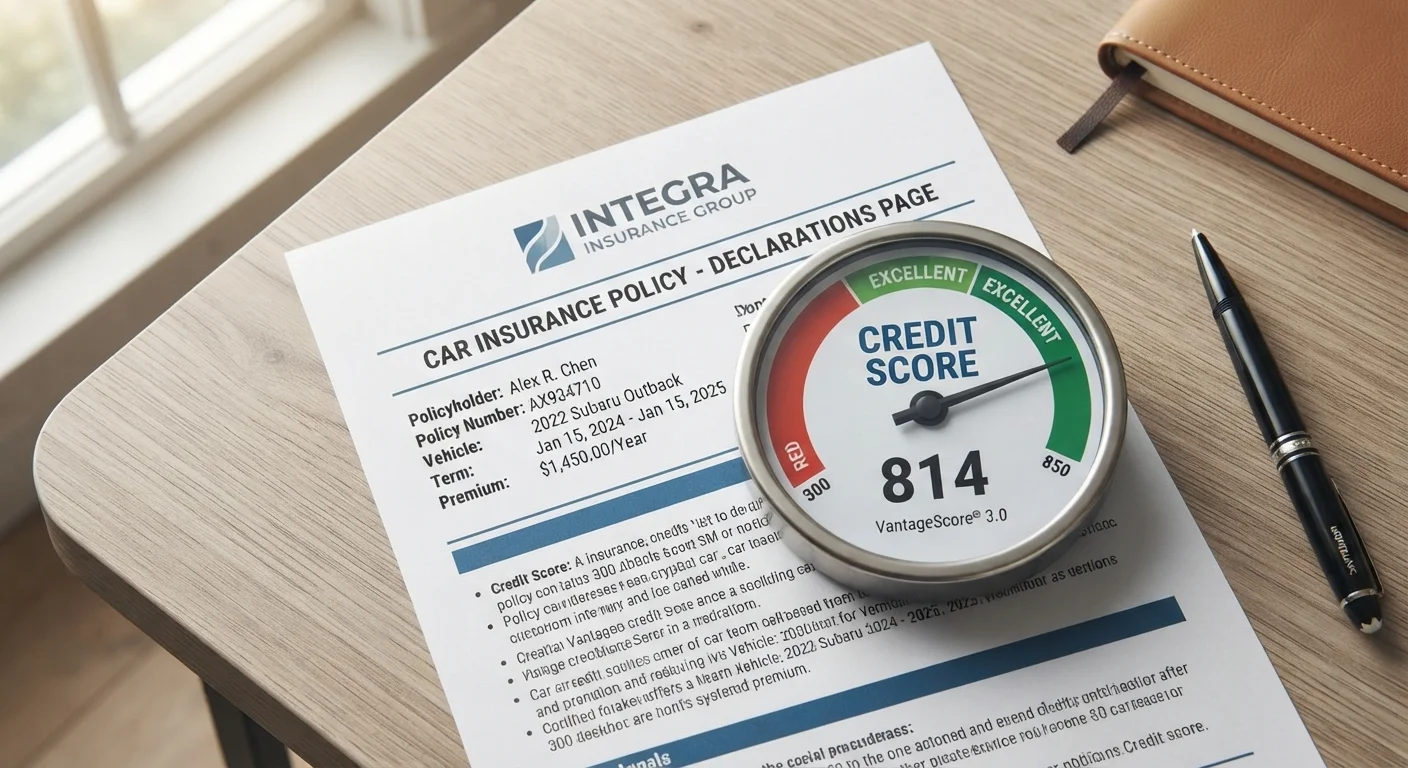
A credit-based insurance score is a number insurers calculate from your credit report data to predict the likelihood you will file a claim. It is not the same as your FICO score or the score a lender pulls when you apply for a loan. Insurers in most states are allowed to use this score as one factor when setting your auto insurance premium.
Credit-based insurance scores are governed by state law, and the specific data elements weighted can differ between scoring models used by different insurers.
What a credit-based insurance score actually is
When an auto insurer quotes you a premium, it typically pulls your credit report and feeds that data into a proprietary scoring model designed specifically for insurance underwriting. The output is a credit-based insurance score, a number that sits separate from the score your mortgage lender or credit card issuer would see.
The underlying data is the same credit report, but the algorithm weighs the variables differently. A lending score focuses on your ability to repay debt. An insurance score focuses on statistical correlations between credit behavior and claim frequency. Insurers and actuarial researchers have argued that consumers with thinner or weaker credit files tend to file claims more often, though critics of the practice dispute whether that correlation justifies the rating factor.
Importantly, a soft inquiry is used when generating the score, so pulling it does not affect your credit standing.
Which factors carry the most weight
While scoring models vary by insurer and vendor, publicly available information from scoring companies points to a consistent set of variables.
- Payment history: Whether you have paid bills on time is the single largest factor in most models.
- Amounts owed: High utilization of available credit tends to lower scores.
- Length of credit history: Longer credit histories generally produce more stable scores.
- New credit inquiries: Multiple recent hard inquiries can signal financial stress.
- Credit mix: Having different types of accounts (revolving and installment) has a modest positive effect.
Income, race, ethnicity, gender, religion, and marital status are not permitted inputs under federal law and most state insurance codes. Insurers are legally required to base the score only on credit report data.
Request the specific credit factors
If an insurer cites credit information in an adverse rating or underwriting decision, you have a legal right under the Fair Credit Reporting Act to know which factors were involved. Ask the insurer for the specific reason codes and then pull the credit report used to verify its accuracy. Errors on credit reports are more common than many consumers expect.
Where the practice is and is not allowed
Most U.S. states permit insurers to use credit-based insurance scores as a rating factor for personal auto policies. Four states stand as clear exceptions. California, Hawaii, Massachusetts, and Michigan ban or substantially restrict the practice by law.
Several other states impose partial limits, such as restricting use for new customers but not renewals, or requiring insurers to offer a path to reconsideration after a qualifying life event. The National Conference of State Legislatures tracks state-by-state insurance credit scoring laws, and your state's department of insurance is the authoritative source for current rules in your state.
Because rules vary, the impact of your credit profile on your premium depends partly on where you register your vehicle. For a broader view of what else drives your premium, see how to keep auto insurance costs manageable over time.
How this differs from other rating factors
Credit is one variable among many. Insurers also weigh your driving history, annual mileage, vehicle type, and where you garage the car. An at-fault accident, for instance, can sharply raise a premium independent of credit. What happens to your premium after an at-fault accident covers that dynamic in detail.
Some programs de-emphasize or bypass credit entirely. Usage-based insurance programs, which calculate premiums from telematics data about how and how much you drive, offer an alternative rating structure. How usage-based and pay-per-mile insurance programs work explains who tends to benefit from those programs.
What you can do with this information
If you receive an adverse action notice from an insurer citing credit information, federal law (specifically the Fair Credit Reporting Act) gives you the right to know which factors from your credit report affected the decision. You can then obtain a free copy of the credit report used and dispute any inaccuracies with the credit bureau.
Improving your general credit health, paying bills on time, reducing revolving balances, and avoiding unnecessary new credit applications, tends to improve your insurance score over time. The timeline varies, and no immediate fix exists. Because your vehicle's value also affects overall ownership costs, understanding how car depreciation intersects with insurance gives a fuller picture of what you are actually paying for.
This article is for general informational purposes only and does not constitute insurance, financial, or legal advice. Coverage rules, rating factors, and state laws vary. Consult a licensed insurance professional or your state's department of insurance for guidance specific to your situation.