

Key Takeaways
- Depreciation is typically the single largest annual cost of owning a vehicle, often exceeding fuel and insurance combined.
- Many drivers underestimate ownership costs by 30 to 40 percent by omitting depreciation, registration fees, and unplanned repairs.
- Fuel and insurance costs vary widely by driver profile, region, and vehicle type, so use your own figures rather than averages.
- Tracking all cost categories in one worksheet lets you compare vehicles on total cost, not just sticker price.
- Seasonal maintenance and pre-trip inspections help avoid unplanned repair costs that can spike your annual total.
Summary
24 items · 30 to 60 minutes
Why a full cost worksheet matters
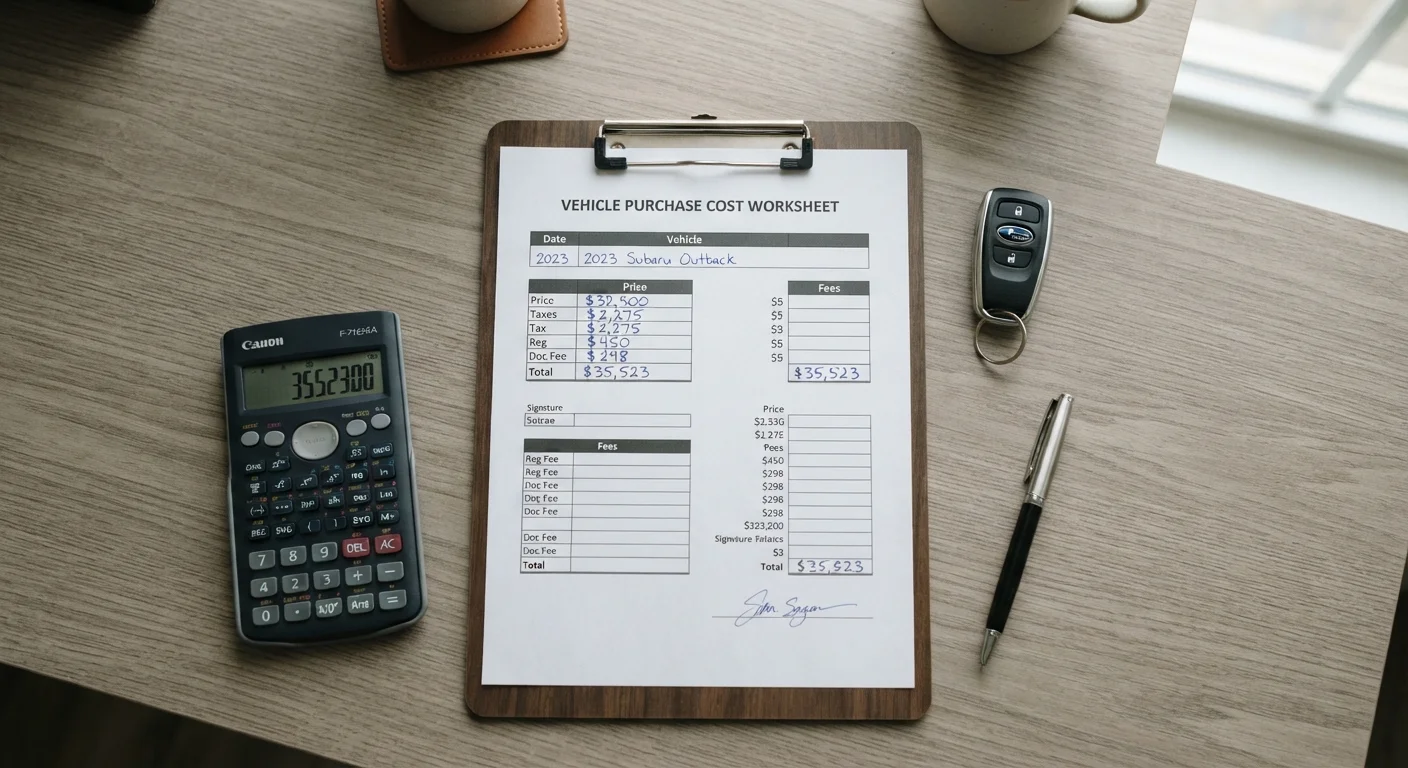
Sticker price and monthly payment figures account for only part of what a vehicle actually costs to own. Drivers who skip a structured cost review routinely discover that fuel, insurance, maintenance, and depreciation push their real annual outlay far above what they budgeted at purchase. This worksheet gives you a category-by-category framework to assemble a complete picture before you sign anything, and to revisit each year while you own the vehicle.
The approach works whether you are evaluating a new purchase, comparing two vehicles side by side, or auditing what your current vehicle actually costs. Fill in your own numbers for each category rather than relying on national averages, which can diverge significantly from your situation based on where you live, how much you drive, and your driving record.
For a detailed look at how one cost category affects both your loan balance and your coverage decisions, see how car depreciation affects insurance. For routine upkeep that directly influences your annual maintenance line, the car maintenance hub is a practical starting point.
Depreciation and financing
Insurance
Fuel
Scheduled maintenance
Tyres
Registration, taxes, and fees
Unplanned repairs and contingency
Ancillary and convenience costs
Tools you will need
Completing this worksheet accurately requires a few data sources. Gather these before you start so estimates reflect your actual situation rather than placeholder figures.
Vehicle owner's manual
Confirms the manufacturer's scheduled maintenance intervals so no required service is omitted from the worksheet.
Current insurance declarations page
Provides exact premium amounts, coverage types, and deductibles for accurate insurance line items.
Vehicle valuation tool (such as those from recognised automotive data sources)
Gives a current market value estimate needed to calculate annual depreciation.
Prior year fuel receipts or bank statements
Lets you calculate actual fuel spending rather than relying on an estimate.
State DMV or motor vehicle authority website
Confirms registration fees, inspection requirements, and any local vehicle taxes applicable to your registration address.
Spreadsheet application
Organises each cost category into a running total and makes year-over-year comparison straightforward.
How to use these cost figures
Once you have populated every line of the worksheet, add the totals to arrive at a true annual ownership cost. Divide by 12 for a monthly figure that can be placed alongside other household expenses. Divide the annual total by your estimated mileage to get a per-mile cost, which is useful when comparing a personal vehicle against rideshare, rental, or public transit alternatives.
Two cost categories deserve special attention. Depreciation is not a cash outflow you will see on a bank statement, but it represents real loss in asset value. A vehicle that loses 15 to 20 percent of its value in year one, as many new vehicles do, can generate a depreciation cost that exceeds what you pay for fuel and insurance combined. The worksheet captures this so it does not disappear from your planning.
Unplanned repairs are the other category that derails budgets. Older vehicles with more mileage carry higher statistical risk of repair costs, and those costs are not evenly distributed across the year. Building a repair reserve into your monthly budget, rather than treating repairs as surprises, is a practical response to this variability. Pairing this worksheet with seasonal maintenance checks and a pre-trip vehicle inspection reduces the likelihood of preventable repair bills inflating your totals.
Do not skip depreciation in your total
Drivers who omit depreciation routinely undercount their true annual cost by thousands of dollars. Even if you plan to keep the vehicle long-term, depreciation represents a real reduction in your net worth that affects future trade-in value and insurance settlement amounts. Include it as a line item every year, not just at the point of sale.
If you plan to sell the vehicle, the total depreciation recorded across years of ownership directly affects what you will net from the sale. A separate preparation process applies once you decide to list. The car-for-sale preparation checklist covers what to do before your listing goes live.
This article provides general financial information for educational purposes only and is not personalised financial or tax advice. Consult a qualified professional for guidance specific to your situation.