

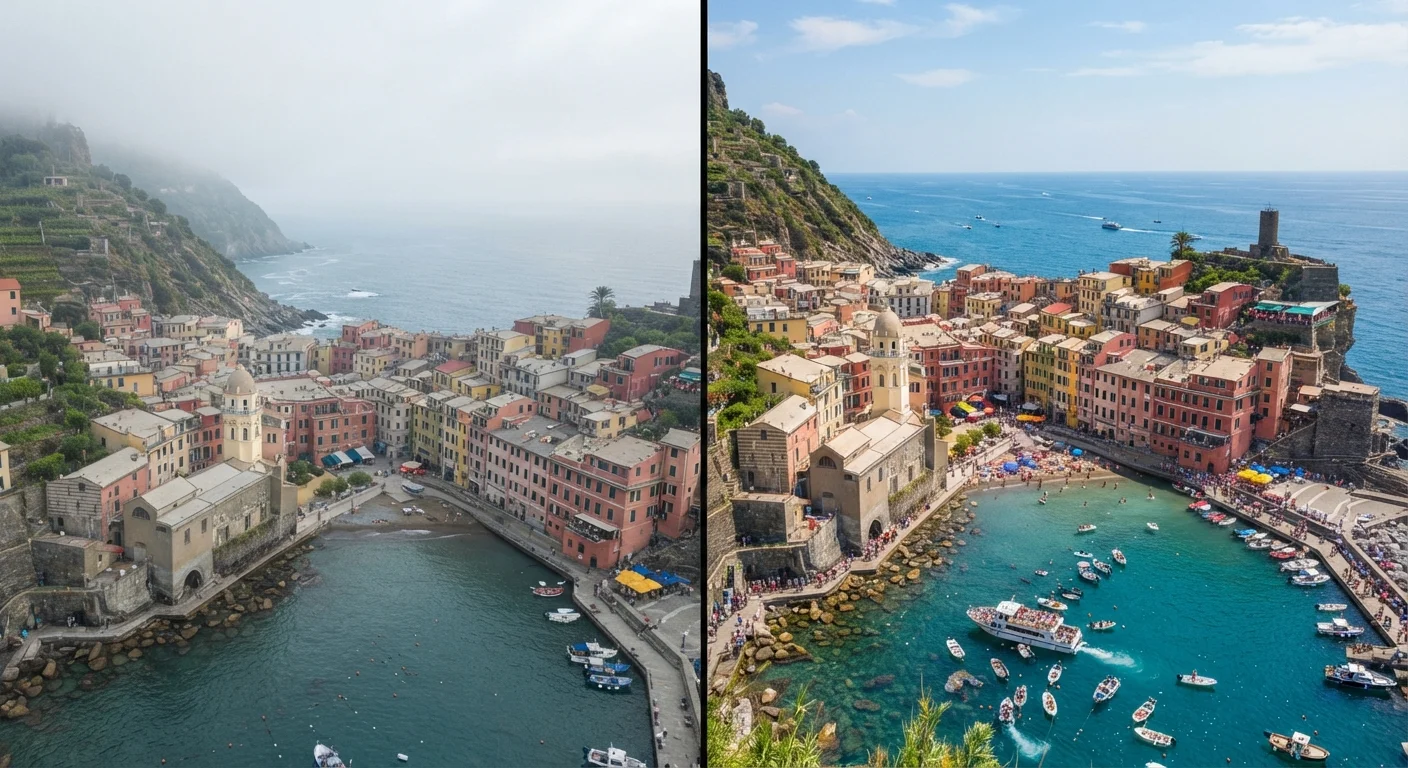
Key Takeaways
- Off-season travel typically means fewer crowds and lower accommodation costs, but some attractions may close.
- Peak-season travel offers reliable weather and full service availability, but at a higher price and more competition for bookings.
- The right season depends on your priorities: budget, experience type, weather tolerance, and flexibility.
- Booking lead times differ significantly between seasons and can affect both cost and availability.
- Some destinations have a 'shoulder season' that offers a middle ground worth considering.
Our Verdict
Neither off-season nor peak-season travel is objectively better. Peak season suits travelers who want predictable conditions, full access to attractions, and a lively atmosphere and can plan well in advance. Off-season suits those with schedule flexibility, tighter budgets, or a preference for quieter experiences, provided they research what remains open.
| Best for | Recommended |
|---|---|
| Budget-conscious travelers with flexible schedules | Off-season travel |
| Families working around school calendars or holidays | Peak-season travel |
| Travelers who want lower prices without sacrificing most services | Shoulder season |
| Those attending specific festivals, events, or seasonal attractions | Peak-season travel |
What defines each season
Peak season at a destination is the window when visitor numbers hit their highest point. At beach destinations in the US, that usually means summer. Ski resorts peak in winter. City destinations tied to cultural events peak around those events, regardless of month. The common thread is that demand drives up prices, fills accommodation quickly, and puts pressure on infrastructure.
Off-season is the inverse: the stretch when most tourists stay away. Some destinations close facilities, reduce transport frequency, or shutter restaurants entirely during this window. Others simply get quieter without losing much of their appeal.
Between the two sits shoulder season, the weeks immediately before or after peak demand. Prices are moderate, crowds are thinner, and most services remain open. For many destinations, shoulder season is worth planning around deliberately. Start with a clear picture of what a destination's seasonal calendar looks like before building your pre-trip research.
What changes when you switch seasons
Five variables shift meaningfully depending on when you travel.
Pricing
Accommodation, flights, and tours price to demand. A hotel room that costs $120 per night in January at a beach destination may exceed $300 in July. That gap widens at popular international destinations. Fees that rarely appear in headline prices also tend to compound during peak season, when timed-entry tickets and resort surcharges are more common.
Crowd levels
Crowds affect more than comfort. At museums or national parks, high visitor numbers mean longer queues, limited parking, and in some cases, timed-entry systems that sell out days or weeks in advance. Off-season, the same sites are often walkable without reservation.
Weather
Peak season usually aligns with the most favorable weather for that destination type. Off-season weather can range from pleasantly mild to genuinely difficult. A European city in November can be cold and rainy; a tropical destination in its rainy season may face daily downpours or hurricane risk. Verify actual historical weather patterns rather than assuming "off-season" means poor conditions everywhere.
Service availability
Smaller operators, seasonal restaurants, and local tour providers often close entirely during the off-season. If specific experiences are central to your trip, confirm they operate during your travel window.
Event access
Some events only happen during peak season by definition. Carnival in Rio, the cherry blossoms in Washington DC, New England foliage. If an event is the reason for the trip, the season is already decided for you.
| Off-season | Shoulder season | Peak season | |
|---|---|---|---|
| Typical pricing | Lowest | Moderate | Highest |
| Crowd levels | Minimal | Light to moderate | Heavy |
| Weather reliability | Variable or unfavorable | Often good | Generally favorable |
| Service availability | Reduced or closed | Mostly open | Fully open |
| Booking lead time needed | Days to weeks | Weeks to months | Months in advance |
| Event access | Limited | Some events | Full calendar |
| Atmosphere | Quiet, uncrowded | Relaxed, moderate traffic | Lively, busy |
Planning lead times by season
How far in advance you need to book varies considerably. During peak season at popular destinations, accommodation sells out months ahead, and prices rise as availability shrinks. Booking six months out for summer travel to US national parks or major European cities is not excessive. During off-season, the same properties often have open availability days before arrival, and last-minute rates can be lower than anything advertised in advance.
Flights follow a similar but less extreme pattern. Peak-season airfare tends to lock in at higher prices earlier. Off-season fares are more forgiving, though the cheapest windows still exist for those who plan rather than scramble.
If you travel frequently, understanding how seasonal timing interacts with insurance coverage is also worth reviewing. Comparing single-trip and annual travel insurance structures helps clarify which approach fits different travel frequencies and seasons.
Check the shoulder window first
Before committing to peak or off-season dates, look up the two to four weeks on either side of the peak window for your destination. Many destinations see noticeably lower prices and thinner crowds during shoulder season while retaining most of their appeal. A quick check of historical occupancy patterns and local event calendars can help you find that window.
Making the decision for your trip
The practical starting point is listing your non-negotiables. If school schedules, specific events, or weather requirements dictate your window, the decision narrows quickly. If you have genuine flexibility, weigh the five variables above against each other and against your budget.
Travelers who want a lively, fully operational destination with predictable conditions should plan for peak season and book early. Those who prefer fewer people, lower costs, and a slower pace can find off-season travel worthwhile, provided they check which services will be running. Slower itineraries pair especially well with off-season travel, since the rhythm of a quieter destination suits a more relaxed pace.
Shoulder season is worth treating as a genuine option rather than an afterthought. At many destinations, the difference in experience between peak and shoulder is small, while the difference in cost and crowd levels is significant.
Whatever window you choose, confirm current entry requirements, weather forecasts, and service schedules with official sources before finalizing bookings. Conditions vary by year, and general seasonal guidance does not substitute for destination-specific verification.