

Key Takeaways
- Body weight alone does not distinguish between fat mass and muscle mass in pets.
- Body condition scoring gives a more complete picture of a pet's fat reserves than a scale reading.
- Muscle loss (sarcopenia) can hide behind a stable or even rising scale number.
- Breed, age, sex, and reproductive status all affect what a healthy weight looks like for an individual animal.
- Vets use BCS, muscle condition scoring, and sometimes bloodwork together to assess overall health.
Body condition scoring
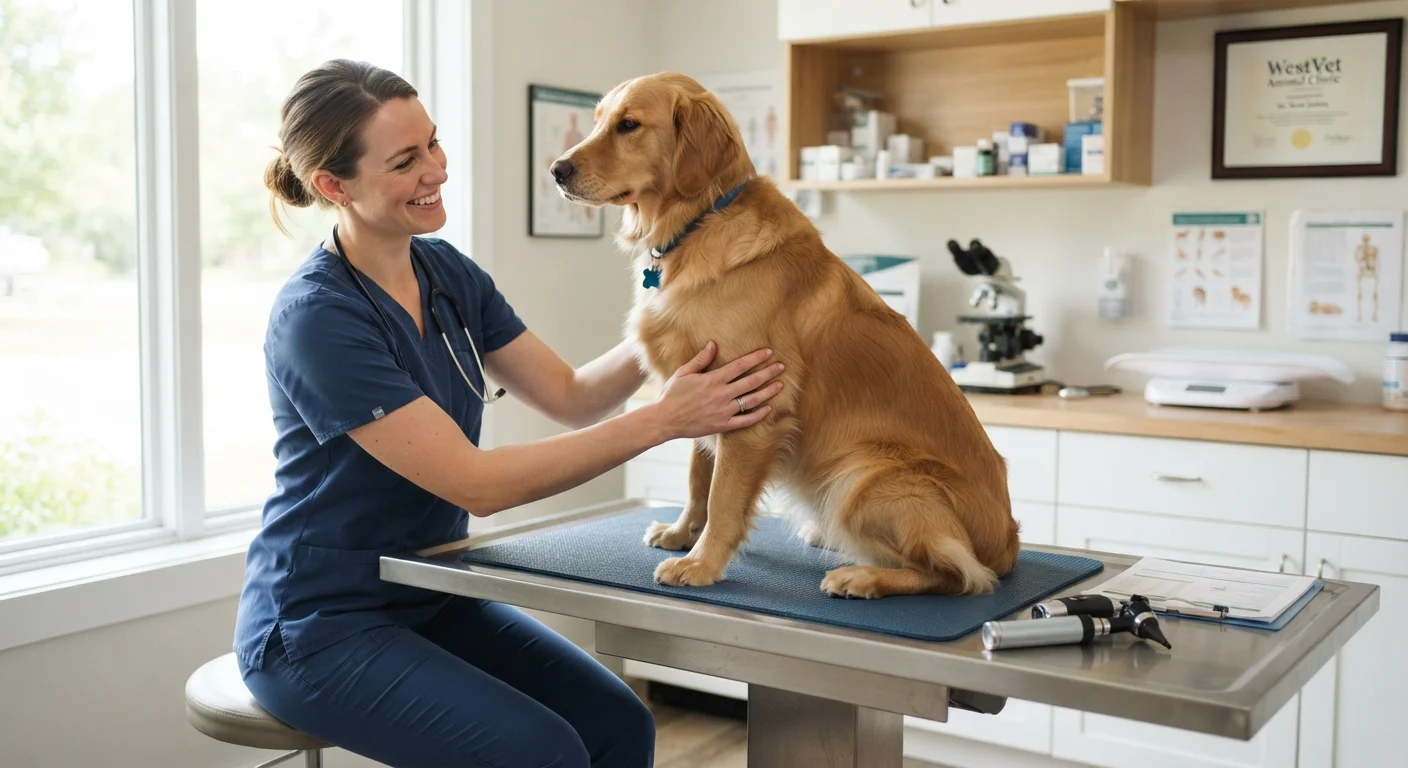
Body condition scoring (BCS) is a hands-on assessment that veterinarians use to estimate how much body fat an animal carries relative to its lean mass. Unlike a scale reading, it accounts for breed differences, bone structure, and coat thickness. A vet or trained owner evaluates how easily ribs can be felt, how defined the waist appears, and whether fat deposits are present around the base of the tail or behind the shoulders.
Most veterinary practices use a 9-point BCS scale developed for dogs and cats; a score of 4 or 5 is generally considered ideal, though target ranges can vary slightly by species and breed.
Why the scale misses the point
When an owner steps on the scale with their dog or cat, they get one number. What that number cannot tell them is how much of that weight is fat, how much is muscle, and whether either proportion is healthy for that specific animal. A lean, muscular Labrador and a fat-depleted older dog can weigh exactly the same, yet their health situations are completely different.
Breed standards complicate this further. A healthy adult Greyhound has visible spine and hip bones that would look alarming on a Beagle. A Pug's stocky build means a vet's eye and hands matter far more than the readout on the scale. Weight-for-breed charts exist, but they are population averages, not individual prescriptions. The same principle applies to cats: a large-framed Maine Coon at 16 pounds may be lean; a small-framed domestic shorthair at the same weight may be significantly overweight.
For practical guidance on daily feeding choices that influence weight over time, see why printed feeding guides are just a starting point.
Body condition scoring: a better tool
Body condition scoring moves assessment from the scale to the hands and eyes. The process involves feeling for rib coverage, observing waist definition from above, and checking for a tuck behind the ribcage when viewed from the side. Fat deposits around the base of the tail and behind the shoulders are also evaluated.
A 9-point scale is most commonly used in veterinary practice for dogs and cats. Scores of 1 to 3 indicate underweight, 4 to 5 indicate ideal condition, 6 to 7 indicate overweight, and 8 to 9 indicate obese. Each point on the scale corresponds to roughly 10 to 15 percent above or below ideal body weight, which means the difference between a 5 and a 7 is clinically meaningful even when scale readings look similar.
BCS is not difficult to learn. Many veterinary hospitals teach owners a simplified version at wellness visits so they can monitor their pet between appointments. Getting comfortable with this skill gives you far more useful information than weekly weigh-ins alone.
Practice BCS at home between vet visits
Ask your veterinarian to walk you through a basic rib and waist check at your next appointment. With a little practice, most owners can reliably detect meaningful changes in body condition between annual visits. Catching a shift early gives you and your vet more time to address it before it becomes a bigger health concern.
Muscle condition scoring and why it matters
Muscle loss, known as sarcopenia or muscle wasting, is common in older pets and in animals managing chronic illness. The problem is that it can go undetected when owners focus only on weight. A dog losing muscle while simultaneously gaining fat deposits can stay at the same scale weight for months, appearing stable when in fact two important health changes are happening simultaneously.
Muscle condition scoring (MCS) addresses this gap. A veterinarian evaluates muscle mass over the spine, scapulae (shoulder blades), skull, and pelvic bones. Muscle loss is graded as mild, moderate, or severe. Combined with BCS, MCS gives a much clearer picture of body composition and helps distinguish between a pet that is genuinely maintaining condition and one that is gradually losing functional tissue.
How vets assess pain in animals covers related physical assessment techniques that often accompany a full wellness evaluation.
59%
US dogs estimated overweight or obese
According to the Association for Pet Obesity Prevention's annual survey, a majority of dogs in the US are assessed as overweight or obese by veterinary body condition evaluation.
61%
US cats estimated overweight or obese
The same Association for Pet Obesity Prevention survey found more than three in five US cats carry excess body fat based on clinical body condition scoring.
10-15%
Body weight change per BCS point
Each point on the 9-point BCS scale corresponds to approximately 10 to 15 percent above or below ideal body weight, making BCS a clinically meaningful measure of condition change.
Factors that shift what 'healthy' looks like
Several biological and lifestyle factors affect where an individual pet sits on the body condition scale and what a realistic target looks like. Age is one: senior pets commonly lose muscle mass even when caloric intake stays consistent, while young growing animals have different fat distribution entirely. Sex and reproductive status matter too, because hormonal changes after spaying or neutering can alter how efficiently a pet metabolizes calories.
Activity level shapes body composition independently of food intake. Two dogs eating identical amounts but with very different exercise routines will carry muscle and fat differently. For more on how activity affects the right animal choice in the first place, see how activity level should shape your pet choice.
Diet quality also matters beyond calories. Decoding pet food labels explains how to read ingredient and nutrient information so feeding choices support the right body composition, not just a calorie target.
When to involve your vet
A body condition or muscle condition concern is always worth raising at your next wellness appointment. Unexplained weight loss or gain, a visible change in muscle definition, or difficulty feeling ribs that were once easy to find are all reasons to schedule a check rather than wait. Vets may add bloodwork to screen for thyroid disease, diabetes, or other conditions that affect metabolism and body composition in ways no scale reading would reveal.
Pets on a weight-management program benefit from scheduled rechecks rather than owner estimates at home. A veterinarian can track BCS and MCS over time, adjust caloric targets based on real progress, and catch muscle loss before it becomes significant. This article is for general information only and does not replace a physical examination or personalized veterinary guidance.
This article is for informational purposes only and is not a substitute for professional veterinary advice. Always consult a licensed veterinarian for guidance specific to your pet's health.