
Raising a Pet Alongside Young Children: What Parents Should Think Through First

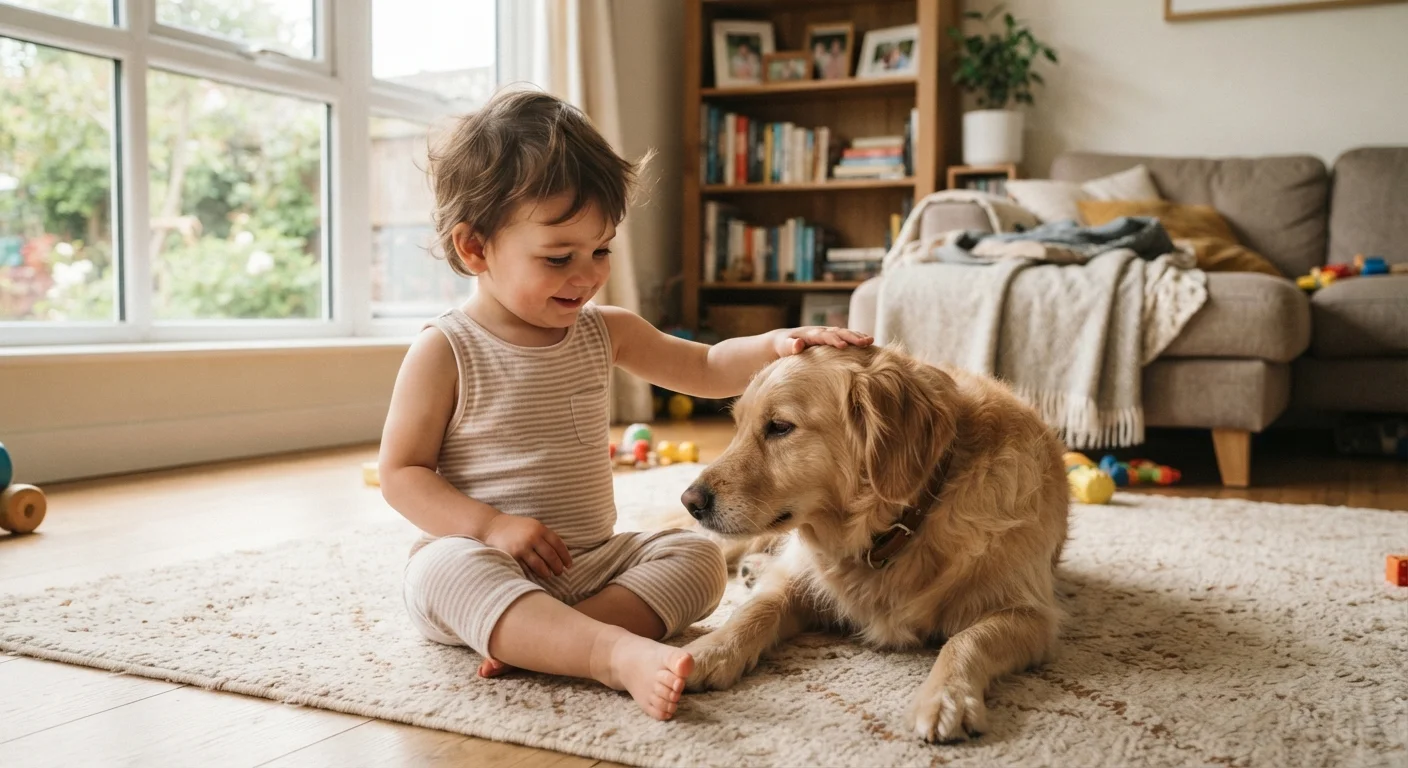
Key Takeaways
- A child's age and developmental stage should shape which species and breed temperament you consider.
- Supervision cannot replace training: both the pet and the child need consistent guidance on how to interact.
- Allergies, zoonotic disease risk, and bite history are health factors families often overlook until after adoption.
- Even gentle animals need a retreat space where children cannot follow them.
- Assigning age-appropriate pet care tasks to children works best when an adult remains the primary caregiver.
Why the child's age changes everything
A two-year-old and a seven-year-old live in very different sensory worlds. Toddlers grab, shriek, and move unpredictably. Most animals find that stressful, regardless of how well-socialized the animal is. Before choosing a species or breed, think honestly about the youngest child in the home and what that child's behavior looks like on a typical Tuesday afternoon, not on best behavior at the pet store.
Infants and toddlers are the highest-risk group for dog bites, and the bites most often come from the family's own dog during a seemingly calm moment. That is not a reason to avoid pets, but it is a reason to weight temperament, size, and prior socialization heavily when choosing a dog. For families with children under three, lower-energy breeds with documented tolerance for handling tend to fare better than high-drive working breeds, though no breed characteristic guarantees individual behavior.
Children ages four to seven can begin learning how to read animal body language, which is a skill that reduces incidents meaningfully. If your children are in that window, factor in whether you have time to teach those skills alongside basic pet care. The first-time owner guide covers what new families most commonly underestimate before bringing an animal home.
Matching species to your household's actual energy level
Dogs and cats are the obvious choices, but they are not automatically the right ones. A busy household with a newborn, a preschooler, and two working parents may find a dog's daily exercise and training needs genuinely unmanageable for the first year. A pair of guinea pigs or a rabbit can give children a tangible animal relationship with a lower daily time burden, while the family stabilizes.
Cats vary enormously by individual personality. Some cats seek out children; others will hide under a bed for the first six months and emerge only when the house is quiet. If you adopt a cat, spending time with the specific animal before committing gives you far more useful information than breed generalizations.
Small mammals, fish, and birds can serve as a child's first experience with daily animal care, building habits before a higher-needs pet joins the family. That said, every species has specific welfare requirements that parents need to meet whether or not the child stays interested. Before committing to any animal, work through the pet ownership readiness checklist as a household.
Evaluate a dog's individual history before breed alone
Breed generalizations describe tendencies across populations, not individual animals. A dog's specific socialization history with children, tolerance for handling, and response to noise are better predictors of safe coexistence than breed charts alone.
Teach children to read animal body language before the pet arrives
Children who recognize stress signals in animals (tucked tail, flattened ears, slow blinking in cats) can adjust their behavior before an animal reaches its threshold. This reduces bites and scratches and builds long-term empathy.
Create a pet retreat zone that children respect as off-limits
An animal that cannot escape stimulation will eventually communicate its distress through biting or scratching. A designated retreat removes that pressure and gives the animal agency, which reduces stress-related behavior overall.
Keep an adult as the primary caregiver regardless of the child's enthusiasm
Children's interest in pet care fluctuates with age, mood, and competing activities. An animal's need for food, water, and attention does not. If adult backup is not built into the routine from the start, the animal pays for gaps in the child's engagement.
Health and safety factors families often skip
Allergies are the most common reason families rehome a pet within the first year. Before adoption, have any child with a history of asthma, eczema, or seasonal allergies assessed by their pediatrician or an allergist. Spending time in a home with the species you are considering can surface reactions before you are emotionally attached to a specific animal.
Zoonotic diseases (illnesses that pass between animals and humans) are worth understanding, especially for children under five, pregnant household members, or anyone immunocompromised. Reptiles carry Salmonella at high rates and are generally not recommended in households with children under five by public health authorities. Cats can transmit Toxoplasma, which is why pregnant individuals are advised to avoid handling cat litter. Your family's pediatrician can help you think through relevant risks based on your household's specific health picture.
Bite and scratch risk is not limited to dogs. Cats scratch and bite when overstimulated. Rabbits and guinea pigs bite when frightened. Teaching children that every animal has a threshold, and that respecting that threshold is non-negotiable, is a safety lesson that applies across species. Every pet also needs a physical retreat: a crate, a room, a high shelf, somewhere the animal can go where children are taught not to follow.
Setting up for success after the animal arrives
The first weeks at home set patterns that are hard to undo. Establish feeding, exercise, and vet appointment routines before novelty fades and the child's interest shifts to something else. An adult should own the core care tasks from day one; children can contribute in age-appropriate ways, but the animal's welfare cannot depend on a six-year-old's consistency.
Training matters whether you choose a dog, a cat, or a rabbit. For dogs especially, puppy training fundamentals built around positive reinforcement give you a calmer animal and a child who can participate in that process safely. Involving children in short, reward-based training sessions (with adult supervision) builds the child's understanding that the animal is a being with needs, not a toy.
Budget for ongoing costs before the animal arrives. Veterinary care, food, parasite prevention, and supplies add up in ways that surprise many families. The complete pet selection guide walks through financial planning alongside every other factor in the decision.
This article is for general informational purposes only and is not a substitute for advice from a licensed veterinarian, pediatrician, or public health professional. Consult qualified professionals for guidance specific to your child's health and your household's circumstances.