

Key Takeaways
- A written debt inventory is the foundation of any repayment plan.
- Secured debts carry different risks than unsecured ones; priority order matters.
- Consistent small payments beat infrequent large ones over time.
- Behavioral habits, not just income, determine how fast debt shrinks.
- A small emergency fund prevents new debt from erasing old progress.
Start with a full debt audit
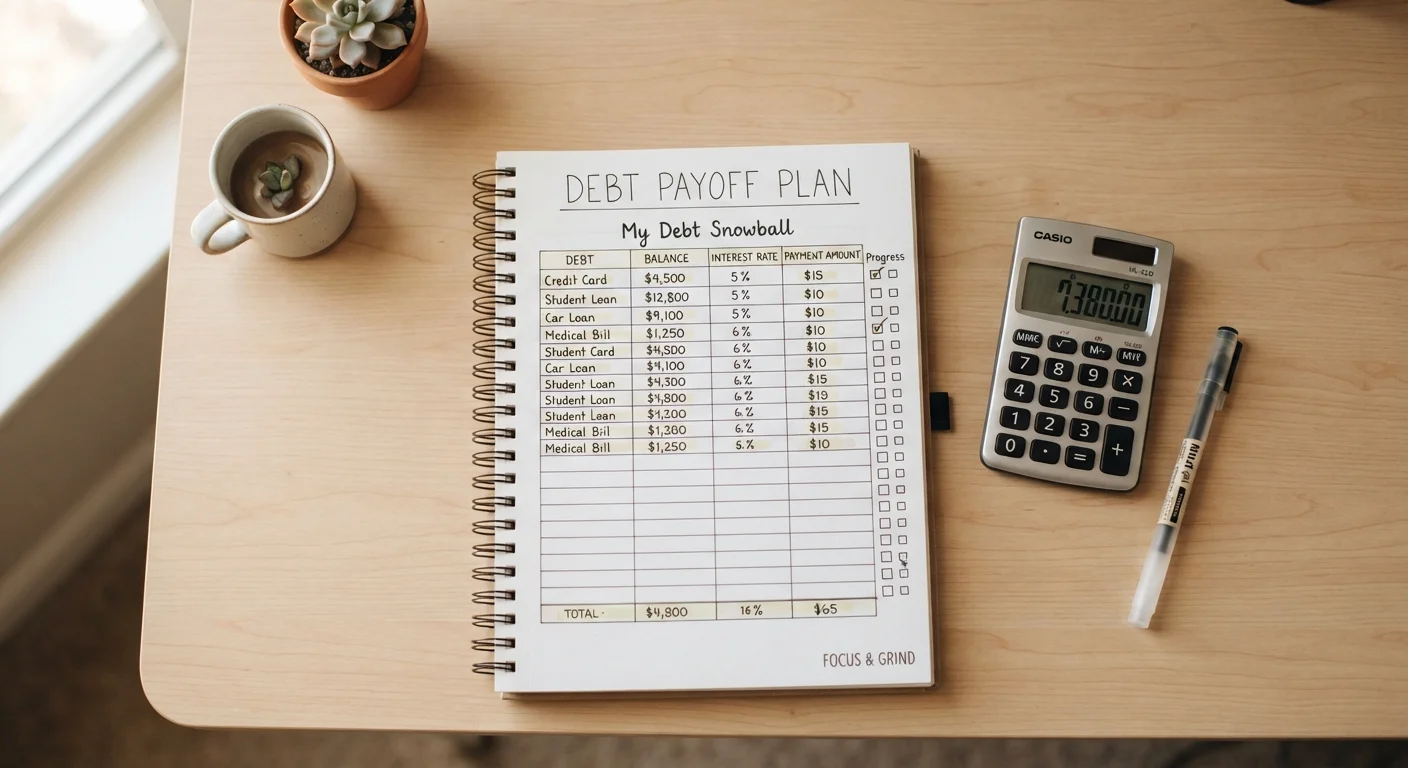
Before any repayment plan can work, you need a complete picture of what you owe. Pull every account: credit cards, personal loans, student loans, medical bills, auto loans, and any money owed to family or employers. For each one, record the creditor name, current balance, interest rate (APR), minimum payment, and due date.
Many people discover balances they had mentally minimized or forgotten entirely. This step is not about judgment; it is about accuracy. A spreadsheet or even a handwritten list works. The goal is a single document that shows your total debt load at a glance.
Once you have that number, calculate what percentage of your monthly take-home income goes toward debt payments. Financial guidance commonly suggests keeping total debt payments below 36% of gross income, though your comfortable threshold depends on your full budget picture. Consult a licensed financial adviser if you want an assessment tailored to your situation.
Prioritize what you repay first
Not all debt is equal. Secured and unsecured debts carry different risks if left unpaid. A mortgage or auto loan is secured against an asset; falling behind can mean losing your home or vehicle. Unsecured debt like credit cards or medical bills carries no collateral risk, though non-payment still damages your credit and can lead to collections or legal action.
As a general principle, never skip a secured debt payment to pay down unsecured debt faster. Always meet minimums on every account first, then direct any extra money toward your chosen target. Missing minimums triggers late fees, penalty rates, and credit score drops that cost more over time than the payment you skipped.
$104,215
Average American household debt
According to the Federal Reserve's 2023 Survey of Consumer Finances, median family debt held by indebted families was in this range across mortgages, vehicle loans, and revolving credit.
22.8%
Average credit card APR (2024)
The Federal Reserve reported average credit card interest rates above 22% in late 2024, making high-rate card debt among the most expensive to carry.
35%
Share of credit score from payment history
FICO scoring models weight on-time payment history at 35%, making consistent minimum payments one of the highest-impact actions during repayment.
Pick a repayment method and apply it
Two widely used approaches are the debt snowball and the debt avalanche. The snowball targets the smallest balance first to build early wins. The avalanche targets the highest-interest balance first to reduce total interest paid. Both work; the method that keeps you consistent is the better choice for your situation.
For a deeper comparison of how each approach performs across different balance sizes and interest rates, see choosing a debt repayment strategy that fits your situation.
Whichever method you choose, automate minimums on every account. Automation removes the decision fatigue that leads to missed payments. Then manually direct extra funds to your target debt each month, even if that extra amount is modest.
Cut the habits that slow progress
Income alone does not determine how fast debt shrinks. Small recurring spending patterns, subscription creep, impulse purchases charged to credit, and using credit to cover shortfalls, can extend repayment by months or years. Recognizing the habits most likely to extend debt is a separate discipline from building a payoff plan, but it runs in parallel.
A monthly cash-flow review, comparing what you planned to spend against what you actually spent, surfaces these patterns. It does not need to be elaborate. Even a 15-minute review at month end can reveal where money is leaving before it reaches a debt payment.
Protect your progress for the long term
The most common reason people return to debt is an unexpected expense with no cash cushion. A starter emergency fund of $500 to $1,000, held in a separate savings account, covers most small emergencies without requiring a new credit charge. Once high-interest debt is gone, rebuilding that fund to three to six months of essential expenses reduces the risk of a larger setback.
Debt freedom is also about the structure you put in place afterward. Review your credit utilization, set a personal policy for when you will and will not carry a balance, and revisit your budget as income or expenses change. The practices that make households financially durable go beyond debt repayment and into the habits that prevent the cycle from starting again.
This article is for general informational and educational purposes only and does not constitute personalized financial, tax, or legal advice. Consult a licensed financial adviser or credit counselor for guidance specific to your circumstances.