

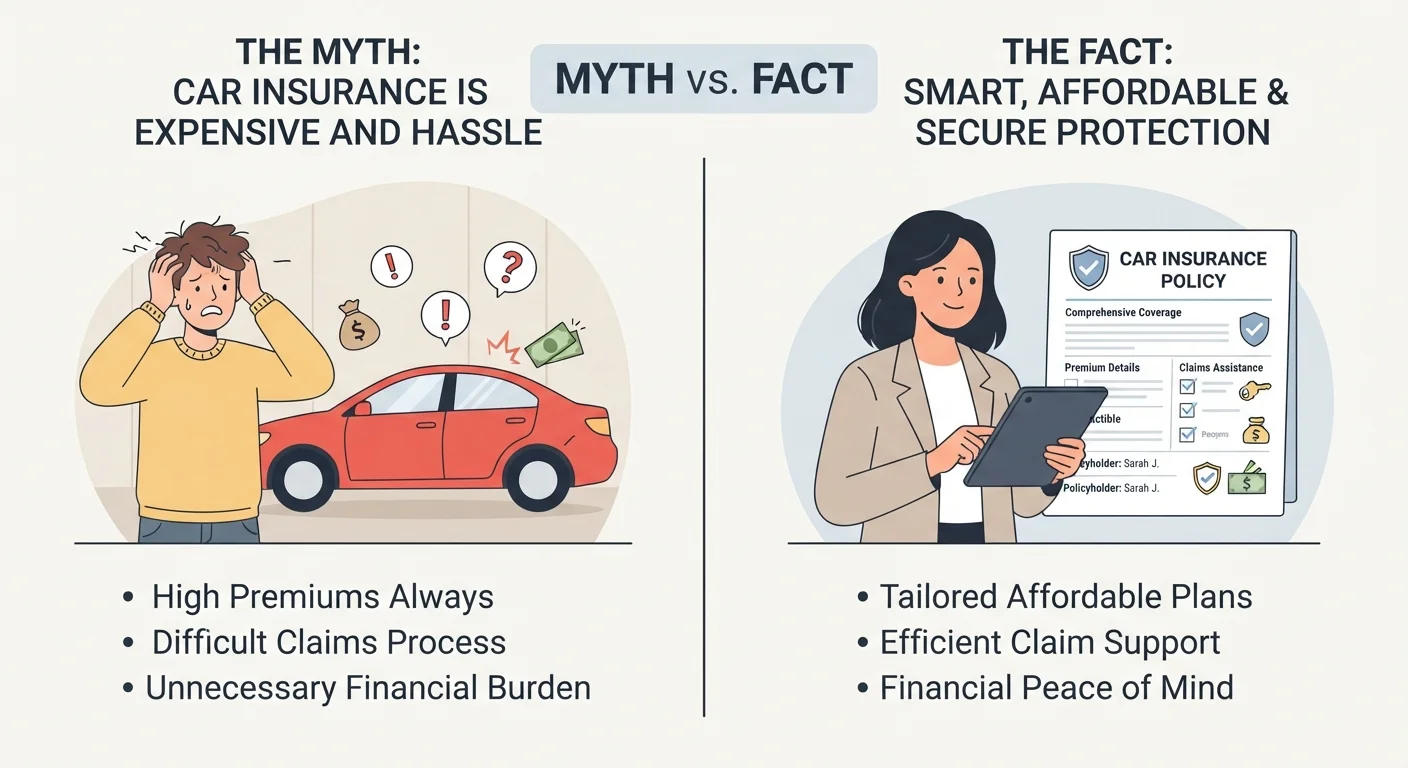
Key Takeaways
- Car color does not affect your insurance premium; insurers do not track vehicle color.
- Full coverage auto insurance does not protect against every possible loss or situation.
- Your insurer pays claims based on actual cash value, not what you originally paid for an item.
- Minimum state-required liability limits are often far too low to cover a serious accident.
- Filing a claim does not automatically raise your premium in every case.
Why insurance myths are a financial problem
Insurance decisions made on bad information tend to go wrong in one direction: people pay for coverage they misunderstand, skip coverage they actually need, or handle claims in ways that reduce what they collect. The gap between what most Americans believe about insurance and how policies actually work is wide enough to cause real financial harm.
This article corrects the most persistent misconceptions. For a plain-language foundation on how insurance works before reading on, see Insurance Decoded: What Every American Actually Needs to Know.
Myth
Red cars cost more to insure because insurers charge more for that color.
Fact
Insurers do not use vehicle color as a rating factor. Your premium is based on the make, model, year, engine size, safety record, and your driving history.
This myth is durable because it feels logical: red is associated with speed, so surely it signals risk. In practice, insurance applications do not ask for color, and no major U.S. insurer uses it to set rates. What does affect your premium is the vehicle's trim level (which determines repair costs), its safety ratings, and its theft rate for that model. If two drivers with identical records insure identical cars in different colors, they pay the same.
Myth
Full coverage means the insurer will pay for any loss, no matter what happened.
Fact
'Full coverage' is informal shorthand for combining liability, collision, and comprehensive coverage. It still excludes many situations, including flood damage in some policies, intentional acts, and losses that fall under separate riders.
No policy sold in the United States covers everything. 'Full coverage' is not a defined term in insurance contracts: it is a phrase consumers use to mean 'more than the minimum.' A policy combining liability, collision, and comprehensive protection still carries exclusions, sub-limits, and conditions. Mechanical breakdown, for example, is typically not covered by auto insurance at all. Reading the declarations page and the exclusions section of any policy is the only way to know what is and is not included. For how valuation affects what you actually collect, see Agreed Value vs Actual Cash Value vs Stated Value in Auto Policies.
Myth
Your insurer will reimburse you for what you originally paid for a stolen or damaged item.
Fact
Most standard policies pay actual cash value (ACV), which is replacement cost minus depreciation. A four-year-old laptop worth $300 today may be all you collect, even if you paid $900 for it.
Depreciation can make a significant difference between what you expect and what you receive. Vehicles lose value quickly: Car Depreciation: How Fast Vehicles Lose Value and Why It Matters for Insurance explains how that curve affects your payout at claim time. Homeowners and renters who want to recover full replacement cost can purchase replacement cost value (RCV) coverage, which typically costs more but closes that gap.
Myth
State minimum liability limits are enough coverage for any accident.
Fact
State minimums set a legal floor, not an adequate financial floor. A single serious collision with injuries can generate medical and legal costs that exceed minimum limits by hundreds of thousands of dollars.
If your liability limits are exhausted, you are personally responsible for the remainder. A bodily injury liability limit of $25,000 per person, common in several states, can be consumed by a single emergency room visit and follow-up care. Umbrella policies and higher liability limits exist precisely because minimum requirements were set to allow low-income drivers to legally operate vehicles, not to protect against realistic loss scenarios. Consulting a licensed insurance agent about appropriate liability levels for your assets and income is worth the time.
Myth
Filing any claim will automatically raise your premium.
Fact
Premium changes after a claim depend on your insurer, your state, your claims history, and whether you were at fault. A single not-at-fault claim or a small claim may not affect your rate at all.
Insurers treat claims differently based on type and frequency. A comprehensive claim for hail damage typically has less effect on your rate than an at-fault collision claim. Some insurers offer accident forgiveness, which limits the rate impact of a first at-fault incident. That said, a pattern of claims can signal elevated risk and may lead to higher premiums or non-renewal. Filing an Insurance Claim Without Undermining Your Coverage covers how to document and time claims in ways that protect your coverage record.
Myth
You only need insurance when you are legally required to carry it.
Fact
Legal requirements cover liability to others, not your own losses. Without appropriate property or health coverage, a single incident can produce a financial loss large enough to take years to recover from.
Liability insurance protects other people from harm you cause. It does not protect your car, your home, your savings, or your health. Renters, for example, are not legally required to carry renters insurance in most states, but their landlord's policy does not cover their belongings. Someone without health insurance who avoids a hospital visit may face far larger costs if a condition worsens. Legal minimums represent the minimum required to operate legally, not the minimum needed for financial stability. For a broader view of how coverage connects to your overall financial picture, see Saving and Debt.
What these myths mean for your wallet
Believing that minimum coverage is adequate, or that your insurer will cover whatever you assume it covers, can leave you responsible for losses that run into tens of thousands of dollars. The Real Costs of Being Underinsured details exactly where those gaps tend to appear and how large they can grow.
Understanding your deductible is equally practical. Many people choose a deductible without knowing what it commits them to pay after a claim. What Your Auto Insurance Deductible Actually Means for Your Wallet walks through how that number affects both your premium and your out-of-pocket exposure.
If you drive for a living or use your vehicle for business errands regularly, personal auto coverage may not apply. Factors Insurers Weigh When Setting Commercial Vehicle Rates outlines how business use changes what insurers charge and what they cover.
This article is general financial and insurance information, not personalized advice. Coverage terms, exclusions, and regulations vary by insurer and by state. Read your policy documents carefully and consult a licensed insurance professional about your specific situation.