

| Essential amino acids | 9 (National Academies of Sciences, Engineering, and Medicine) |
| Complete plant proteins | Soy, quinoa, buckwheat, hemp seeds |
| Most common limiting amino acid in plant diets | Lysine |
| PDCAAS scale range | 0 to 1 (1 = highest quality) (Food and Agriculture Organization of the United Nations) |
| Legume amino acid strength | High lysine, low methionine |
| Grain amino acid strength | High methionine, low lysine |
What makes a protein 'complete' or 'incomplete'
Protein is made of amino acids, and the body requires 20 of them to function. Nine of those are called essential amino acids because the body cannot manufacture them; they must come from food. A complete protein contains all nine essential amino acids in amounts adequate for human needs. An incomplete protein is low in one or more essential amino acids, called limiting amino acids.
This distinction matters because the body builds and repairs tissue, produces enzymes, and regulates immune function using the full set of essential amino acids. If even one is consistently scarce, those processes slow down.
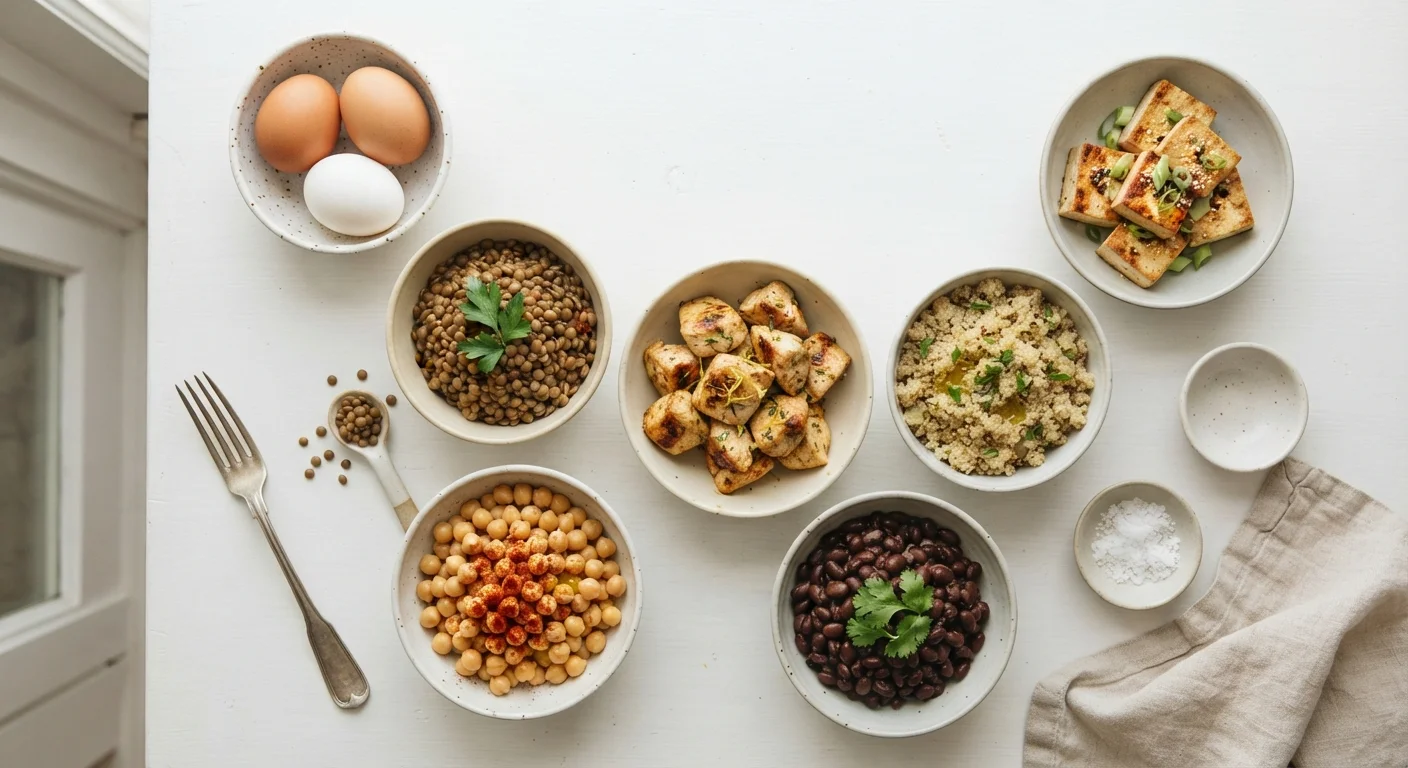
Most animal-based foods, including meat, poultry, fish, eggs, and dairy, are complete proteins. Most plant-based foods are incomplete, though there are notable exceptions. Soy, quinoa, buckwheat, and hemp seeds each provide all nine essential amino acids at sufficient levels, making them complete plant proteins.
If you are new to thinking about macronutrients, the nutrition fundamentals guide covers the broader context before diving into specifics like this one.
Essential amino acids
Nine amino acids the human body cannot synthesize on its own: histidine, isoleucine, leucine, lysine, methionine, phenylalanine, threonine, tryptophan, and valine. They must be obtained through food.
Complete protein
A food that contains all nine essential amino acids in amounts sufficient to support human health. Examples include eggs, fish, meat, dairy, soy, and quinoa.
Incomplete protein
A protein source that lacks sufficient amounts of one or more essential amino acids. Most plant foods fall into this category, though they can complement each other when combined.
Limiting amino acid
The essential amino acid present in the lowest quantity relative to human requirements in a given food. It limits how fully the body can use the protein in that food.
PDCAAS
Protein Digestibility-Corrected Amino Acid Score. A measure of protein quality that adjusts amino acid content for digestibility, scored from 0 to 1, where 1 is the highest quality.
Complementary proteins
Two or more incomplete protein sources that, when eaten together or across a day, supply all nine essential amino acids in adequate amounts. Rice and beans are a classic example.
Combining incomplete proteins to meet your needs
Eating a variety of plant proteins throughout the day allows the body to pool amino acids from multiple sources. A meal does not need to contain every essential amino acid by itself; research supports that the body maintains an amino acid pool that can be drawn from across hours, not just across a single plate.
Certain pairings are nutritionally complementary because each food supplies what the other lacks. Legumes (beans, lentils, peas) tend to be low in methionine but high in lysine. Grains (rice, wheat, corn) are the reverse: high in methionine, low in lysine. Together, they cover the full essential amino acid range.
Common complementary combinations include:
- Rice and beans or lentils
- Peanut butter on whole-grain bread
- Hummus with pita
- Corn tortillas with black beans
These pairings appear naturally across many traditional food cultures, which is why populations eating largely plant-based diets have met protein needs for generations without tracking amino acids consciously.
For a practical way to build meals around varied protein sources without obsessing over numbers, see the guide to building a balanced plate.
Protein digestibility and bioavailability
Amino acid content alone does not tell the whole story. The body also needs to digest and absorb the protein efficiently. Two scoring systems are used in nutrition science to measure this.
The PDCAAS (Protein Digestibility-Corrected Amino Acid Score) adjusts a food's amino acid profile for how well humans digest it, on a scale of 0 to 1. Egg whites, casein (dairy protein), and soy protein isolate score near 1.0. Many whole plant foods score lower, partly because fiber and certain plant compounds reduce digestibility.
The DIAAS (Digestible Indispensable Amino Acid Score) is a newer, more precise method that measures amino acid absorption in the small intestine rather than the whole gut. Animal proteins and soy generally score higher under DIAAS as well, though the practical difference for most people eating varied diets is modest.
Cooking and food processing improve the digestibility of many plant proteins. Soaking and cooking legumes, fermenting soy into tempeh or miso, and sprouting grains or seeds each increase the proportion of protein the body can actually use.
| Essential amino acids | 9 (National Academies of Sciences, Engineering, and Medicine) |
| Complete plant proteins | Soy, quinoa, buckwheat, hemp seeds |
| Most common limiting amino acid in plant diets | Lysine |
| PDCAAS scale range | 0 to 1 (1 = highest quality) (Food and Agriculture Organization of the United Nations) |
| Legume amino acid strength | High lysine, low methionine |
| Grain amino acid strength | High methionine, low lysine |
Special considerations for plant-based and mixed diets
People eating predominantly plant-based diets can meet protein needs, but variety matters more than it does for omnivores. Relying on a narrow set of plant foods, such as only rice and vegetables with minimal legumes, increases the risk of falling short on lysine, which is the most common limiting amino acid in plant-heavy eating patterns.
Iron and zinc from plant sources are also less bioavailable than from animal sources, and protein-rich plant foods like legumes are among the better plant sources of both. This is relevant because protein intake and micronutrient sufficiency often move together. The shortfall nutrients article explains this overlap in more detail.
Older adults, people recovering from illness or surgery, pregnant individuals, and children have higher protein needs and may benefit from deliberate attention to both quantity and quality. Anyone in these groups should consult a registered dietitian or their healthcare provider for guidance tailored to their circumstances.
This article is for general informational purposes only and is not a substitute for professional medical or dietary advice. Speak with a qualified healthcare provider or registered dietitian before making significant changes to your diet, especially if you have an existing health condition.