

Key Takeaways
- Most US adults consume roughly half the fibre their bodies need each day.
- Soluble and insoluble fibre have distinct mechanisms and both matter for health.
- Adequate fibre intake is associated with lower risks of cardiovascular disease, type 2 diabetes, and colorectal cancer.
- Whole grains, legumes, vegetables, and fruit are the most reliable dietary sources.
- Fibre feeds beneficial gut bacteria, which produce compounds that support immune and metabolic function.
- Increasing fibre intake gradually, with adequate water, reduces common digestive side effects.
Dietary fibre
Dietary fibre is the portion of plant foods that the human body cannot fully digest or absorb. Unlike carbohydrates, proteins, and fats, fibre passes largely intact through the stomach and small intestine into the colon. There it does important work, ranging from slowing digestion to feeding beneficial gut bacteria.
Fibre is classified as either soluble (dissolves in water to form a gel) or insoluble (remains structurally intact through digestion). Most plant foods contain both types in varying proportions.
Why fibre is consistently under-consumed
Fibre is abundant in nature but largely absent from the modern American diet. Ultraprocessed foods, refined grains, and low vegetable intake have collectively pushed average fibre consumption well below recommended levels. For context, the Dietary Guidelines for Americans estimate that 90 to 97 percent of adults do not meet recommended fibre targets, making it one of the most widespread nutritional shortfalls in the country.
The reasons are mostly structural. Highly refined products have had much of their plant matrix stripped away during processing, which improves shelf life and texture but removes fibre along with it. A slice of white bread delivers less than one gram of fibre; a slice of whole grain bread typically provides three to four grams. That gap, multiplied across every meal and snack, adds up fast.
If you want context for where fibre fits within broader nutritional thinking, the nutrition fundamentals guide offers a grounded starting point for making sense of food and diet advice.
15-17g
Average daily fibre intake for US adults
The Dietary Guidelines for Americans estimate average adult fibre intake at 15 to 17 grams per day, well below the recommended 25 to 38 grams depending on sex.
90%+
US adults not meeting fibre recommendations
According to Dietary Guidelines for Americans analysis, the vast majority of adults consume less fibre than recommended, making it one of the most common nutrient shortfalls in the country.
8g
Fibre in half a cup of cooked lentils
Legumes are among the most fibre-dense foods available, with a single half-cup serving of lentils providing roughly one-third of many adults' daily target.
Soluble and insoluble fibre: what each type does
Fibre is not a single substance. The two main categories behave differently in the body, and both contribute to health in distinct ways.
Soluble fibre dissolves in water to form a viscous gel. This slows the movement of food through the upper digestive tract, which moderates the rise in blood glucose after a meal and can reduce the absorption of LDL cholesterol. Oats, barley, psyllium, legumes, and many fruits are reliable soluble fibre sources. The gel also becomes a substrate for beneficial bacteria in the colon, a process discussed further below.
Insoluble fibre does not dissolve. It absorbs water, adds bulk to stool, and accelerates transit through the large intestine. This is the mechanism behind fibre's well-known effect on regularity. Wheat bran, vegetable skins, and the outer layers of whole grains are high in insoluble fibre. Faster transit time reduces the amount of time potentially harmful compounds spend in contact with the colon wall, which may partly explain the association between high-fibre diets and lower colorectal cancer risk.
Most whole plant foods contain both types, so eating a variety of vegetables, legumes, whole grains, and fruit covers both categories without requiring any precise tracking.
Fibre and the gut microbiome
Beyond its structural effects, fibre feeds the community of microorganisms living in the large intestine. When gut bacteria ferment certain soluble fibres, they produce short-chain fatty acids (SCFAs), primarily butyrate, propionate, and acetate. These compounds are not waste; they are biologically active. Butyrate is the main energy source for the cells lining the colon and may support the integrity of the gut barrier. Propionate and acetate are absorbed into circulation and appear to influence metabolic and immune signalling.
The relationship between dietary fibre and gut bacteria is an active area of research. The current evidence suggests that higher and more varied fibre intake supports a more diverse microbiome, which is broadly associated with better health outcomes. For a careful look at what the evidence actually shows, and where it remains uncertain, the gut microbiome and diet article is worth reading alongside this one.
It is also worth being cautious about overblown claims. Fibre is not a cure-all, and not every marketed claim about gut health stands up to scrutiny. The gut health myths article covers which popular ideas have evidence behind them and which do not.
Reliable food sources and practical ways to increase intake
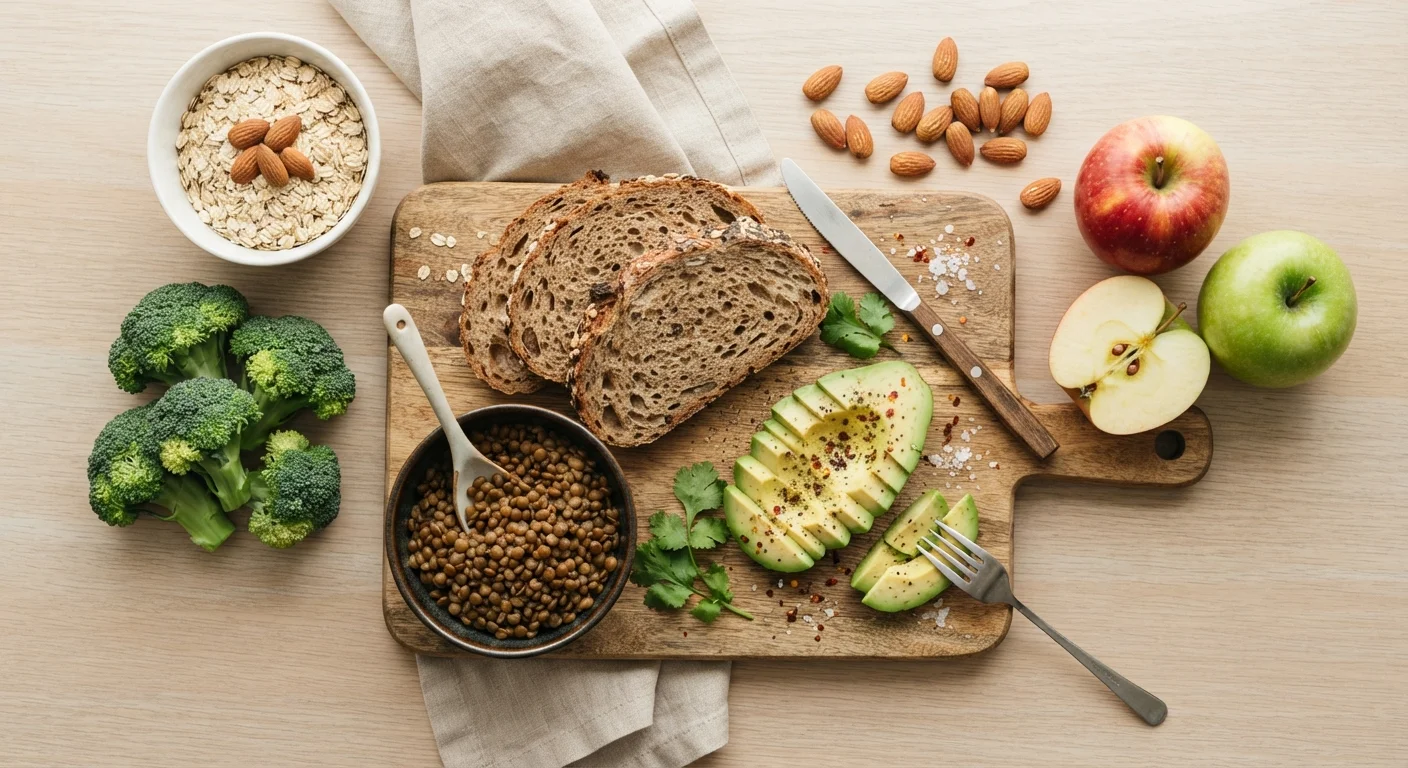
Legumes are the single most fibre-dense food group most people can easily incorporate. A half-cup of cooked lentils provides about 8 grams of fibre; black beans and chickpeas are in a similar range. Whole grains add up too: a cup of cooked barley delivers roughly 6 grams, oats about 4 grams per cooked cup.
Vegetables vary considerably. Artichokes, Brussels sprouts, and broccoli are among the higher-fibre options. Fruit contributes as well, with raspberries, pears, and apples (eaten with skin) among the better sources. Chia seeds and ground flaxseed offer fibre alongside omega-3 fatty acids and are easy to stir into oatmeal or yogurt.
A few practical approaches that tend to work well:
- Swap refined grains for whole grain versions in staple foods like bread, pasta, and rice.
- Add a legume to at least one meal daily, whether that is lentil soup, bean-based tacos, or chickpeas in a salad.
- Leave the skin on vegetables and fruit where safe and palatable to do so.
- Increase intake over two to four weeks rather than all at once, and drink water consistently throughout the day to prevent discomfort.
To understand how the digestive system actually processes these foods, the digestion and absorption guide explains what happens after you eat in clear, accessible language.
This article is for general informational purposes only and is not a substitute for personalised nutrition or medical advice. Consult a registered dietitian or qualified healthcare provider before making significant changes to your diet, especially if you have a digestive condition or chronic health concern.