

Key Takeaways
- Most car batteries last three to five years under normal driving conditions.
- Short trips prevent the alternator from fully recharging the battery over time.
- Extreme cold and heat both shorten battery life noticeably.
- Slow engine cranking, dim lights, and a swollen battery case are warning signs.
- Jumping a dead battery incorrectly can damage electronics; follow the correct cable sequence.
- A simple load test at an auto shop can confirm whether a battery is failing before you get stranded.
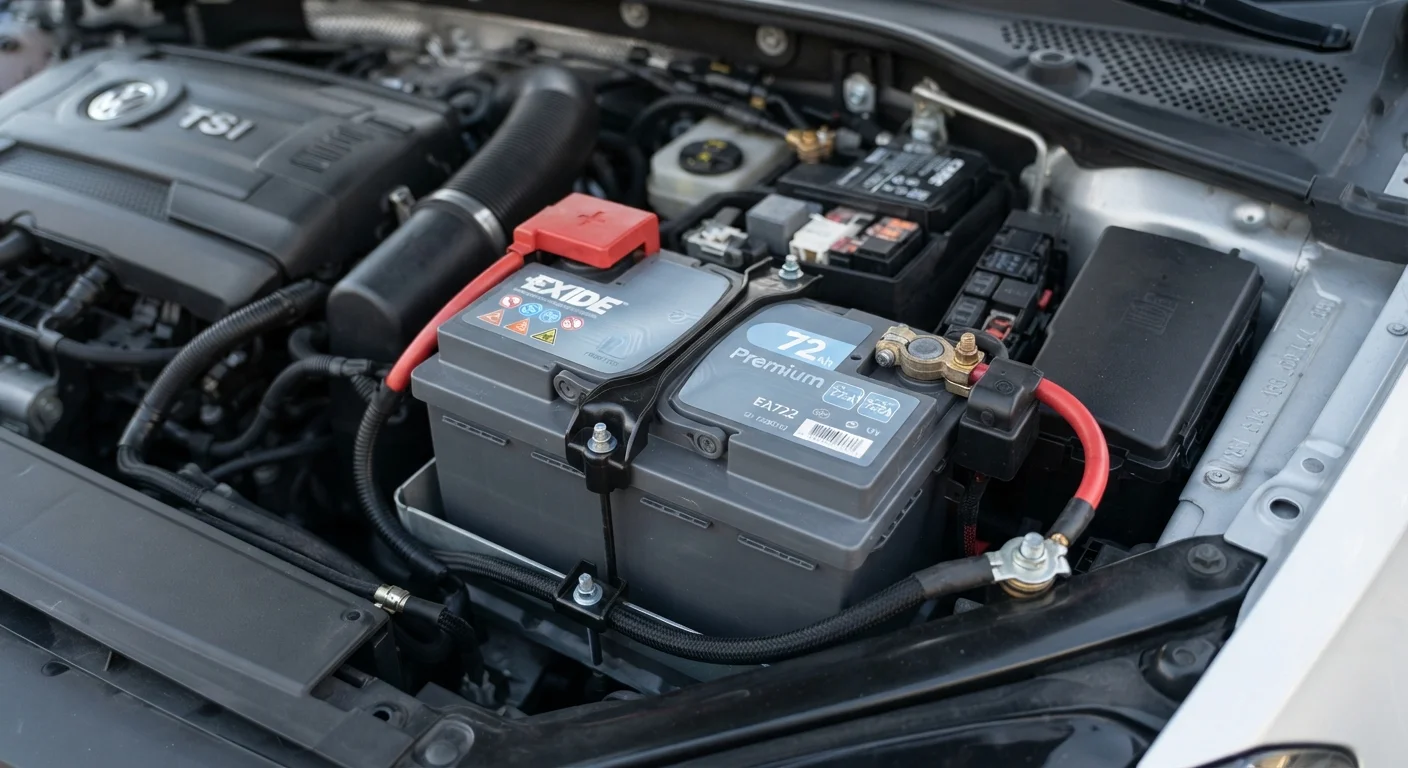
Car battery
A car battery is a rechargeable lead-acid battery that stores and delivers the electrical energy needed to start your engine and power accessories when the engine is off. Once the engine runs, the alternator takes over and also recharges the battery. Most passenger vehicles use a 12-volt battery.
Standard automotive batteries are flooded lead-acid cells; newer vehicles may use AGM (absorbent glass mat) or lithium-ion variants that handle higher electrical loads and charge differently.
How a car battery works
A 12-volt lead-acid battery contains six cells, each producing about two volts. Each cell holds lead plates submerged in a sulfuric acid electrolyte solution. A chemical reaction between the plates and electrolyte releases electrons, generating the surge of current that spins your starter motor. That initial burst can be several hundred amps for a fraction of a second.
Once the engine runs, the alternator takes over as the primary power source and simultaneously recharges the battery. The battery then handles smaller loads: the clock, alarm system, and any accessories you leave running with the engine off. This division of labor matters because it means a weak alternator will slowly drain an otherwise healthy battery, and a weak battery puts extra strain on the alternator.
AGM batteries, increasingly common in vehicles with start-stop systems or heavy electrical loads, use fiberglass mats instead of free liquid electrolyte. They tolerate deeper discharge cycles and recharge faster, but they require a compatible charger. Substituting a standard charger can damage them.
What shortens battery life
Temperature is the largest factor outside of your control. Heat accelerates internal corrosion and causes electrolyte to evaporate, while cold thickens engine oil and forces the battery to work harder to crank the engine. A battery already weakened by a hot summer often fails visibly when the first cold snap arrives.
Driving habits matter just as much. Short trips of five minutes or less do not give the alternator enough time to replenish the charge used at startup. A driver who makes several brief errands daily can slowly deplete a battery over weeks without noticing. Occasional longer drives help, but a battery maintainer is more reliable if short trips dominate your routine. For a broader look at how temperature and seasonal conditions affect your vehicle, see the seasonal car maintenance guide.
Parasitic drain is another common culprit. A door light that stays on, a faulty relay, or a poorly installed aftermarket accessory can draw current continuously. Even a small drain of 50 milliamps will flatten a battery in a few days if the vehicle sits unused.
Test before you need to replace
Many auto parts retailers offer free battery load tests. A load test takes about five minutes and reveals whether a battery is near failure, even if it still starts the car on a warm day. Testing annually after a battery reaches three years old gives you time to replace it on your schedule rather than on the roadside.
Signs a battery is failing
Slow or labored engine cranking is the most reliable warning. If the starter sounds sluggish rather than snapping the engine to life quickly, the battery may not be delivering full current. Dim headlights when the engine is off, or lights that brighten when you rev the engine, point in the same direction.
A battery case that looks swollen or bloated has been damaged by excessive heat. This is a safety concern and the battery should be replaced promptly. Corrosion at the terminals, visible as a white or blue-green powder, restricts current flow and can mimic a dying battery even when the battery itself still has capacity. Cleaning terminals with a wire brush and a baking-soda solution sometimes restores normal operation.
Age alone is a reasonable trigger for testing. Any battery past four years old is worth having load-tested before a long drive. The pre-long-trip vehicle check covers this alongside other items worth confirming before hitting the highway.
What to do when a battery goes flat
Jump-starting is the immediate fix. Connect the red (positive) cable to the dead battery's positive terminal, then to the good battery's positive terminal. Connect the black (negative) cable to the good battery's negative terminal, then to an unpainted metal surface on the dead vehicle away from the battery. Start the working vehicle, wait two minutes, then try to start the dead one. Disconnect in reverse order once the engine starts.
A portable jump starter removes the need for a second vehicle and is compact enough to keep in a trunk. After a jump-start, drive for at least 20 to 30 minutes on a highway or open road to let the alternator recharge the battery fully. A short drive back home is not enough.
If the battery goes flat again within a day or two, a mechanic should run a load test and check the charging system. Repeated jump-starting without addressing the underlying cause can damage the alternator. Drivers new to vehicle ownership will find additional context in the new driver car maintenance guide, which covers battery care alongside other routine upkeep.
This article is for general informational purposes only. For repairs or electrical diagnostics beyond basic battery replacement, consult a qualified mechanic.