

Key Takeaways
- File a Property Irregularity Report (PIR) at the airport before you leave the baggage claim area.
- The Montreal Convention gives airlines defined timelines and liability limits for delayed or lost bags.
- Keep every receipt for essential purchases you make while your bag is missing.
- Most bags reported delayed are returned within 48 hours; the 21-day rule determines official loss.
- Written follow-up and documentation strengthen any compensation claim significantly.
What you will need
What to do the moment you notice your bag is missing
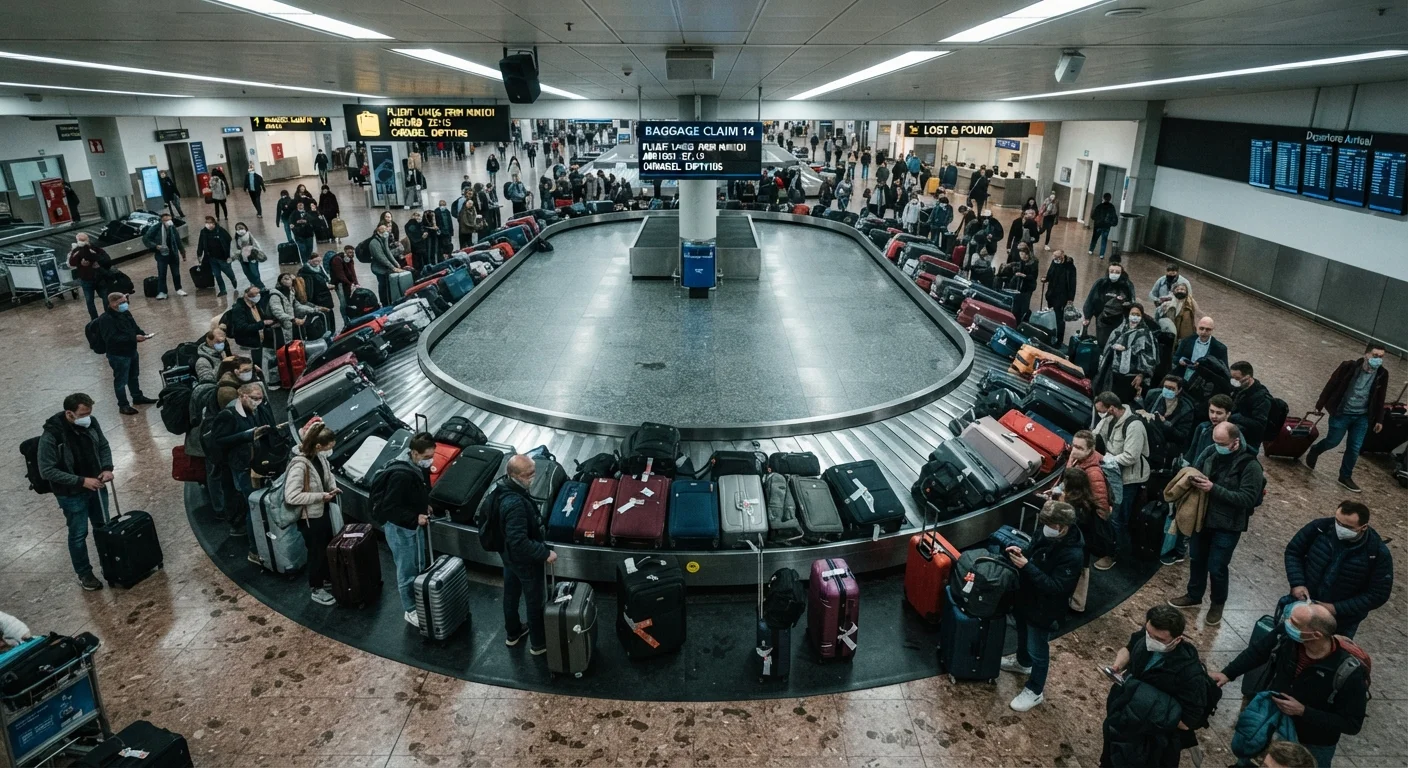
Before you leave the baggage claim hall, confirm your bag is actually missing rather than delayed on the belt. Wait until the carousel stops completely and the area empties out. Check that you are at the right carousel and scan any unclaimed bags nearby, since luggage tags can be misread and a bag similar to yours may be sitting a few feet away.
Once you are certain the bag did not arrive, locate the airline's baggage service desk. This desk is almost always inside or immediately adjacent to the baggage claim area. Do not exit into the arrivals hall first, because doing so can complicate the paperwork and, at some airports, prevent you from returning airside.
What you will need
The step-by-step recovery process
Follow these steps in order. Each one builds on the last, and skipping ahead can weaken your position if you later need to file a compensation claim.
File a Property Irregularity Report at the baggage desk
Ask the airline agent to open a Property Irregularity Report, commonly called a PIR. This is the official record of your missing bag and the document you will reference in every follow-up. Provide your bag's description: color, brand, size, distinguishing features, and any identifying tags. Give the agent your destination address and a working phone number. Before you leave the desk, confirm you have a written reference number for the report.
Register your bag in the airline's online tracking system
Most major airlines have a dedicated baggage tracking portal, accessible through their website or app. Enter your PIR reference number and booking details to create an account for your specific case. The system will update you as the bag moves through the network and will show the airline's current status on locating it. Set up email or push notifications if the option is available.
Buy essential items and save every receipt
Airlines are required to cover reasonable interim expenses when a bag is delayed. This typically includes toiletries, a change of clothes, and basic items you need to function for the next 24 to 48 hours. Do not purchase anything extravagant; stick to essentials and keep spending proportional to your trip's length and purpose. Save physical or digital receipts for everything, because you cannot claim reimbursement without them.
Follow up every 24 hours until the bag is found
Contact the airline's baggage department once a day if you have not received an update. Keep a simple log of each call or chat: the date, the agent's name, and what was said. Written communication via email or the airline's messaging portal is preferable to phone calls because it creates a timestamped record. Reference your PIR number in every message.
Submit a formal compensation claim after 21 days
If the bag has not been returned or confirmed found within 21 days, submit a written loss claim to the airline. Include your PIR reference number, a detailed inventory of the bag's contents with estimated values, proof of purchase for high-value items where available, and all receipts for interim expenses already incurred. Send this by email so you have delivery confirmation and a date stamp.
Understanding your rights and compensation limits
The Montreal Convention is the international treaty that governs airline liability for delayed, damaged, or lost baggage on most international flights. For flights that fall under it, airlines are liable up to a specific limit (expressed in Special Drawing Rights, a currency unit set by the International Monetary Fund) unless you declared a higher value and paid a supplemental fee before travel. Domestic US flights fall under separate Department of Transportation rules, which set their own liability caps.
A bag is not officially classified as lost until it has been missing for 21 days. Before that point, it is considered delayed, which affects which compensation rules apply. After 21 days you can file a formal loss claim and the airline must reimburse you for the bag's depreciated value up to the applicable limit.
Claim windows close faster than you might expect
Under the Montreal Convention, you must submit a written complaint about a delayed bag within 21 days of receiving it. For damaged bags, the window is just 7 days. Missing these deadlines can forfeit your right to compensation entirely, regardless of the circumstances. Do not wait for the airline to prompt you.
Travel insurance with baggage coverage can fill the gap between the airline's liability cap and the actual value of your belongings. Review your policy's terms carefully before travel so you know exactly what is and is not covered.
When the airline stops responding or denies your claim
If the airline misses its own stated callback windows or rejects your claim without a clear explanation, escalate in writing. Send a formal demand letter by email to the airline's customer relations department, attach your PIR reference, all receipts, and a summary of every contact attempt you have made including dates and names if you have them.
US travelers can also file a complaint with the Department of Transportation's Aviation Consumer Protection Division. The DOT does not arbitrate individual claims, but complaint volume influences its oversight activity and airlines do respond to formal filings. For international claims, the relevant civil aviation authority in the country of departure or arrival may accept complaints as well.
Small claims court is a legitimate final option for amounts within your jurisdiction's limit. Many travelers have recovered compensation this way after airline customer service channels stalled. Bring printed copies of every document: the PIR, receipts, correspondence, and the airline's contract of carriage showing the liability provisions you are citing.