

Key Takeaways
- U.S. airlines are only required to refund your ticket if a flight is cancelled or significantly changed, not for most standard delays.
- Airlines set their own delay policies; check the airline's Customer Service Plan or Contract of Carriage for specifics.
- Tarmac delays on domestic flights are capped at three hours before the airline must allow passengers to deplane.
- Travel insurance or certain credit cards may cover costs like meals and hotels that airlines are not legally required to pay.
- Always get confirmation of any rebooking, meal voucher, or hotel offer in writing before leaving the gate or service desk.
Flight delay
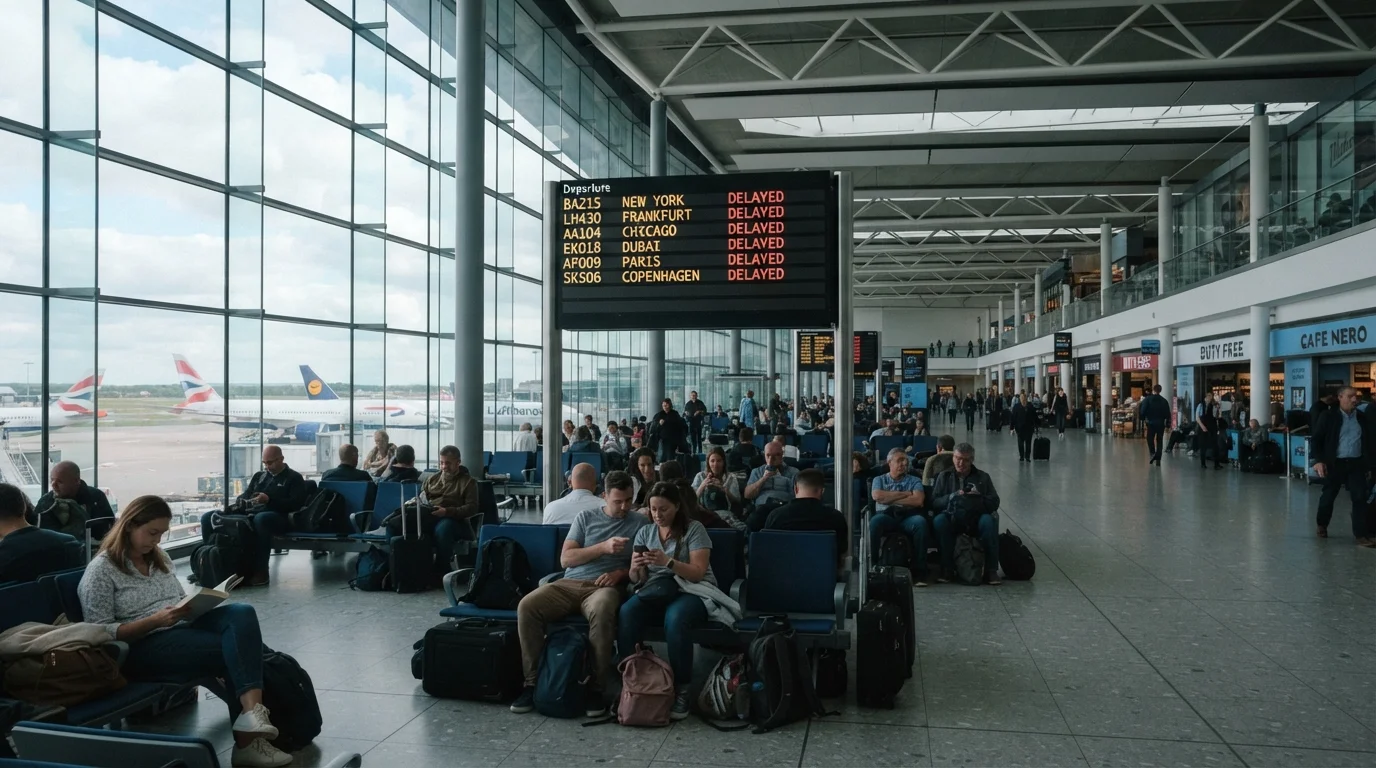
A flight delay is any departure or arrival that occurs later than the scheduled time shown on your ticket. Airlines distinguish between short delays (under two hours), significant delays (two hours or more), and cancellations, because each category triggers different passenger options and, in some cases, different airline obligations. What you are owed depends on the length of the delay, the reason for it, and whether you are flying domestically or internationally.
In the United States, the Department of Transportation (DOT) defines a domestic flight as delayed when it operates 15 or more minutes after its scheduled time, though passenger compensation rights under U.S. rules are narrower than those in some other jurisdictions such as the EU.
What the airline is required to do
When a flight is delayed, passengers often assume the airline owes them a hotel room, meals, and cash. U.S. rules are narrower than that. The DOT requires airlines to issue a full refund to your original payment method if a flight is cancelled or significantly changed and you decide not to travel. That refund must be prompt: seven business days for credit card purchases, 20 calendar days for other payment forms.
For delays that fall short of a cancellation or significant change, airlines are not legally required to provide meals, hotels, or rebooking on a competing carrier. Many carriers do offer these voluntarily for delays caused by factors within their control, such as a mechanical problem or a crew scheduling issue. Weather delays and air traffic control holds are generally treated differently, and voluntary compensation is less common in those situations.
One hard rule that does apply regardless of cause: tarmac delay protections. On a domestic flight, the airline must return to the gate after three hours if passengers want to leave. Food and water are required within two hours of any tarmac delay.
Get everything in writing
When a gate agent offers a voucher, hotel, or rebooking, ask for written confirmation before leaving the desk. A verbal promise is hard to act on later. Screenshot any digital voucher codes and note the agent's name and the time of the conversation.
How to find out what your airline offers
Each U.S. carrier publishes a Customer Service Plan and a Contract of Carriage. These documents list exactly what the airline commits to when a delay is within its control. Common voluntary commitments include meal vouchers for delays over three hours and hotel accommodation for overnight delays caused by the airline. The DOT maintains a dashboard where you can compare domestic carrier commitments side by side.
Knowing what to ask for matters. Gate agents and phone representatives can issue vouchers, rebook you on the next available flight on that carrier, and sometimes rebook you on a partner airline. If the agent cannot help, ask to escalate to a supervisor or file a complaint through the DOT's Aviation Consumer Protection division.
Practical steps while you wait
Open the airline's app as soon as you see a delay notice. Many carriers allow self-service rebooking through the app before agents are available at the gate. If you need to speak with someone, call the airline's reservation line at the same time as waiting in the gate queue: whichever connects first saves time.
Keep every receipt for meals, transportation, and accommodation you purchase during the delay. Even if the airline does not cover those costs, your travel insurance policy or the credit card you used to book the ticket may reimburse qualifying expenses. Policies differ, so check the terms before you spend freely.
If you decide to give up on the trip, tell the airline before the flight officially departs. Accepting a seat on a later flight can sometimes complicate a refund request on the original ticket.
~20%
U.S. domestic flights delayed annually
According to Bureau of Transportation Statistics data, roughly one in five domestic flights arrives late in a typical year.
3 hours
Domestic tarmac delay limit before deplaning required
The U.S. Department of Transportation enforces this limit for domestic flights under its tarmac delay rule.
7 days
Maximum refund window for credit card purchases
The DOT requires airlines to process refunds to credit cards within seven business days of a cancellation or significant change.
When you get home: filing a complaint or claim
If an airline promised compensation that was never delivered, or if you believe a refund was wrongly denied, file a complaint with the DOT's Aviation Consumer Protection division at aviationconsumer.dot.gov. The DOT reviews complaints and contacts airlines on behalf of passengers. For international flights, the rules of your destination country may also apply: EU Regulation 261/2004, for example, can require fixed compensation for certain delays on flights departing EU airports, regardless of the airline's home country.
Keep a written record of what happened: the delay duration, any written or verbal promises from airline staff, voucher numbers, and the names of agents you spoke with. That documentation makes any follow-up claim easier to support.