

Key Takeaways
- Every pet owner needs a dedicated go-bag stocked before an emergency happens.
- Pets require species-specific supplies, medications, and documentation that differ from human kits.
- A written evacuation plan that names your pet's shelter options can prevent panic decisions.
- Microchipping and current ID tags are the most reliable ways to reunite lost pets after a disaster.
- Reviewing and refreshing your kit twice a year keeps it reliable when you actually need it.
Summary
28 items · 45 to 90 minutes to set up; 15 minutes to review every six months
Why pet-specific planning matters
When a hurricane warning goes out or a house fire forces an immediate exit, most people grab their phone, their wallet, and their family. Pets can get left behind, not from lack of love but from lack of preparation. Having a plan built around your animals before any emergency occurs changes that outcome.
General household emergency kits do not account for a dog who needs a prescription diet, a cat who panics without a familiar carrier, or a rabbit who requires hay and a temperature-stable environment. Animal companions have needs that only you know, and those needs require their own checklist.
If you are newer to pet ownership, the pet ownership readiness checklist covers foundational preparation that pairs well with what follows here. This checklist focuses specifically on emergency scenarios: what to pack, how to plan, and how to keep your information current.
Do not assume emergency shelters will accept pets
Many public emergency shelters operated by government agencies do not accept animals other than trained service animals. Relying on this option without advance research can leave you choosing between your safety and your pet's. Verify shelter pet policies with your local emergency management office before a disaster occurs, and have a backup housing plan ready.
Tools and supplies you will need
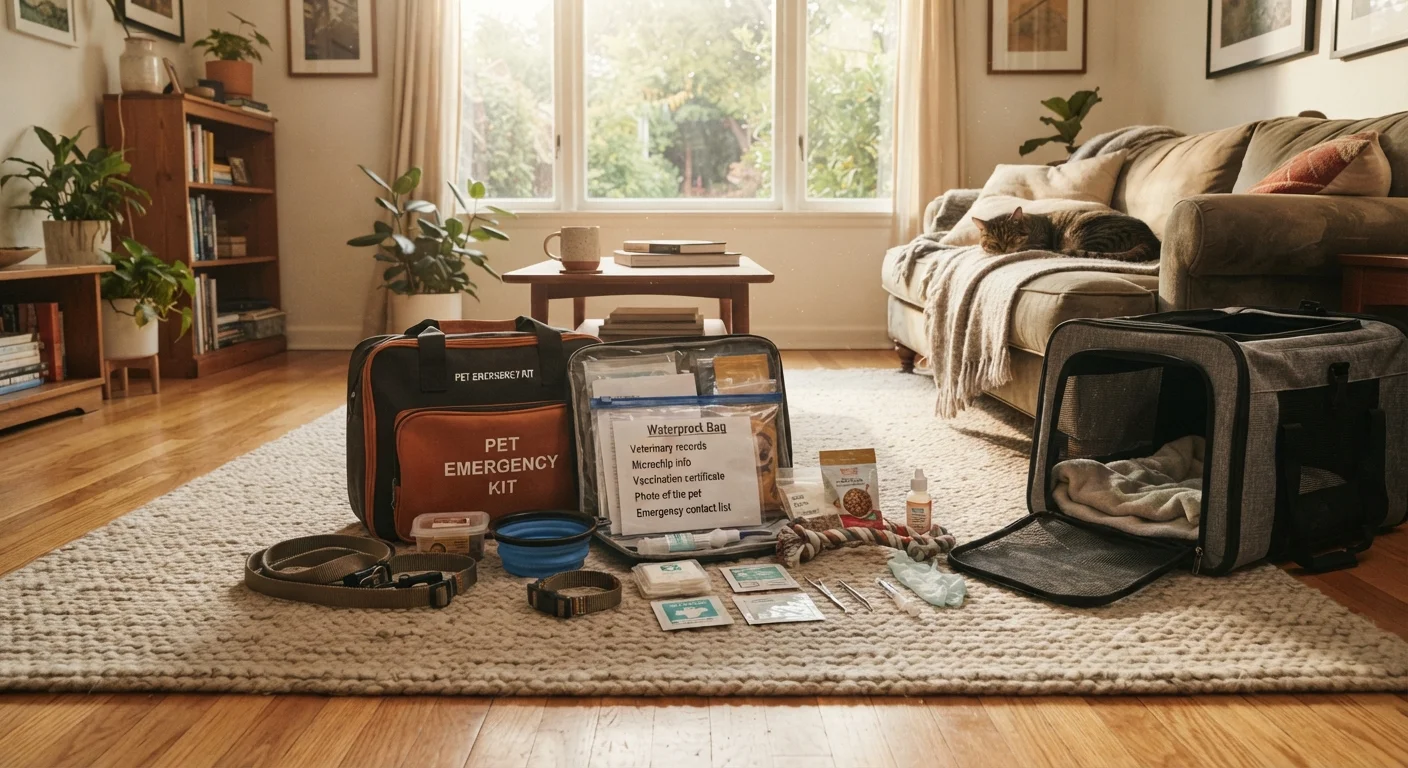
Before working through the checklist items, gather or purchase the supplies listed below. Having them in one place makes assembly faster and reduces the chance that something critical gets forgotten during a stressful situation.
Hard-sided pet carrier
Provides safe, secure transport for cats and small pets during evacuation.
Waterproof document bag or folder
Protects vaccination records, ID photos, and written care instructions from water damage.
Sealed food storage containers
Keeps emergency pet food fresh and protected from moisture and pests.
Food-grade water containers
Stores a multi-day supply of drinking water for your pet.
Basic pet first aid kit
Handles minor injuries until your pet can be seen by a veterinarian.
Backup collar and leash
Ensures you can secure your dog even if their everyday collar is lost or damaged.
Chemical hand warmers or battery-powered fan
Maintains appropriate temperature for birds, reptiles, or other temperature-sensitive animals.
Portable litter box and waste supplies
Manages sanitation for cats and dogs during a multi-day displacement.
The emergency preparedness checklist
Work through each group at your own pace. Mark items complete only when they are physically ready, not just planned. A checklist item that exists only in your head offers no protection.
Go-bag essentials
Identification and documentation
Housing and transport
Species-specific and special-needs items
Plan and practice
For guidance on recognizing when a health situation during or after a disaster requires immediate veterinary attention, see our article on emergency vs urgent care for pets.
Keeping your plan current
A kit assembled once and never revisited can fail when you need it most. Food and water expire. Medications change. Your pet's microchip registration may still list an old address. Set a recurring calendar reminder every six months to go through each item.
After any significant change in your household, such as a move, a new pet, or a change in your animal's medical needs, review the full checklist rather than waiting for the next scheduled date. The Pet Health and Wellness hub has ongoing guidance on preventive care that connects directly to keeping your records up to date.
Emergency planning also extends to the people in your life. Tell a trusted neighbor or nearby friend where your pet's go-bag is stored and what your evacuation plan involves. If you are unable to return home, that person may be the one retrieving your animal.
This article is for general informational purposes only and does not constitute veterinary or emergency management advice. Always follow guidance from local emergency management authorities and consult your veterinarian about your specific animal's health and medication needs.