

Key Takeaways
- Dogs with sensitive skin need shorter, gentler grooming sessions with fragrance-free, hypoallergenic products.
- Bathing too frequently strips protective oils and worsens irritation; most sensitive-skin dogs do well with baths every four to six weeks.
- Brushing technique matters as much as frequency: soft bristles and light pressure reduce skin trauma.
- Watch for redness, flaking, or excessive scratching after grooming as signals to adjust your approach.
- A consistent grooming schedule helps your dog feel calm and builds trust over time.
What you will need
Understanding sensitive skin in dogs
Sensitive skin in dogs is not one single condition. It is a general term covering a range of responses: environmental allergies, food sensitivities, breed-specific tendencies toward dryness, and contact reactions to products or fabrics. Breeds such as West Highland White Terriers, Bulldogs, and Golden Retrievers are more commonly affected, but any dog can develop skin sensitivity at any age.
The signs are usually visible. Look for persistent scratching, patchy redness, flakiness, or a coat that looks dull or feels rough to the touch. If you notice any of these, it is worth discussing them with your veterinarian before settling on a grooming routine, since some symptoms point to underlying conditions that need medical attention. For a closer look at what coat and skin changes can signal, see reading skin and coat health changes.
Once your vet has ruled out or addressed any medical causes, you are in a good position to build a home routine that works with your dog's skin rather than against it.
What you need before you start
Having the right supplies on hand makes every session easier and reduces the chance of accidental irritation. You do not need many products, but the ones you use should be chosen with your dog's skin in mind.
Soft-bristle brush or wide-toothed comb
Removes loose fur and detangles the coat without scratching or irritating sensitive skin.
Hypoallergenic, fragrance-free dog shampoo
Cleans the coat without the dyes, perfumes, or harsh surfactants that commonly trigger skin reactions.
Soft microfibre towels
Pat-dries the coat gently after bathing, reducing friction on sensitive skin.
Handheld shower head or pitcher
Allows controlled rinsing to remove all shampoo residue thoroughly, especially around the belly and legs.
Low-heat blow dryer
Dries the coat fully to prevent moisture from sitting against the skin after bathing.
Cotton balls
Placed loosely in the ear openings during bathing to reduce water entering the ear canal.
Keep all supplies in one dedicated spot so sessions feel predictable for your dog. Familiar routines genuinely reduce stress, and the principles behind that apply to grooming just as much as to feeding or walks. For more on why consistency matters, see daily routines that help dogs feel secure.
Step-by-step grooming routine
Follow these steps in order. For a dog new to home grooming or one that has had a difficult experience with it before, work through the steps gradually over several sessions rather than completing everything at once. If your dog was recently adopted, socialising timelines for rescue dogs may give useful context for setting realistic expectations.
Do a pre-groom skin check
Before reaching for any tool, run your hands gently over your dog's coat from neck to tail. Feel for lumps, sore spots, cuts, or areas where the dog flinches. Part the fur in a few places to look directly at the skin beneath. Note any redness or flaking.
This check takes about two minutes and tells you whether it is safe to proceed with a full session or whether you need to avoid a particular area or contact your vet first.
Brush before bathing
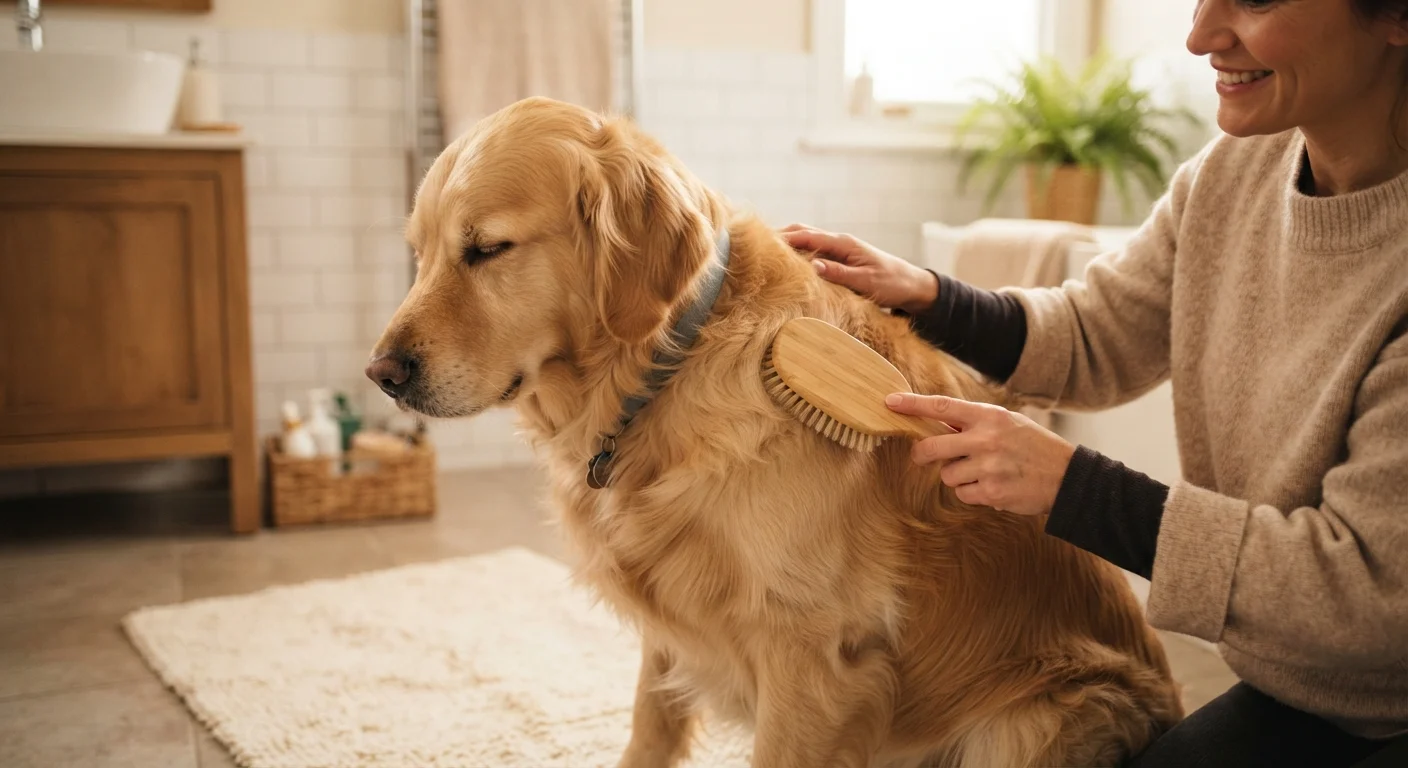
Always brush your dog's coat before introducing water. Wet mats are much harder to remove and can pull painfully on sensitive skin. Use a soft-bristle brush or a wide-toothed comb suited to your dog's coat length.
Work in the direction of hair growth using light, short strokes. Do not drag through tangles. When you find a mat, hold the base of it close to the skin with your fingers to reduce pulling, then work through it from the outer edges inward.
Prepare a lukewarm bath
Fill the tub or use a handheld shower head to wet your dog's coat with lukewarm water. Water that is too hot dries out skin; water that is too cold causes unnecessary stress. Test the temperature on your wrist before directing it at your dog.
Wet the coat thoroughly from the neck down before applying any product. Avoid spraying water directly into ears, eyes, or nostrils.
Apply shampoo gently and rinse fully
Dilute the shampoo in a small cup of water before applying it, unless the product instructions say otherwise. This helps distribute it evenly without concentrating it on one patch of skin. Work the lather in with your fingertips using circular motions, avoiding the face.
Rinse until the water runs completely clear. Shampoo residue left on the skin is one of the most common causes of post-bath irritation in sensitive dogs. Spend at least twice as long rinsing as you did applying the product.
Dry gently and thoroughly
Pat the coat dry with a soft towel rather than rubbing. Rubbing roughens the hair cuticle and can irritate already-sensitive skin. If you use a blow dryer, set it to the lowest heat and hold it at least 30 cm (about 12 inches) from the skin, keeping it moving.
Make sure the coat and skin are fully dry before your dog goes outside or settles in a cool area. Damp skin sitting against fur for extended periods can encourage bacterial or yeast overgrowth, both of which are more common in dogs already prone to skin issues.
Finish with a post-groom check and reward
Once your dog is dry, do a brief second skin check of the areas you groomed. Look for any new redness or spots you may have missed in the pre-groom check.
End every session with calm praise and a treat your dog enjoys. Grooming should end on a positive note, which makes the next session easier for both of you.
Recognising when to stop or seek help
Even with the gentlest routine, some dogs show signs of distress or worsening skin. Stop the session immediately if your dog is trembling, panting heavily, or trying to escape persistently. These are stress signals, not stubbornness, and pushing through them makes future sessions harder.
After each grooming session, check the skin beneath the coat. A small amount of pinkness right after brushing can be normal, but redness that lasts more than an hour, new patches of hair loss, or weeping skin are reasons to contact your vet. Similarly, if your dog scratches heavily in the hours following a bath, the shampoo may not suit them, even if it is labelled for sensitive skin.
This article is for general informational purposes only and is not a substitute for veterinary advice. If your dog shows signs of a skin condition, consult a licensed veterinarian for guidance specific to your pet.