

Key Takeaways
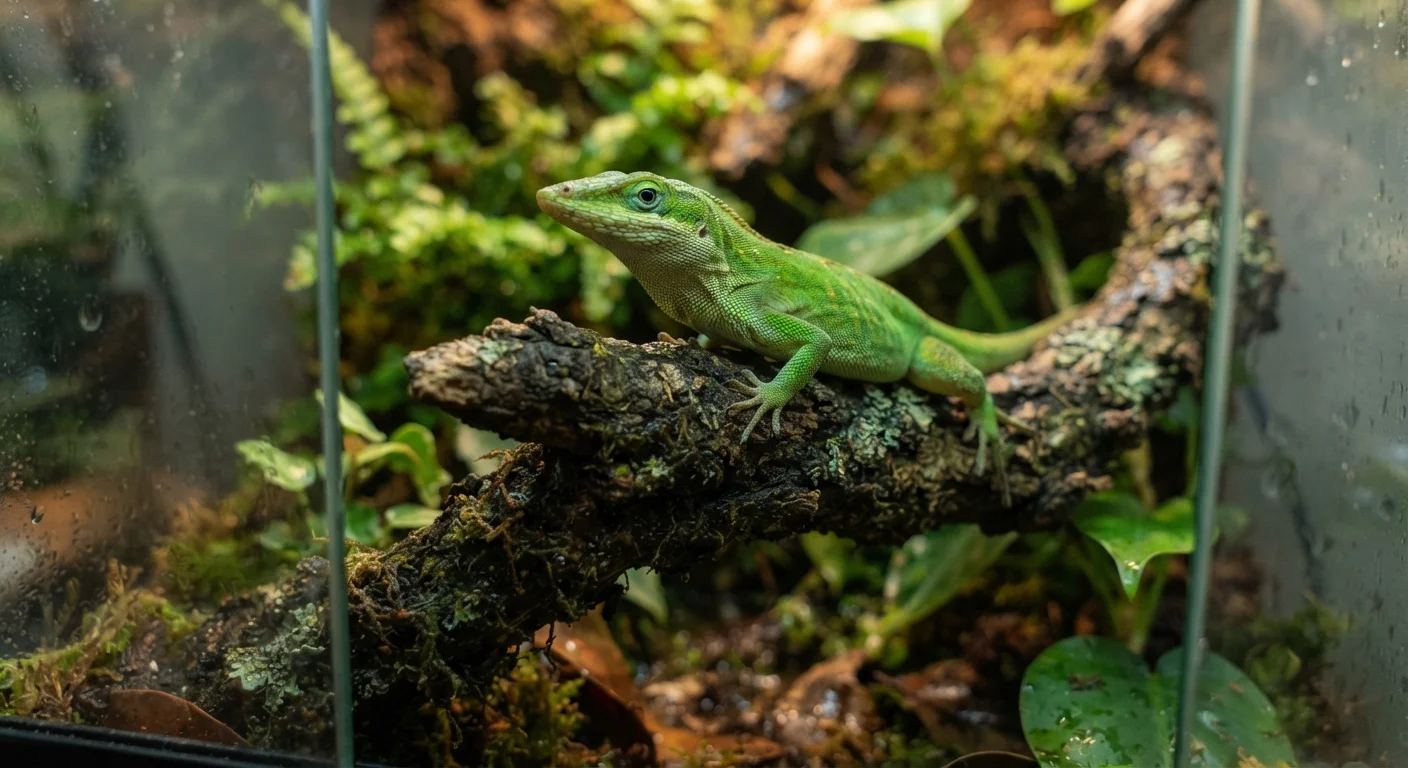
- Reptiles require specialized lighting, heating, and humidity that must be maintained consistently to prevent illness.
- Most reptiles do not form social bonds with owners the way dogs or cats do, though some tolerate handling well.
- Veterinary care for reptiles requires an exotic animal specialist, which can be harder to find and more costly.
- Many reptiles live 10 to 30 years, making ownership a long-term commitment that deserves careful planning.
- Some species are low-cost to feed; others need live prey, specialized diets, or UV-B lighting to survive.
No dander, suitable for many allergy sufferers
Reptiles produce no pet dander, which is the protein-carrying dead skin cells that trigger allergic reactions in many people. This makes them a genuinely viable option for households where dogs or cats are medically problematic.
Quiet and contained within their enclosure
Most reptiles are silent and stay within their habitat, creating no noise disturbances. This makes them practical for apartment living or noise-sensitive households.
Infrequent feeding schedules for many species
Adult ball pythons typically eat every 10 to 14 days, and leopard geckos are fed every two to three days. Owners with unpredictable work schedules may find this preferable to the daily feeding demands of mammals.
Fascinating behavior to observe and learn
Reptile biology and behavior are genuinely complex, and many keepers find long-term satisfaction in studying thermoregulation habits, natural feeding responses, and species-specific behaviors that reflect wild adaptations.
Some species tolerate regular handling well
Bearded dragons and leopard geckos are widely noted by keepers for becoming calm and responsive to consistent, gentle handling, though this varies by individual animal and early socialization.
Habitat setup is expensive and technically demanding
A proper enclosure requires multiple pieces of equipment, including UV-B lighting, basking lamps, thermostats, and hygrometers. Errors in temperature gradients or humidity levels directly cause preventable health problems.
Exotic vets are scarce and can be costly
Reptiles must be seen by a veterinarian with exotic animal training. In many US regions, these practices are limited, and emergency after-hours care is especially difficult to access.
Illness signs are easy to miss until serious
Reptiles instinctively hide symptoms of illness, a survival behavior inherited from prey-animal ancestors. By the time visible signs appear, conditions are often advanced and harder to treat.
Lifespans frequently exceed 20 years
Ball pythons, tortoises, and many turtle species regularly live two to four decades in captivity. Owners who purchase young animals must plan for a commitment that spans major life changes.
Minimal emotional reciprocity with owners
Most reptiles do not form attachment bonds with humans. While some tolerate handling, they do not seek out interaction or display the social behaviors that many people associate with pet companionship.
Some species have complex dietary requirements
Chameleons need precise gut-loaded insects and calcium supplementation. Green iguanas require a specific plant-based diet with careful calcium-to-phosphorus ratios. Meeting these needs demands consistent effort and knowledge.
Our Verdict
Reptiles are genuinely rewarding pets for people who research specific species thoroughly, can invest in proper equipment, and find satisfaction in observing animal behavior rather than seeking physical affection. They are a poor fit for anyone expecting low-maintenance care or spontaneous interaction.
Patient, detail-oriented owners who are comfortable with consistent habitat management and have access to an exotic veterinarian.
Why reptiles attract new owners
Reptiles have a quiet, almost meditative presence that appeals to people who want something genuinely different from a cat or dog. A well-kept terrarium is visually compelling, the animals themselves are biologically fascinating, and many species are physically compact. For renters with strict pet policies, a reptile in an enclosed tank often sidesteps restrictions that ban dogs or cats. See what to consider before committing to a pet as a renter for more on that nuance.
The appeal is real, but it is shaped partly by how reptiles are perceived rather than how they actually live. Walk into many pet stores and you will see a ball python coiled in a small plastic container, motionless, apparently effortless. That image does not represent the full picture of ownership.
The genuine advantages of reptile ownership
When the match is right, reptiles offer things other pets simply cannot.
No dander, suitable for many allergy sufferers
Reptiles produce no pet dander, which is the protein-carrying dead skin cells that trigger allergic reactions in many people. This makes them a genuinely viable option for households where dogs or cats are medically problematic.
Quiet and contained within their enclosure
Most reptiles are silent and stay within their habitat, creating no noise disturbances. This makes them practical for apartment living or noise-sensitive households.
Infrequent feeding schedules for many species
Adult ball pythons typically eat every 10 to 14 days, and leopard geckos are fed every two to three days. Owners with unpredictable work schedules may find this preferable to the daily feeding demands of mammals.
Fascinating behavior to observe and learn
Reptile biology and behavior are genuinely complex, and many keepers find long-term satisfaction in studying thermoregulation habits, natural feeding responses, and species-specific behaviors that reflect wild adaptations.
Some species tolerate regular handling well
Bearded dragons and leopard geckos are widely noted by keepers for becoming calm and responsive to consistent, gentle handling, though this varies by individual animal and early socialization.
9.4 million
Reptiles kept as pets in US households
According to the American Pet Products Association's 2023-2024 National Pet Owners Survey, approximately 9.4 million reptiles are kept as pets across US households.
25-30 years
Typical ball python lifespan in captivity
Ball pythons are among the most commonly kept pet snakes, yet many new owners are unaware they routinely live 25 to 30 years under proper care.
Many reptiles produce no dander, making them a practical option for people with pet allergies. They do not bark, scratch furniture, or demand walks. Feeding frequency for species like ball pythons is once every one to two weeks for adults, which suits owners whose schedules are unpredictable. Some species, particularly leopard geckos and bearded dragons, become relaxed around consistent handling and can be genuinely enjoyable to interact with.
The realities that catch owners off guard
Reptile care has a reputation for being simpler than it is. The three areas that surprise new owners most are habitat complexity, veterinary access, and lifespan.
Habitat setup is expensive and technically demanding
A proper enclosure requires multiple pieces of equipment, including UV-B lighting, basking lamps, thermostats, and hygrometers. Errors in temperature gradients or humidity levels directly cause preventable health problems.
Exotic vets are scarce and can be costly
Reptiles must be seen by a veterinarian with exotic animal training. In many US regions, these practices are limited, and emergency after-hours care is especially difficult to access.
Illness signs are easy to miss until serious
Reptiles instinctively hide symptoms of illness, a survival behavior inherited from prey-animal ancestors. By the time visible signs appear, conditions are often advanced and harder to treat.
Lifespans frequently exceed 20 years
Ball pythons, tortoises, and many turtle species regularly live two to four decades in captivity. Owners who purchase young animals must plan for a commitment that spans major life changes.
Minimal emotional reciprocity with owners
Most reptiles do not form attachment bonds with humans. While some tolerate handling, they do not seek out interaction or display the social behaviors that many people associate with pet companionship.
Some species have complex dietary requirements
Chameleons need precise gut-loaded insects and calcium supplementation. Green iguanas require a specific plant-based diet with careful calcium-to-phosphorus ratios. Meeting these needs demands consistent effort and knowledge.
Habitat setup costs are front-loaded and substantial. A proper enclosure for a bearded dragon, for example, requires a UV-B bulb (replaced every six months even if it still produces visible light), a basking lamp, a thermostat, a hygrometer, and appropriate substrate. Getting any of these wrong can cause metabolic bone disease, respiratory infection, or stress-related illness. Unlike with dogs, symptoms of illness in reptiles are often subtle and easy to miss until the animal is seriously unwell.
Veterinary care is another barrier. Reptiles need a vet with exotic animal training, and those practices are not evenly distributed across the US. Emergency care outside business hours is even harder to find. The self-assessment questions for prospective pet owners include practical prompts about vet access that apply directly here.
Lifespan: a commitment many owners underestimate
A ball python can live 25 to 30 years in captivity. A red-eared slider turtle may live 20 to 40 years. A Russian tortoise can outlive its owner. These are not edge cases; they are normal outcomes for healthy animals in proper care.
Long lifespans require advance planning
A reptile purchased on impulse at age 25 may still be alive when the owner is in their 50s. Some tortoise species outlive multiple human generations. Before acquiring any reptile, it is worth making a realistic plan for what happens to the animal if your living situation, health, or circumstances change significantly. Rescue organizations that accept reptiles exist in many states, but they are often at capacity.
Lifespan is one of the most consequential factors in choosing any pet, and reptiles are among the longest-lived animals in the pet trade. The lifespan factor in choosing a pet covers why this calculation matters more than most people anticipate when they are drawn to an animal in a store.
Owners who are unprepared for that commitment are among the most common sources of surrendered reptiles. Understanding why that pattern repeats itself can help you avoid it. See why people surrender pets and what it reveals about choosing wisely.
Matching the species to your actual life
Not all reptiles are equally demanding. A leopard gecko is far more forgiving for a first-time keeper than a green iguana, which grows large, requires complex UVB lighting, and can become aggressive if not handled consistently from a young age. Doing species-specific research before purchasing is not optional; it is the difference between a sustainable pet relationship and an overwhelming one.
Consider honestly whether your home environment, schedule, and budget fit a particular animal's needs. Reptiles should not be compared to dogs or cats in terms of interaction style. They do not greet you at the door or seek comfort. For people who understand that and find the biology itself rewarding, reptile ownership can be a long, satisfying experience. For those hoping for warmth and reciprocation, the reality will likely disappoint. The honest self-assessment for prospective pet owners can help clarify which category you fall into.
This article is for general informational purposes only and is not veterinary advice. Consult a qualified exotic animal veterinarian for guidance specific to your reptile's health and care needs.