

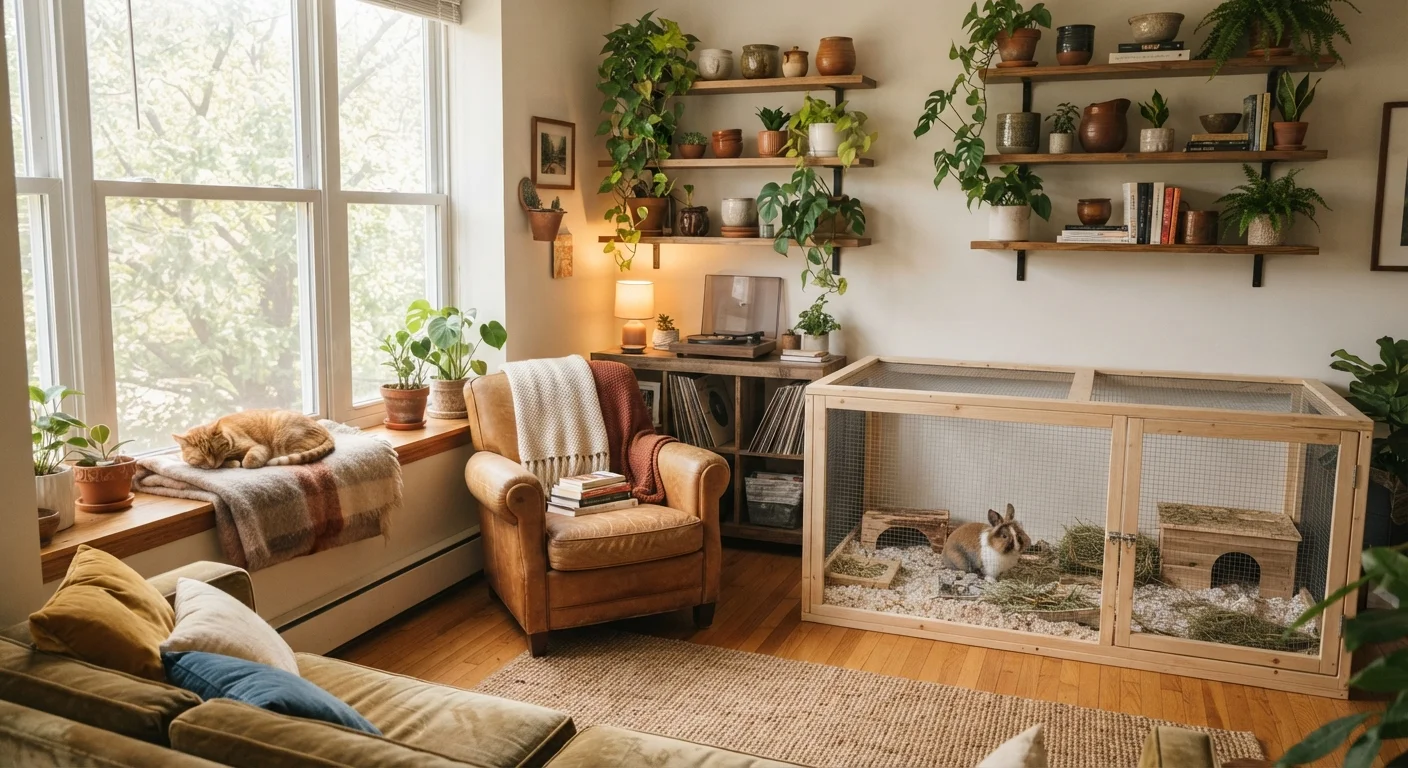
Key Takeaways
- Apartment suitability depends more on an animal's temperament and exercise needs than on its size alone.
- Noise levels, daily enrichment, and social needs matter as much as physical space when choosing a pet.
- Leases and building rules can restrict pet choices before temperament or care needs are even considered.
- Several species, including cats, certain dog breeds, and small mammals, genuinely adapt well to smaller homes.
- Matching your daily schedule and activity level to a pet's needs is the most reliable predictor of success.
Why the right match matters more than square footage
Many apartment dwellers assume they cannot own a pet responsibly, but the square footage of your home is rarely the deciding factor. What matters is whether your daily routine, noise tolerance, and living setup meet that animal's actual needs. A high-energy border collie in a house with a yard may still be understimulated if its owner works long hours. Meanwhile, a pair of guinea pigs in a 500-square-foot studio can live full, healthy lives with the right enclosure and attention.
Before choosing any animal, it helps to think honestly about your schedule, how often you are home, your building's pet policy, and your tolerance for noise, odor, and mess. The self-assessment questions in our owner profile guide are a good place to start that reflection. And if you rent, reviewing your lease before falling for a specific animal is genuinely worth the extra step. Navigating pet policies as a renter can save you from a difficult situation later.
Cats (especially low-energy adult cats)
Cats are among the most naturally apartment-suited animals. They sleep for much of the day, use vertical space efficiently, and do not need outdoor access to stay healthy, provided they have enough mental stimulation. Adult cats adopted from shelters often have known temperaments, which makes it easier to choose one whose energy level fits a quieter home.
A cat that has vertical climbing options, a window with an outdoor view, and regular interactive play can be genuinely content in a studio or one-bedroom apartment. Two cats who get along can also keep each other company when owners are at work, reducing stress-related behaviors.
Adult rescue cats often have established temperaments that make apartment compatibility easier to assess.
Small dog breeds with calm temperaments
Not every dog suits apartment life, but several smaller breeds adapt well when their owners commit to daily walks and mental stimulation. Breed alone is not a reliable guide: a small dog with high prey drive or excessive barking can be harder to manage in a shared building than a calm medium-sized dog. Temperament, training history, and the owner's daily availability matter more than breed charts suggest.
Apartment-dwelling dog owners should plan for at least two substantial walks per day and consider the noise impact on neighbors. Buildings with weight or breed restrictions add another layer to the decision. Understanding what your lease actually allows before choosing a breed saves real difficulty later.
Temperament and training history predict apartment compatibility in dogs more reliably than breed or size alone.
Guinea pigs
Guinea pigs are social, vocal in a gentle way, and adapt well to indoor living without requiring the kind of free-roaming time that rabbits need. They do best in pairs or small groups, since they are herd animals and can develop stress-related health issues when kept alone. A proper enclosure for two guinea pigs is larger than many people expect, at a minimum of about 7 to 8 square feet of floor space, but that still fits comfortably in most apartments.
They are quiet enough to suit buildings with noise restrictions, and their care routine is manageable for most working adults. Comparing guinea pigs to rabbits and hamsters can help you decide which small mammal fits your specific setup.
Guinea pigs need companionship from their own kind: a solitary guinea pig is a stressed guinea pig.
Fish
Aquariums fit almost any apartment and can be scaled to match available space and budget. Fish require no outdoor access, produce no noise, and present no allergy concerns for neighbors. The care commitment varies widely by species: a single betta fish in a properly filtered and heated tank is very different from a planted community aquarium, which needs consistent water testing, temperature management, and regular maintenance.
Fish are not passive pets. Water quality, lighting cycles, compatible tank mates, and appropriate feeding schedules all require attention. But for someone who finds watching an aquarium calming and can commit to regular upkeep, fish offer genuine companionship within a compact footprint.
Water quality and consistent maintenance shape fish health far more than tank size alone.
Hamsters
Hamsters are solitary, quiet during the day, and take up very little floor space, which makes them appealing to apartment residents with limited room. Their activity peaks at night, so owners who keep early hours may find the wheel noise disruptive unless they choose a silent-spinner model and position the enclosure thoughtfully.
A common misconception is that the small cages sold in pet stores are adequate. Most animal welfare organizations recommend a minimum of 450 square inches of unbroken floor space for a single hamster, along with deep substrate for burrowing. Meeting that need inside an apartment is straightforward, but it does require choosing the right setup from the start. The full care picture for hamsters and other small mammals covers what responsible ownership actually involves.
Hamsters need far more burrowing space than typical store cages provide: enclosure size is the most common mistake.
Rabbits (with realistic expectations)
Rabbits can thrive in apartments, but they need more space and interaction than their quiet nature might suggest. They require several hours of supervised free-roaming time each day outside their enclosure, a diet of fresh hay, leafy greens, and pellets, and regular veterinary care from a vet who specializes in exotic or small animals. They are also chewers, so apartment owners need to rabbit-proof electrical cords and baseboards.
Rabbits are not starter pets or low-effort alternatives to cats and dogs. They live 8 to 12 years, form strong bonds with their owners, and can develop depression when isolated or understimulated. For the right owner who is home regularly and willing to invest in their care, a rabbit can be a deeply rewarding companion in a small space.
Rabbits live up to 12 years and need daily free-roaming time: they are long-term companions, not low-effort pets.
Getting the conditions right
Whichever animal you choose, the physical setup inside your apartment shapes their wellbeing more than anything else. Vertical space matters for cats. Quiet, temperature-stable corners matter for small mammals. A predictable daily routine matters for dogs. Enrichment, whether that means foraging toys, window perches, tunnels, or puzzle feeders, compensates for what a yard or large room might otherwise provide.
Your own activity level should also guide the decision. Matching your pet to your activity level covers this in more depth, and it is one of the most practical filters available. For small mammal owners specifically, the actual care realities for rabbits, guinea pigs, and hamsters are often more involved than people expect, so reading up before committing is worth your time.
Enrich the space before you bring an animal home
Set up the enclosure, climbing structures, or baby gates before the animal arrives, not after. Enrichment items like foraging toys, tunnels, and window perches reduce stress-related behavior in confined spaces. A well-arranged apartment can meet most animals' needs for stimulation more effectively than square footage alone.
This article is for general informational purposes only. Individual animals vary widely in temperament and health needs. Always consult a veterinarian or animal behavior professional before acquiring a new pet.