

Key Takeaways
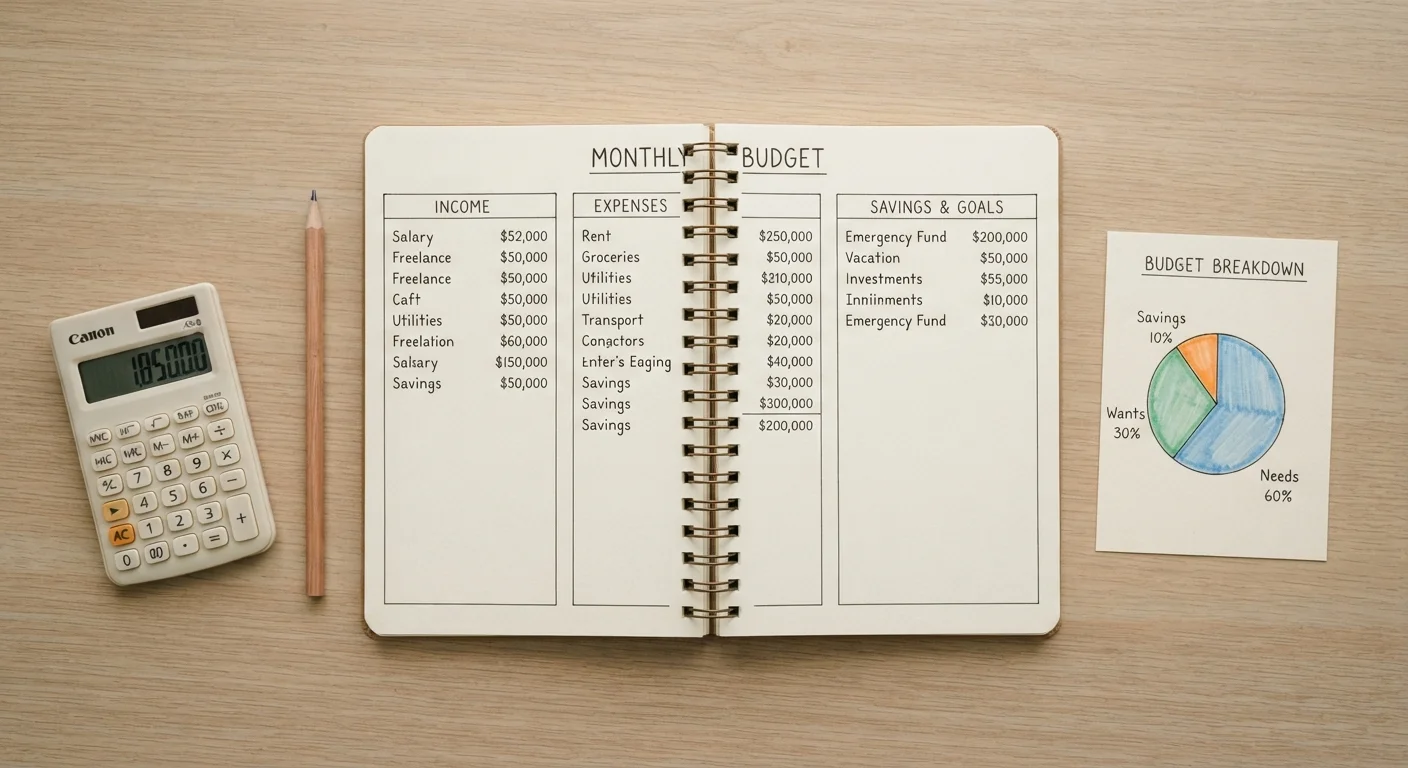
- The 50/30/20 rule splits after-tax income into needs (50%), wants (30%), and savings or debt payoff (20%).
- High housing costs in many US cities mean the needs category often needs adjustment.
- The 20% bucket should cover both building savings and paying down high-interest debt.
- The framework is a starting point, not a rigid prescription, and can be adapted to your situation.
- Tracking actual spending is necessary before the percentages become useful guides.
Start here
What the 50/30/20 rule is
Next
How each category works in practice
Then
When the standard splits do not fit
Apply it
Putting the framework into action
Watch for this
Common mistakes to avoid
What the 50/30/20 rule is
The 50/30/20 framework is a budgeting method that divides your after-tax income into three broad categories: 50% toward needs, 30% toward wants, and 20% toward savings or debt repayment. The approach was described by Senator Elizabeth Warren and her daughter Amelia Warren Tyagi in their 2005 book All Your Worth as a way to give households a simple structure without requiring a line-by-line spending spreadsheet.
The appeal is proportion rather than precision. Instead of assigning a dollar limit to every individual expense, you work with three buckets and judge whether your overall spending pattern is roughly balanced. That makes it more approachable for people who have never built a formal budget before.
After-tax income
The money left in your paycheck after federal, state, and payroll taxes are withheld. This is the figure the 50/30/20 framework uses as its starting point, not your gross salary.
Needs
Expenses that are essential to maintaining your housing, health, and employment. Examples include rent, utilities, groceries, and minimum debt payments.
Wants
Discretionary spending that improves comfort or enjoyment but could be reduced without serious harm. Examples include dining out, entertainment, and optional subscriptions.
Emergency fund
A dedicated pool of savings set aside to cover unexpected expenses or income loss. It is typically kept in an accessible account separate from everyday spending money.
Minimum debt payment
The smallest payment a lender requires each month to keep a loan or credit card account in good standing. Paying only the minimum reduces the balance slowly and results in more interest paid over time.
The starting point is always your after-tax income, sometimes called take-home pay. Using gross income before taxes would distort every percentage, since taxes are not a discretionary category you can shift around.
How each category works in practice
The needs category (50%) covers spending you cannot reasonably drop: housing, utilities, groceries, health insurance premiums, minimum debt payments, and the transportation costs required to get to work. The defining test is whether eliminating the expense would cause real harm to your housing, health, or employment. If yes, it belongs here.
The wants category (30%) is everything that improves your quality of life but is discretionary: restaurant meals, entertainment, clothing beyond basics, travel, and subscription services. Some expenses sit in a gray zone. A smartphone plan is closer to a need for most working adults; a premium unlimited data tier with streaming bundles edges toward a want. Place items honestly rather than inflating the needs bucket to protect your preferred spending.
The savings and debt category (20%) is where financial resilience gets built. This includes contributions to an emergency fund, retirement accounts such as a 401(k) or IRA, and any debt payments above the minimum. Paying more than the minimum on a credit card or student loan belongs here because those extra payments reduce what you owe rather than just servicing it. For guidance on how large your emergency fund should be, see what actually determines the right emergency fund size.
When the standard splits do not fit
The 50/30/20 percentages describe an idealized distribution that does not map cleanly onto every household. High housing costs are the most common pressure point. In cities where rent regularly consumes 35% or more of take-home pay on its own, hitting a 50% ceiling for all needs combined is mathematically difficult without moving, finding a roommate, or significantly increasing income.
Lower-income households face a sharper version of this problem. When fixed expenses consume 60% or 70% of income, the framework still offers direction: any movement toward a lower needs percentage or a higher savings percentage is improvement, even if the 50/30/20 targets are not yet reachable.
Irregular or self-employed income adds another layer of complexity. Budgeting against an average month obscures the months when income drops below average and spending commitments remain fixed. A more stable approach is to base the budget on a conservative floor and treat income above that floor as an allocation decision rather than assumed spending money.
The framework also does not distinguish between types of debt. A 6% federal student loan and a 24% credit card balance both sit in the 20% bucket, but they are not equivalent problems. Foundational financial habits typically prioritize clearing high-interest debt before building non-emergency savings, which is a refinement the basic framework does not specify.
Putting the framework into action
The practical first step is calculating your actual after-tax monthly income. For salaried employees, that is the net pay figure on your paycheck multiplied by the number of pay periods in a month. For variable earners, a three-month average of net deposits is a working starting point.
Next, total your current monthly spending in each of the three categories using two or three months of bank and credit card statements. Most people find this revealing: spending that felt modest in isolation adds up differently when categorized. Once you have real numbers, compare each category's dollar total to the corresponding percentage of your income.
If your needs exceed 50%, look for the largest individual expenses first. Housing and transportation are usually the biggest levers, though they are also the hardest to change quickly. If your wants exceed 30%, subscriptions and dining are often the easiest places to trim without affecting quality of life much. If your savings and debt payments fall below 20%, that gap is where the framework has the most to offer.
The monthly budget health check is a practical companion to this process, giving you structured questions to review your numbers each month before small gaps become larger problems. As your financial foundation strengthens, investing fundamentals become the natural next step for the savings portion of your budget.
Use statements, not memory
Pull two or three months of actual bank and credit card statements before assigning any category targets. Memory consistently underestimates how much flows into wants and overestimates how much goes toward savings. Real numbers make the framework work; estimates make it comfortable but inaccurate.
Common mistakes to avoid
Categorizing expenses generously is the most common distortion. Labeling streaming services, restaurant meals, and clothing as needs inflates the 50% bucket and makes the budget look balanced when it is not. Apply the test consistently: would cutting this expense cause real harm to your housing, health, or employment?
A second mistake is treating the framework as a set-and-forget plan. Income changes, expenses change, and life events shift priorities. Running a quick check monthly keeps the ratios meaningful rather than decorative. It also catches problems early, before a small overage in one category compounds into sustained debt.
Finally, do not skip the tracking step and jump straight to target allocations. The percentages are only useful once you know what you actually spend. Estimating from memory consistently underestimates discretionary spending and overestimates savings, which produces a budget that feels accurate but does not reflect behavior.
This article is for general informational and educational purposes only and does not constitute personalized financial, tax, or legal advice. For guidance specific to your situation, consult a qualified financial adviser or other licensed professional.