

Our Verdict
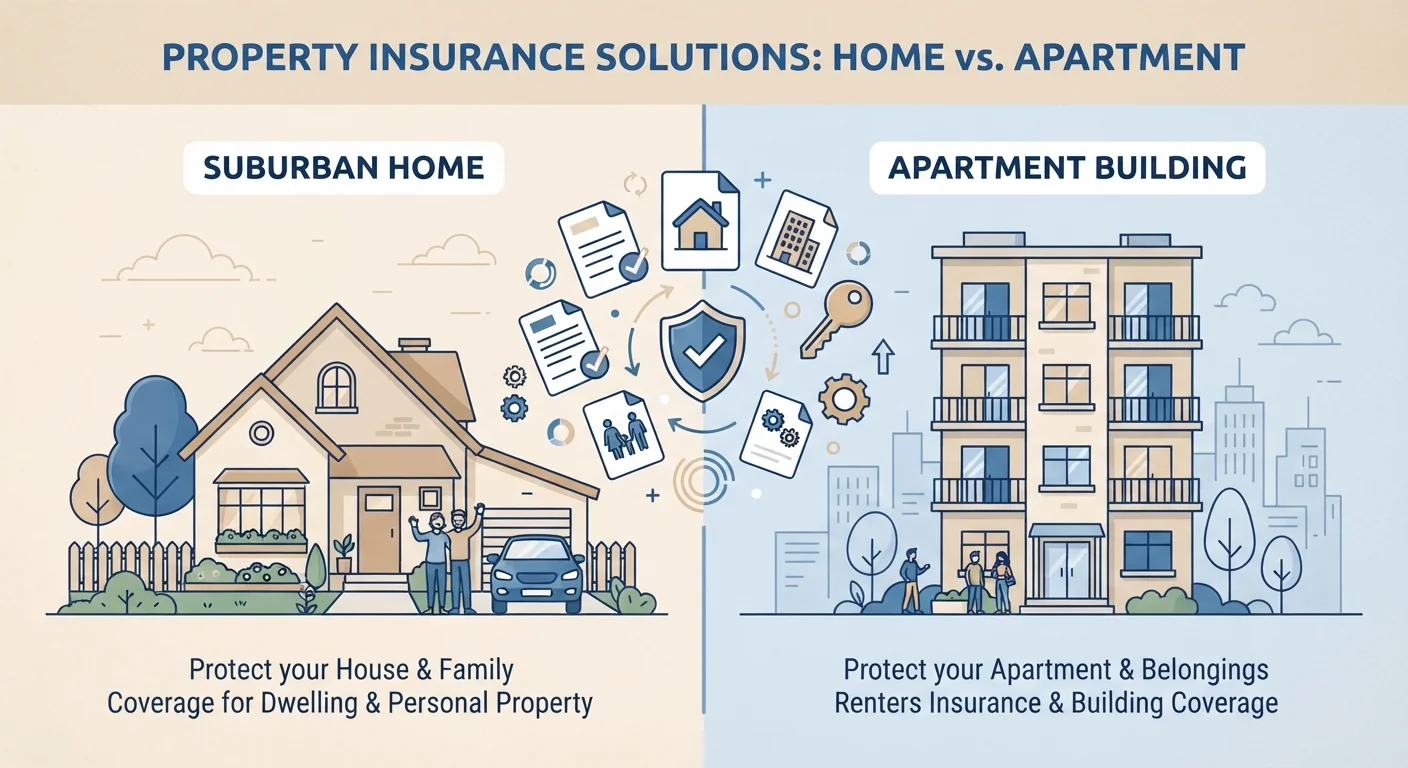
Homeowners and renters insurance solve different problems. A homeowner carries risk for the structure itself, which renters do not. Both types protect personal property and liability, but the right amounts and riders depend on what you own and how you live.
| Best for | Recommended |
|---|---|
| People who own their home and its structure | Homeowners insurance |
| People who rent and need to protect their belongings and liability | Renters insurance |
| Anyone in a flood- or earthquake-prone area | Either policy plus a separate flood or earthquake rider |
What each policy is designed to do
Homeowners insurance and renters insurance share a common structure, but they address fundamentally different risks. The difference comes down to ownership: a homeowner is financially responsible for the building itself, while a renter is only responsible for what is inside it.
A standard homeowners policy (commonly called an HO-3) covers the dwelling structure, attached structures like garages, personal belongings inside the home, liability if someone is injured on the property, and additional living expenses if the home becomes uninhabitable after a covered loss.
A renters policy (commonly called an HO-4) drops the dwelling and structural coverage entirely. The building belongs to the landlord, and the landlord's own policy covers it. What renters insurance adds is coverage for the tenant's personal property, personal liability, and temporary living costs if the unit is rendered unlivable. Premiums are lower because the insured risk is narrower.
| Coverage area | Homeowners insurance | Renters insurance | |
|---|---|---|---|
| Physical structure | Covered | Not covered (landlord's responsibility) | |
| Personal belongings | Covered | Covered | |
| Personal liability | Covered | Covered | |
| Additional living expenses | Covered if home is uninhabitable | Covered if unit is uninhabitable | |
| Flood damage | Not standard; requires separate policy | Not standard; requires separate policy | |
| Average annual cost (U.S.) | Roughly $1,000 to $2,500 | Roughly $150 to $300 | |
| Required by | Mortgage lender (typically) | Some landlords require it |
Personal property: what both policies cover and where limits matter
Both policy types reimburse you for personal belongings lost or damaged by covered perils, which typically include fire, theft, vandalism, windstorm, and certain types of water damage. What they do not automatically cover matters as much as what they do.
Standard policies often cap payouts on high-value categories such as jewelry, electronics, and collectibles. If a single item exceeds the sublimit, the standard policy will not fully replace it. A scheduled personal property endorsement (sometimes called a floater) can extend coverage for specific high-value items, and both homeowners and renters policies can include one.
Policies pay losses in one of two ways. Actual cash value (ACV) reimburses the depreciated value of the item at the time of loss. Replacement cost value (RCV) reimburses what it costs to buy a comparable new item today. RCV coverage costs more in premium but closes a significant gap for renters and homeowners alike.
Take a home inventory before you need it
Before a loss occurs, photograph or video your belongings room by room and store the record somewhere outside your home, such as a cloud account. When filing a claim, an inventory speeds up the process and reduces disputes over what you owned. This applies equally to renters and homeowners.
Liability coverage and why it matters for renters
Liability coverage is the part of both policies that many people overlook until they need it. If a guest slips and falls in your home or apartment and sues you, liability coverage pays for legal defense and any judgment up to your policy limit. It can also cover accidental damage you cause to someone else's property.
Renters sometimes assume their landlord's policy provides them liability protection. It does not. A landlord's policy covers the building and the landlord's liability, not a tenant's personal liability. A renter who causes a kitchen fire that damages adjacent units could face a claim from the landlord or neighboring tenants with no coverage if they carry no renters policy.
For anyone building assets, the liability limits on a standard policy may be worth reviewing. An umbrella policy can extend that protection across home, auto, and other liability exposures. See how coverage priorities shift at different life stages for a broader view of when to revisit limits.
Gaps both policies share
Flood damage is excluded from standard homeowners and renters policies. Coverage for flooding requires a separate policy, typically through the National Flood Insurance Program (NFIP) or a private flood insurer. Earthquake damage is also excluded and requires its own endorsement or separate policy. These gaps affect both homeowners and renters equally.
Mold, sewer backup, and wear-and-tear are generally excluded as well. Some insurers offer sewer backup as an add-on. Understanding what is not covered is as important as knowing what is, because a gap discovered after a loss cannot be retroactively filled.
Renters who share a space with a roommate should confirm whether a single policy covers both occupants or only the named insured. Many insurers require each resident to carry their own policy, or explicitly add a roommate. If you have pets and rent, pet ownership adds another layer of lease and liability considerations worth reviewing before assuming your renters policy handles every scenario.
This article is general educational information about insurance concepts and is not personalized insurance, financial, or legal advice. Coverage terms, exclusions, and costs vary by provider, policy, and state. Read your actual policy documents carefully and consult a licensed insurance professional for guidance specific to your situation.