

Key Takeaways
- Autoimmune diseases occur when immune cells attack the body's own healthy tissue.
- Genetics, environment, and hormonal factors all appear to contribute to autoimmune risk.
- Women are diagnosed with autoimmune conditions at higher rates than men.
- No single cure exists, but many people manage symptoms effectively with medical care.
- Early diagnosis can reduce long-term tissue damage in many autoimmune conditions.
Autoimmune disease
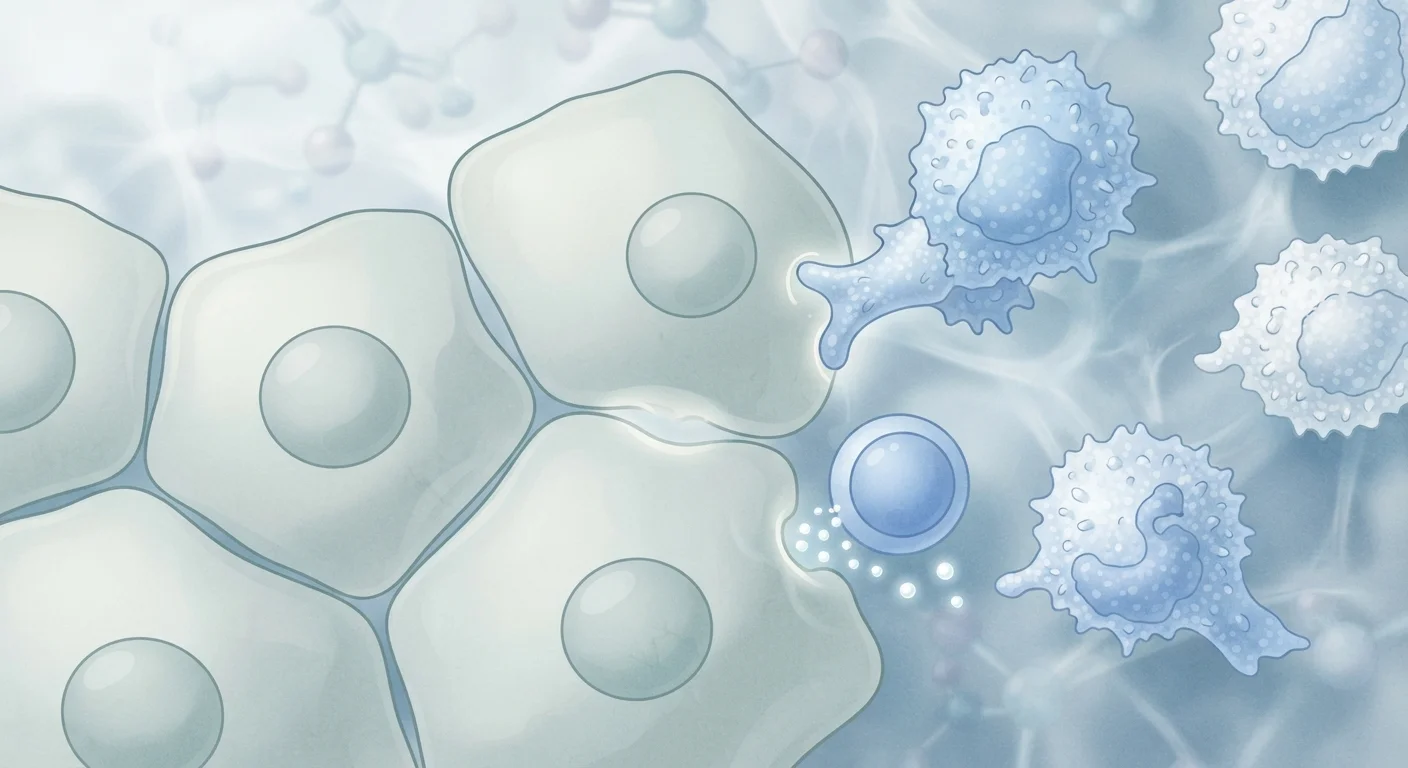
An autoimmune disease is a condition in which the body's immune system mistakenly attacks its own healthy cells and tissues instead of foreign threats like viruses or bacteria. This misdirected immune response can damage organs, joints, skin, nerves, or other body systems depending on which tissues are targeted. More than 80 recognized autoimmune conditions exist, ranging from well-known diseases like rheumatoid arthritis and lupus to rarer disorders.
The immune system normally relies on self-tolerance mechanisms to distinguish 'self' from 'non-self'; autoimmunity occurs when these checkpoints fail, allowing autoreactive T cells or autoantibodies to attack host tissue.
How the immune system is supposed to work
The immune system is the body's defense network. It identifies and destroys pathogens: bacteria, viruses, fungi, and other foreign invaders. To do this reliably, immune cells must tell the difference between what belongs to the body and what does not. This distinction is called self-tolerance.
Self-tolerance develops largely in childhood and depends on a process where immune cells that react too aggressively to the body's own proteins are either retrained or eliminated. When this process works, the immune system remains both effective against threats and restrained enough to leave healthy tissue alone.
Several overlapping checkpoints maintain this balance. Regulatory T cells, for instance, suppress immune responses that might otherwise become destructive. When one or more of these checkpoints fails, immune cells can begin treating normal tissue as a target.
What goes wrong in autoimmune disease
In autoimmune disease, the immune system generates a sustained attack on specific parts of the body. The exact mechanism varies by condition. In some diseases, the immune system produces autoantibodies, proteins that bind to the body's own cells and flag them for destruction. In others, autoreactive T cells directly infiltrate and damage tissue.
The tissue targeted depends on the condition. Rheumatoid arthritis involves the lining of joints. Multiple sclerosis involves the myelin sheath that insulates nerve fibers. Type 1 diabetes involves the insulin-producing beta cells of the pancreas. Lupus can affect multiple organs simultaneously, including the kidneys, skin, and heart.
Inflammation is the common thread. The immune response that normally clears an infection produces redness, swelling, and pain as byproducts. In autoimmunity, that inflammatory process runs persistently in places it should not, causing cumulative tissue damage over time.
Autoimmunity versus inflammation
Inflammation is a normal immune response to injury or infection and is not the same as autoimmunity. Autoimmune disease involves a specific, sustained misdirection of immune activity against the body's own tissue. Not all inflammatory conditions are autoimmune, and not all autoimmune diseases present with obvious outward inflammation. A healthcare provider can help clarify what type of process may be involved in a specific case.
Who is affected and why
Autoimmune diseases affect an estimated 23.5 million people in the United States, according to the National Institutes of Health, though some analyses using broader diagnostic criteria place that figure higher. Women are diagnosed at roughly twice the rate of men across most autoimmune conditions, with some diseases like lupus and Sjogren's syndrome showing even more pronounced sex differences.
23.5M+
Americans estimated to have an autoimmune disease
According to the National Institutes of Health, autoimmune diseases collectively affect tens of millions of people in the United States.
80+
Recognized distinct autoimmune conditions
The American Autoimmune Related Diseases Association recognizes more than 80 autoimmune diseases, ranging in severity and affected organ systems.
2:1
Ratio of women to men diagnosed with autoimmune disease
Women are diagnosed with most autoimmune conditions at roughly twice the rate of men, with some diseases showing an even larger disparity.
Genetic risk is real but not deterministic. Certain gene variants related to immune regulation appear repeatedly across different autoimmune diseases, which explains why one condition can run in families and why a person with one autoimmune diagnosis is more likely to develop a second. However, genetics alone do not cause autoimmunity. Environmental triggers are thought to interact with genetic vulnerability to initiate disease in susceptible individuals.
Infections are among the most studied environmental triggers. Some research suggests that certain viral or bacterial infections may prompt an immune response that inadvertently targets similar-looking proteins in the body's own cells, a concept called molecular mimicry. Gut microbiome composition, vitamin D levels, and cigarette smoking have also been studied in relation to autoimmune risk, though the science in these areas continues to develop.
Diagnosis and the challenge of recognition
Autoimmune diseases are frequently difficult to diagnose. Symptoms such as fatigue, joint pain, rashes, and brain fog are common to many conditions and overlap with other diagnoses. The average time between symptom onset and a confirmed autoimmune diagnosis has historically been several years for some conditions, partly because no single test confirms autoimmunity across the board.
Diagnosis typically involves a combination of blood tests (including tests for specific autoantibodies, inflammatory markers, and organ function), imaging, physical examination, and sometimes biopsy. Because symptoms can wax and wane, a physician may need to observe the pattern over time before reaching a conclusion.
If you have persistent, unexplained symptoms affecting multiple body systems, talking to a healthcare provider is the right first step. A primary care physician can order initial tests and refer to relevant specialists such as rheumatologists, neurologists, or gastroenterologists depending on what the presentation suggests. Conditions like type 2 diabetes, which also involves immune-related processes in its early stages, sometimes require careful diagnostic differentiation from type 1, an autoimmune condition.
Treatment approaches and living with autoimmune disease
No cure exists for most autoimmune diseases, but treatment has advanced substantially. The main goals are to suppress the overactive immune response, protect affected tissue from further damage, and manage symptoms that affect daily life.
Treatment varies by condition and severity. Broadly, approaches include medications that broadly dampen immune activity, as well as newer biologics that target specific molecules in the immune cascade. Biologic therapies have expanded options for conditions like rheumatoid arthritis, inflammatory bowel disease, and psoriasis, though they carry their own risk profiles and require medical supervision.
Lifestyle factors such as sleep, stress management, and physical activity are frequently discussed in the context of autoimmune management, though these should be approached as complements to medical care, not substitutes for it. Some people experience extended remission periods; others manage chronic, ongoing symptoms. Any changes to treatment should be made in coordination with a qualified healthcare provider.
This article is for informational purposes only and does not constitute medical advice. If you have concerns about your health or symptoms, please consult a licensed healthcare professional.